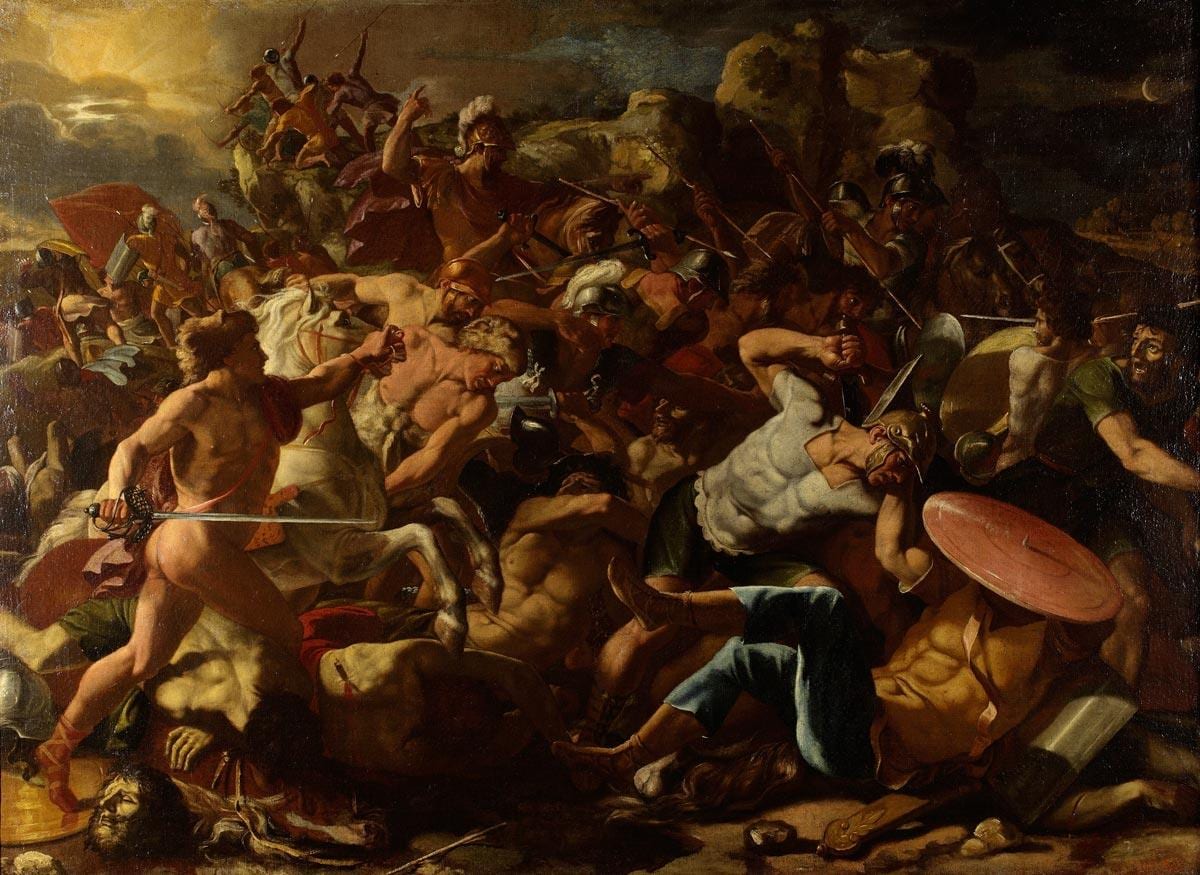
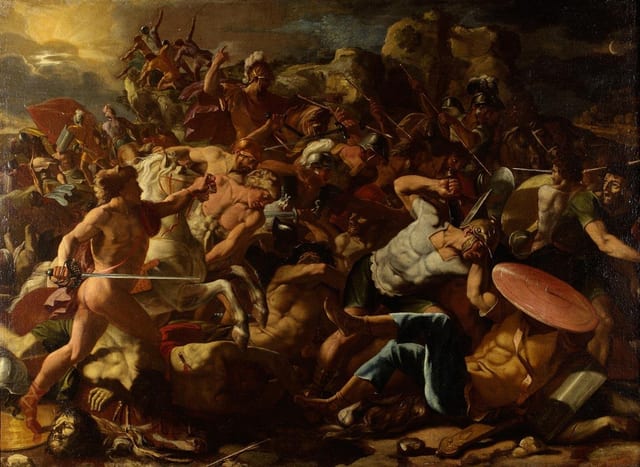
The Victory of Joshua over the Amorites
Nicolas Poussin · 1625

Nicolas Poussin
Kingdom of France · 1594–1665
Nicolas Poussin was a leading painter of the classical French Baroque style, although he spent most of his working life in Rome. Most of his works were on religious and mythological subjects painted for a small group of Italian and French collectors. He returned to Paris for a brief period to serve as First Painter to the King under Louis XIII and Cardinal Richelieu, but soon returned to Rome and resumed his more traditional themes. In his later years he gave growing prominence to the landscape in his paintings. His work is characterized by clarity, logic, and order, and favors line over color. Until the 20th century he remained a major inspiration for such classically-oriented artists as Jacques-Louis David, Jean-Auguste-Dominique Ingres and Paul Cézanne.
Independent artist guide by Momentable. Biography from Wikipedia; artworks credited to the museums that hold them.
 LIVENow streaming · The Victory of Joshua over the Amorites
- life
- 1594–1665life
- movement
- Classicismmovement
The work
A selection of 8 works, free to stream.
The Victory of Joshua over the Amorites
Nicolas Poussin · 1625
Pushkin Museum
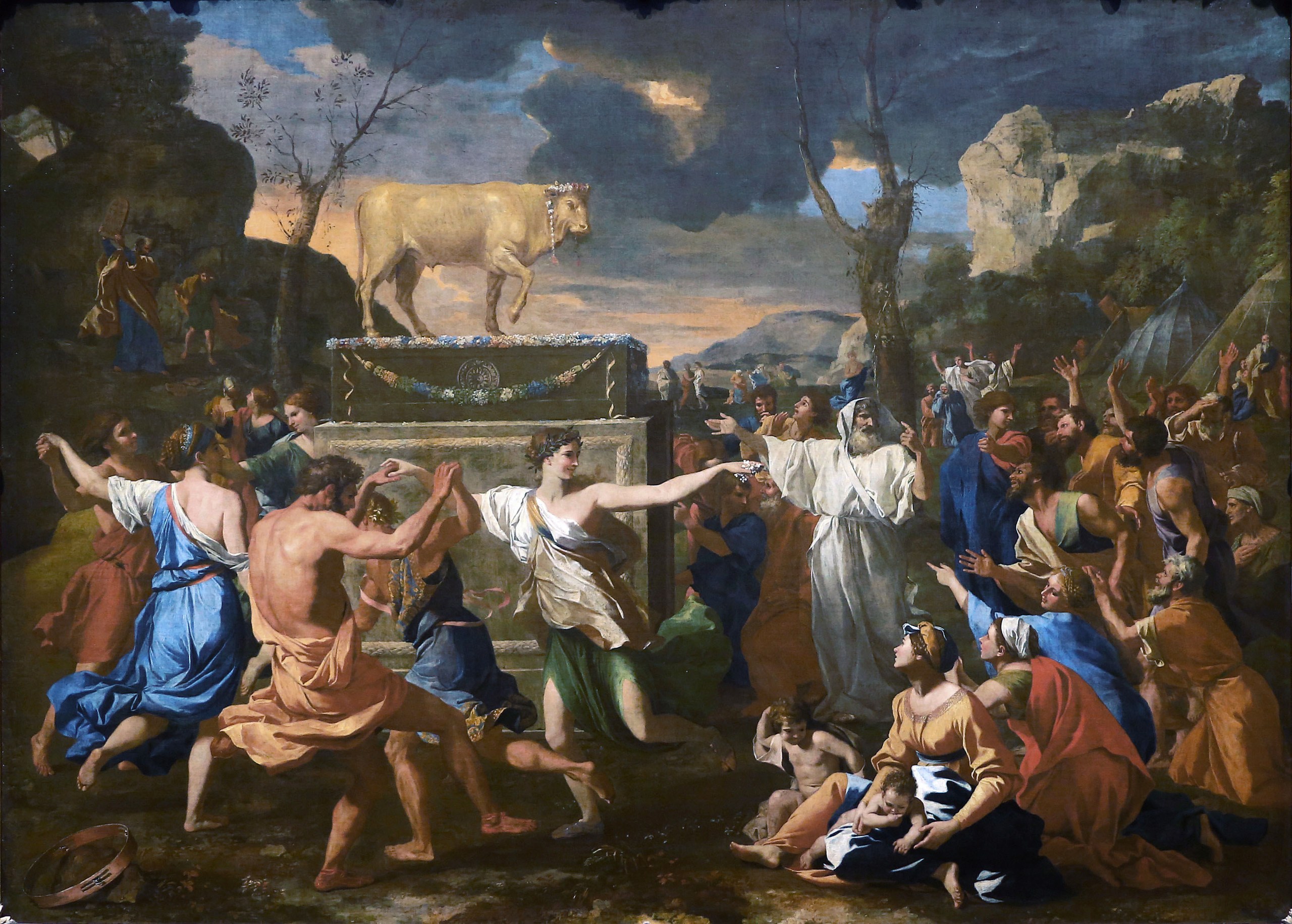
The Adoration of the Golden Calf
Nicolas Poussin · 1634
National Gallery
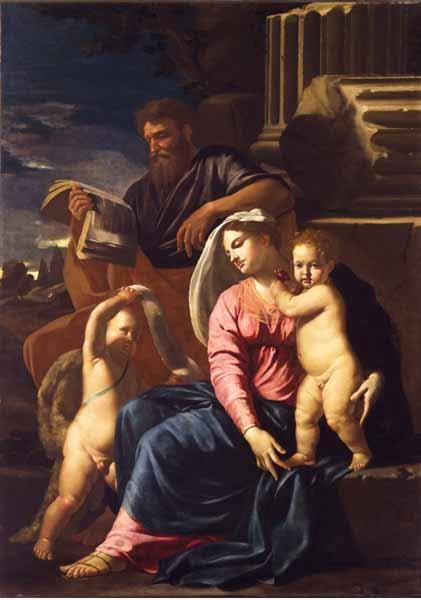
The Holy Family with Saint John
Nicolas Poussin · 1627
Toledo Museum of Art
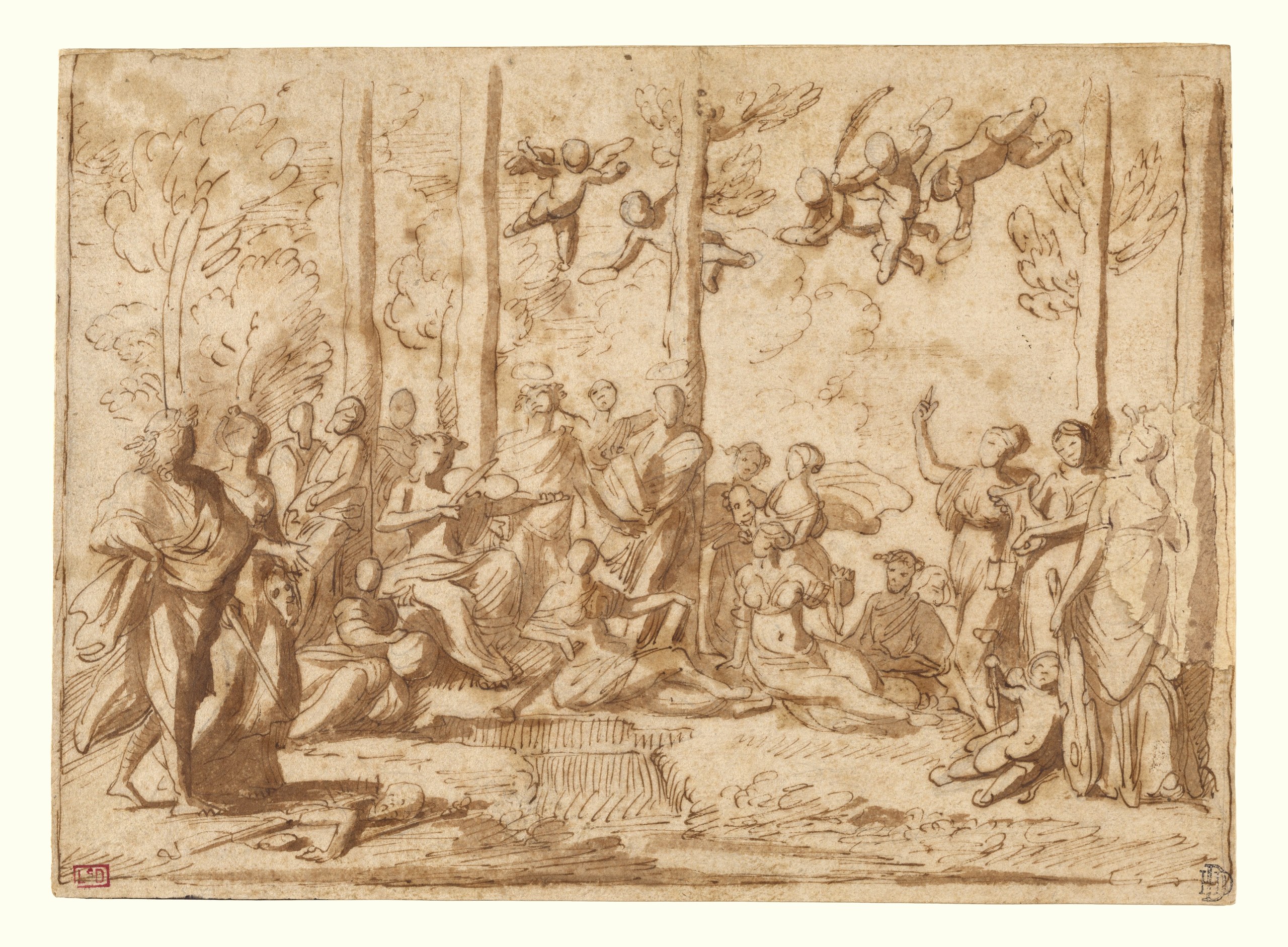
Apollo and the Muses on Mount Parnassus
Nicolas Poussin · 1626
Getty Center
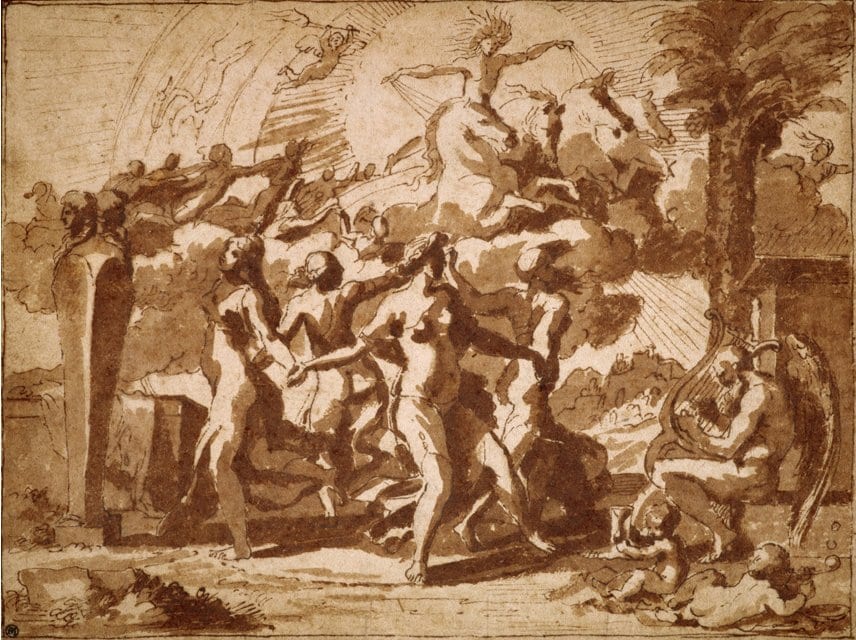
A Dance to the Music of Time
Nicolas Poussin · 1640
Scottish National Gallery
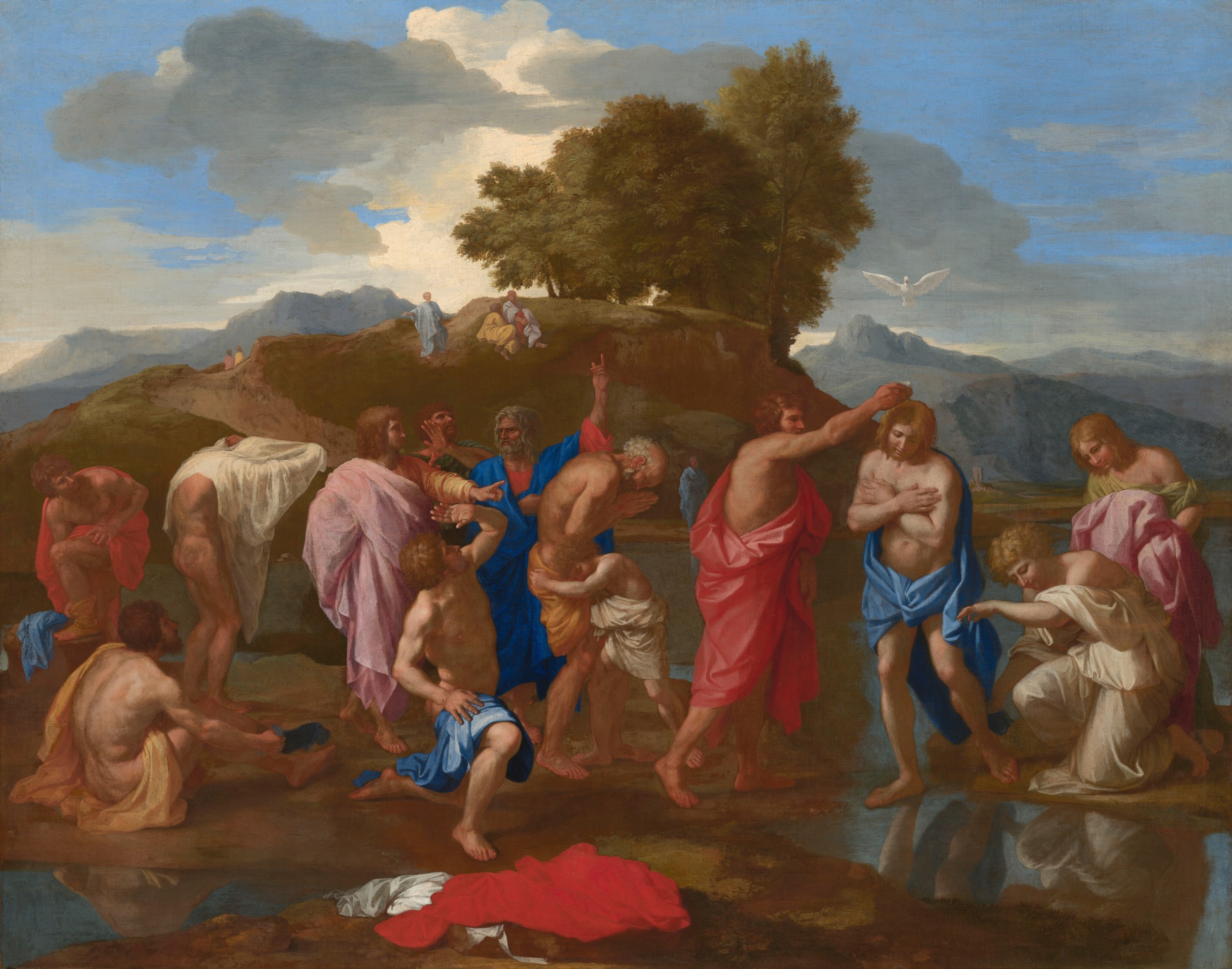
The Baptism of Christ
Nicolas Poussin
National Gallery of Art
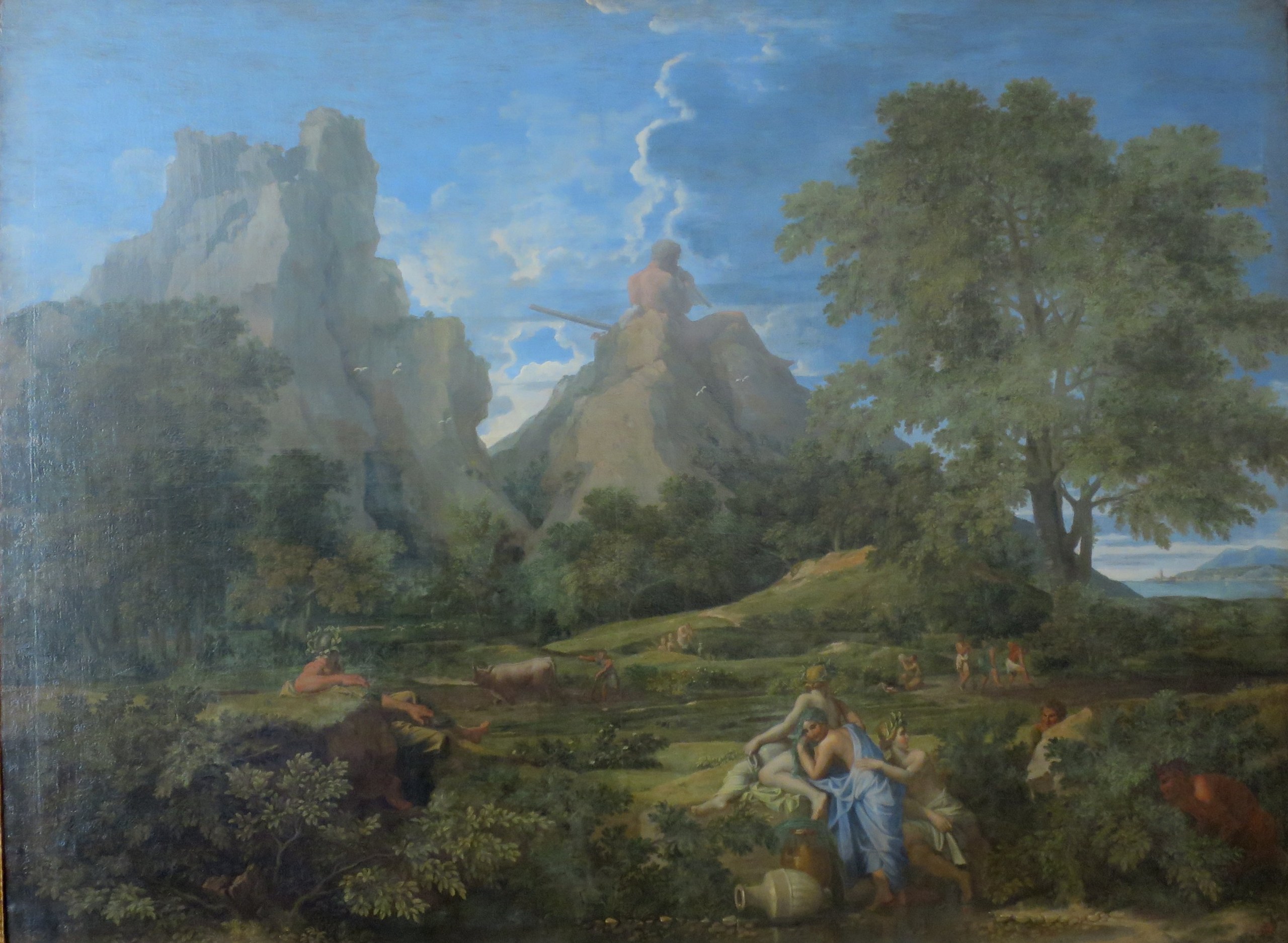
Landscape with Polyphemus
Nicolas Poussin · 1649
State Hermitage Museum
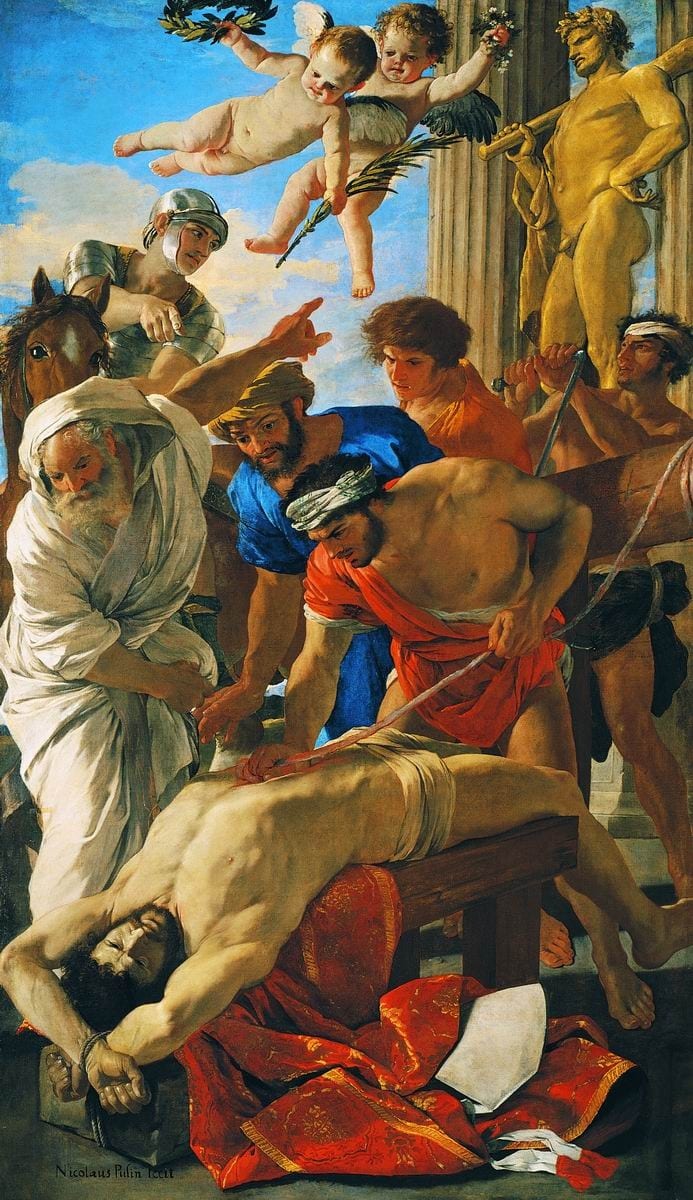
The Martyrdom of Saint Erasmus
Nicolas Poussin · 1628
Vatican Museums
Works worth knowing
5 of Nicolas Poussin's works, and what makes each one worth a look.
The Victory of Joshua over the Amorites
Nicolas Poussin · 1625
Pushkin Museum
The Battle between the Israelites and the Amorites, Joshua's Battle Against the Amorites or Joshua's Victory over the Amorites is a c. 1625 oil-on-canvas painting by the French artist Nicolas Poussin, now in the Pushkin Museum, in Moscow. It was produced as a pendant to Joshua's Battle against the Amalekites by the same artist during his time in Rome.
The Adoration of the Golden Calf
Nicolas Poussin · 1634
National Gallery
The Adoration of the Golden Calf is a painting by Nicolas Poussin, produced between 1633 and 1634. It is held in the National Gallery, in London. It depicts the adoration of the golden calf by the Israelites, from chapter 32 of the Book of Exodus.
The Baptism of Christ
Nicolas Poussin
National Gallery of Art
Nicolas Poussin was a leading painter of the classical French Baroque style, although he spent most of his working life in Rome. Most of his works were on religious and mythological subjects painted for a small group of Italian and French collectors. He returned to Paris for a brief period to serve as First Painter to the King under Louis XIII and Cardinal Richelieu, but soon returned to Rome and resumed his more traditional themes.
Landscape with Polyphemus
Nicolas Poussin · 1649
State Hermitage Museum
Landscape with Polyphemus (Paysage avec Polyphème) is a 1649 oil painting by French artist Nicolas Poussin. It is held in the Hermitage Museum, in Saint Petersburg. The painting refers to a Spanish literary work La Fábula de Polifemo y Galatea and Ovid's Metamorphoses.
The Martyrdom of Saint Erasmus
Nicolas Poussin · 1628
Vatican Museums
The Martyrdom of Saint Erasmus is an altarpiece, painted by Nicolas Poussin in 1628 to 1629, originally displayed in St. Peter's Basilica, Rome. The painting was commissioned on February 5, 1628, by the Fabric of Saint Peter, to adorn the altar dedicated to Erasmus of Formia in St. Peter's Basilica. More precisely, it was to be located to the left of the north transept, near the Martyrdom of Saint Processus and Saint Martinian by Valentin de Boulogne (1629).
How Nicolas Poussin worked
From the record of their own practice.
Throughout his life Poussin stood apart from the popular tendency toward the decorative in French art of his time. In Poussin's works a survival of the impulses of the Renaissance is coupled with conscious reference to the art of classical antiquity as the standard of excellence. Rejecting the emotionalism of Baroque artists such as Bernini and Pietro da Cortona, he emphasized the cerebral. His goal was clarity of expression achieved by disegno or 'nobility of design' in preference to colore or color. During the late 1620s and 1630s, he experimented and formulated his own style.
Where the work hangs
The museums that hold it, and their visitor guides.
National Gallery of Art
2 in the archive · Washington, D.C.
State Hermitage Museum
1 in the archive · Saint Petersburg
Scottish National Gallery
1 in the archive · Edinburgh
Toledo Museum of Art
1 in the archive · Toledo
Vatican Museums
1 in the archive · Vatican City
Pushkin Museum
1 in the archive · Moscow
Getty Center
1 in the archive · Los Angeles
National Gallery
1 in the archive · London
If you like Nicolas Poussin
Artists held by the same museums.
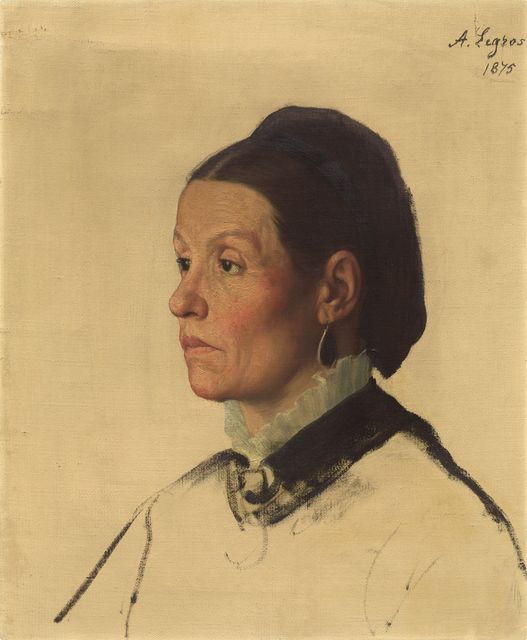
Alphonse Legros
French · 561 in the archive
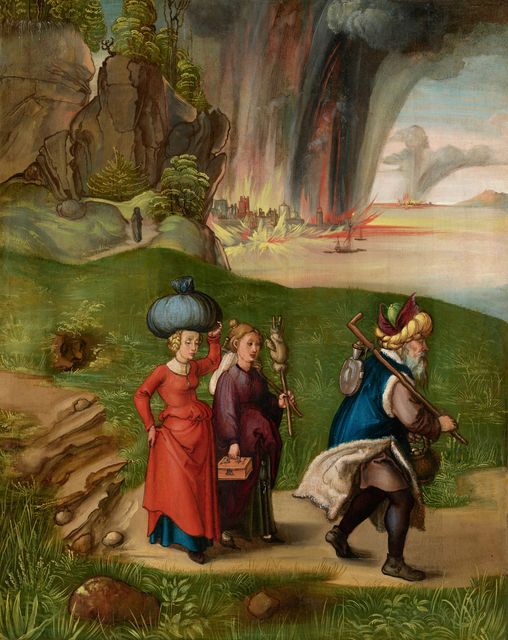
Albrecht Dürer
German · 288 in the archive
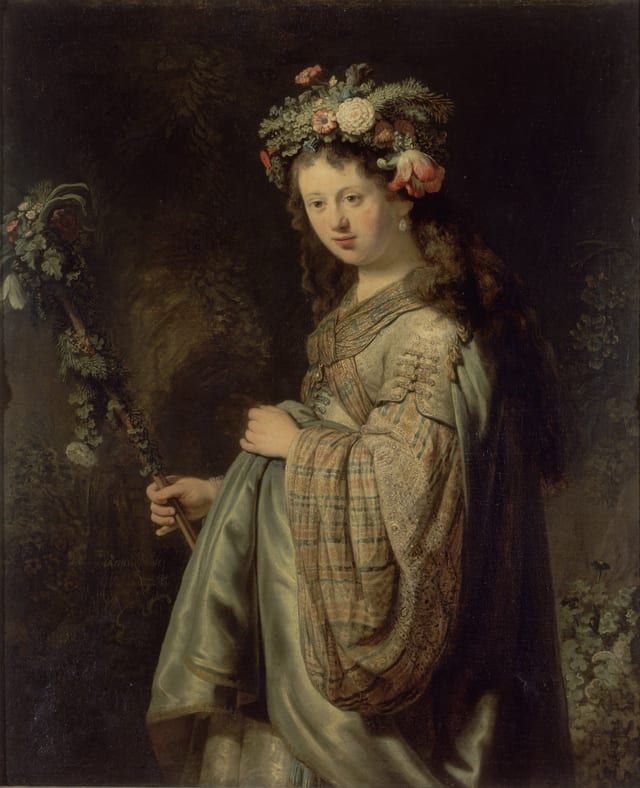
Rembrandt van Rijn
Dutch · 269 in the archive
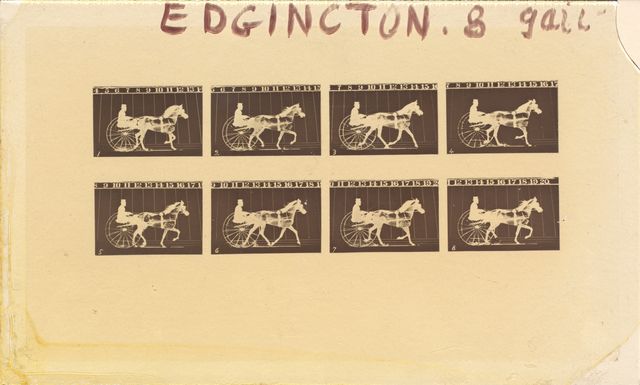
Eadweard Muybridge
English · 259 in the archive
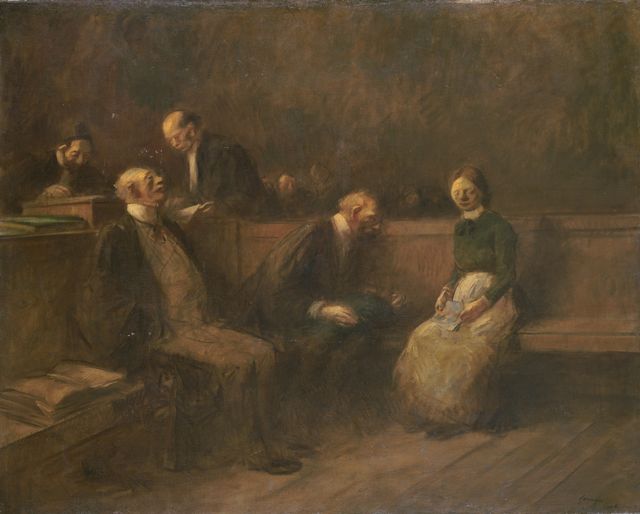
Jean-Louis Forain
French · 259 in the archive
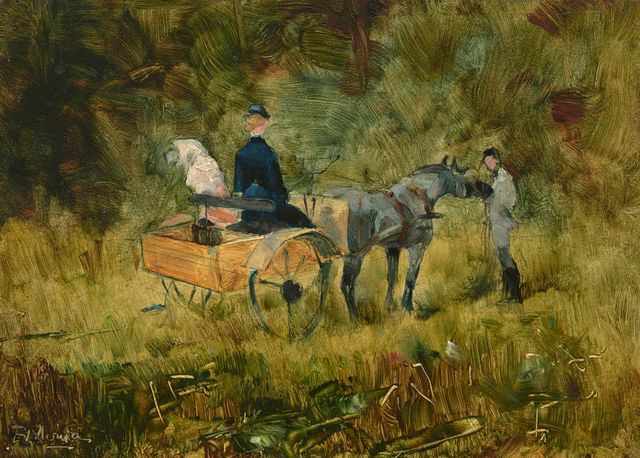
Henri de Toulouse-Lautrec
French · 242 in the archive
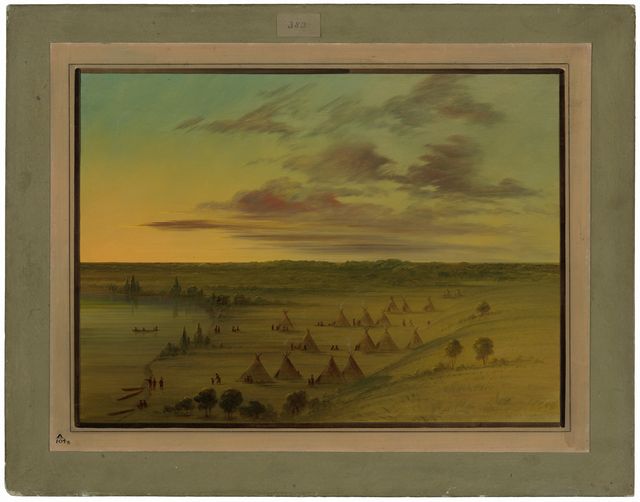
George Catlin
United States · 223 in the archive
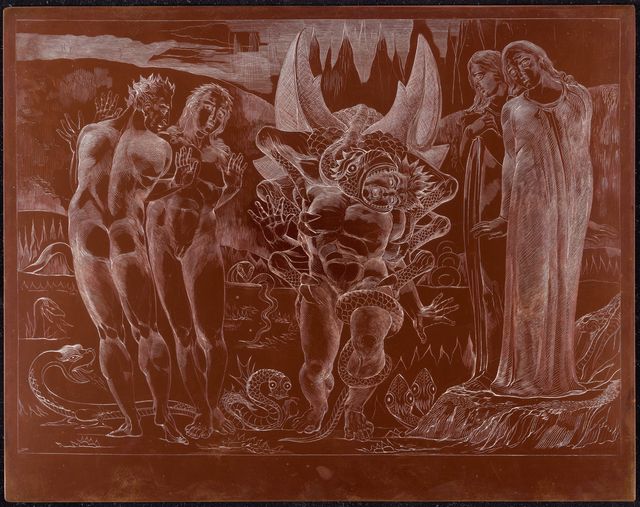
William Blake
United Kingdom of Great Britain and Ireland · 173 in the archive
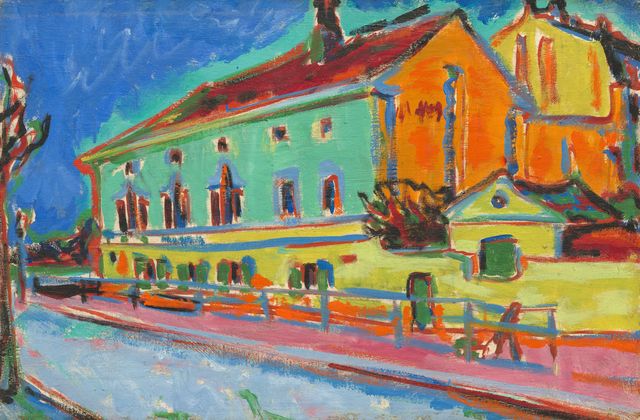
Ernst Ludwig Kirchner
German · 147 in the archive
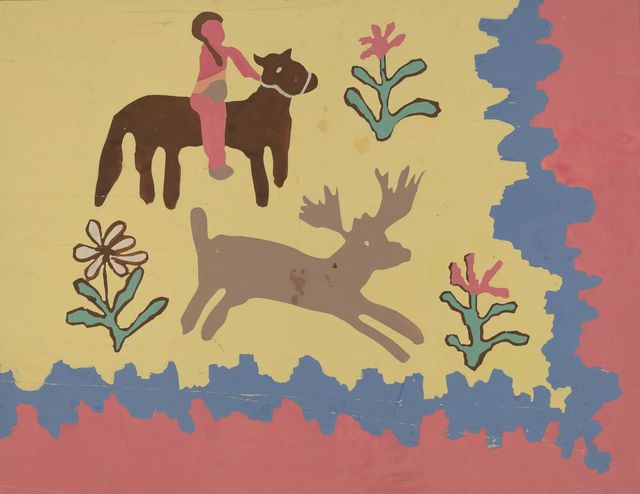
Majel G. Claflin
United States · 135 in the archive
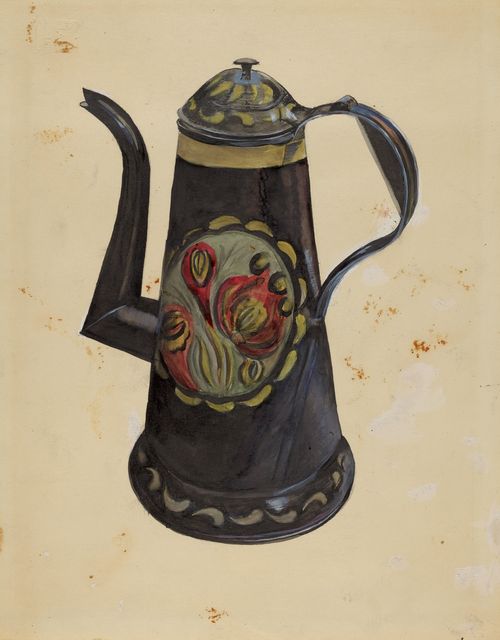
Mina Lowry
United States · 124 in the archive
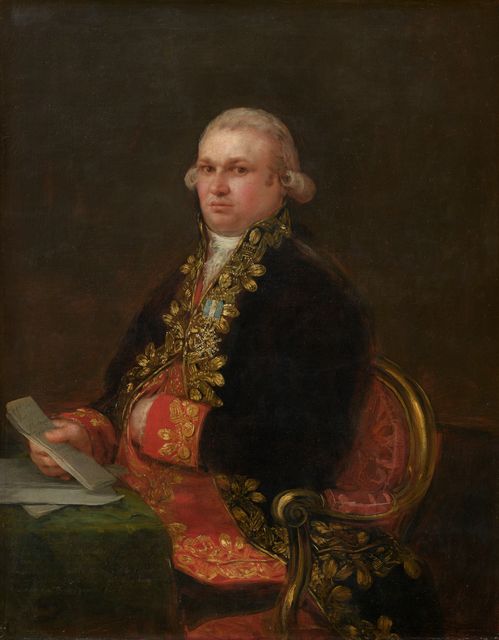
Francisco Goya
Spanish · 116 in the archive
Invite the masters into your living room.
Nicolas Poussin on your TV, phone, or tablet. Free to start.
View on MomentableIndependent guide by Momentable · biography from Wikipedia · artworks are in the public domain and credited to the museum that holds them