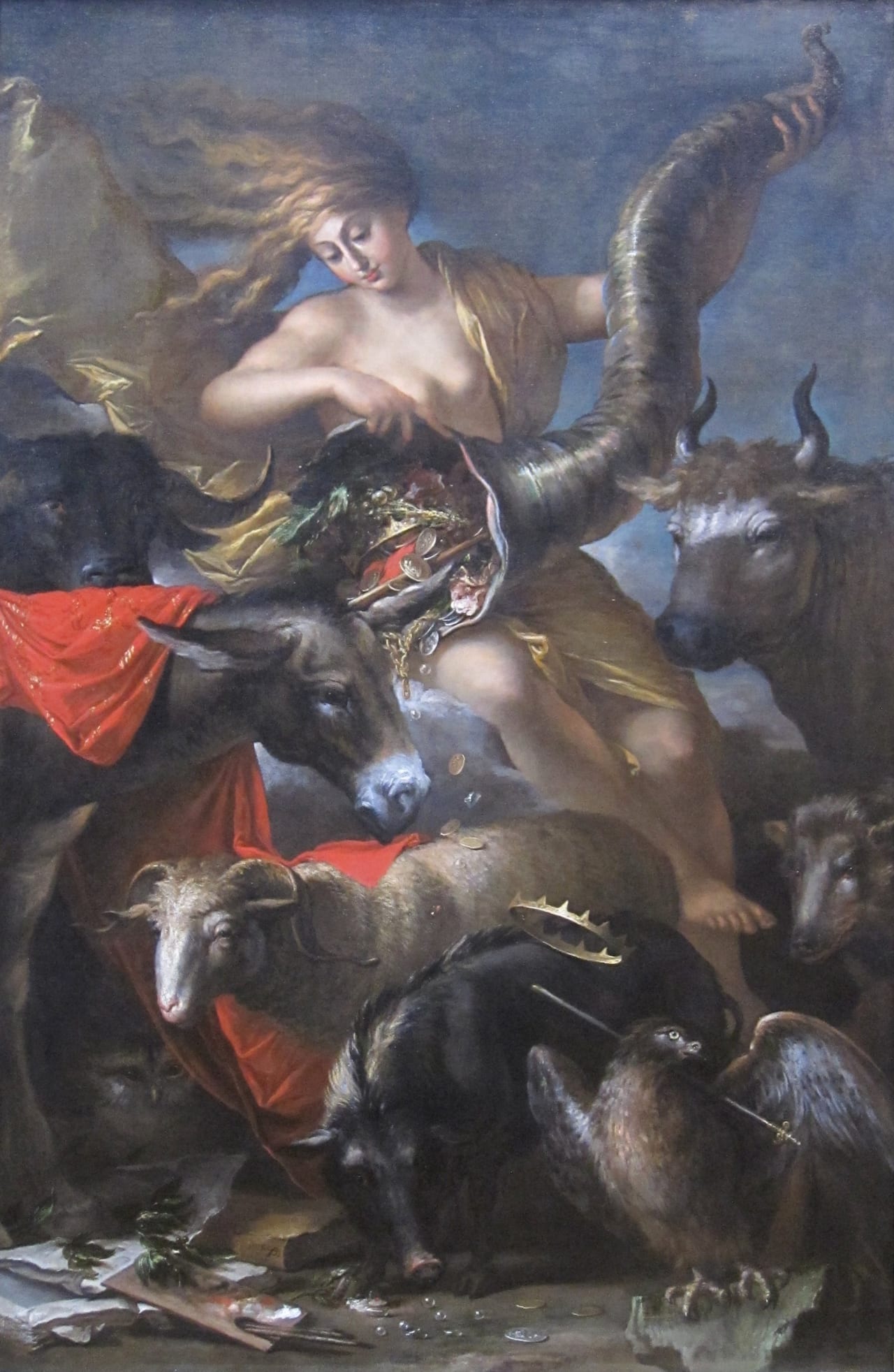
Allegory of Fortune
Salvator Rosa · 1658

Salvator Rosa
1615–1673
Salvator Rosa is best known today as an Italian Baroque painter, whose romanticised landscapes and history paintings, often set in dark and untamed nature, exerted considerable influence from the 17th century into the early 19th century. In his lifetime, he was among the most famous painters, known for his flamboyant personality, and regarded as an accomplished poet, satirist, actor, musician and printmaker. He was active in Naples, Rome, and Florence, where on occasion he was compelled to move between cities, as his caustic satire earned him enemies in the artistic and intellectual circles of the day. As a history painter, he often selected obscure and esoteric subjects from the Bible, mythology, and the lives of philosophers, which were seldom addressed by other artists. He rarely painted the common religious subjects, unless they allowed a treatment dominated by the landscape element.
Independent artist guide by Momentable. Biography from Wikipedia; artworks credited to the museums that hold them.
 LIVENow streaming · Allegory of Fortune
- life
- 1615–1673life
- rights
- Public domainrights
The work
A selection of 1 works, free to stream.
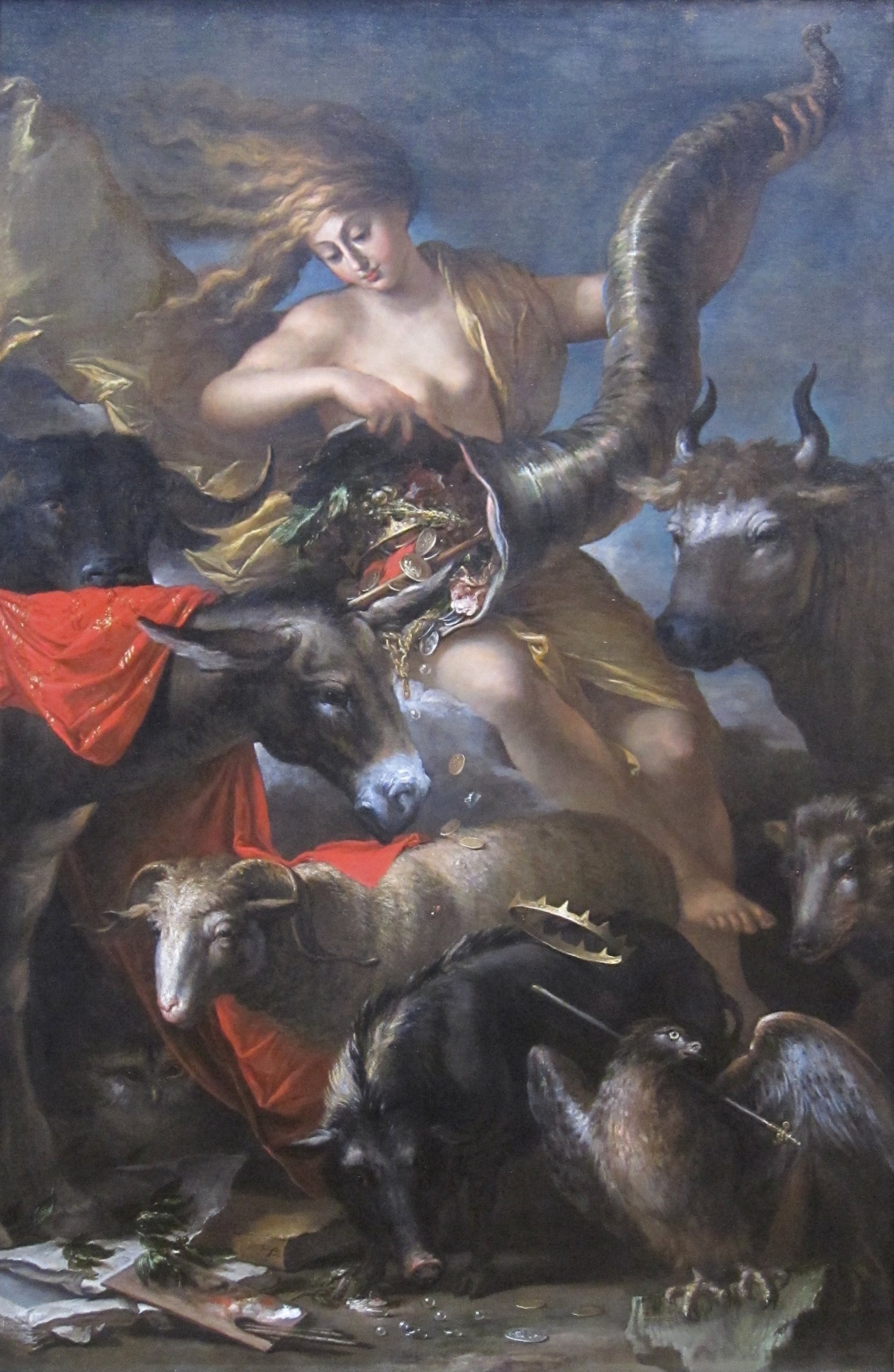
Allegory of Fortune
Salvator Rosa · 1658
Getty Center
Works worth knowing
What Salvator Rosa made, and why each one is worth looking at.
Allegory of Fortune
Salvator Rosa · 1658
Getty Center
Allegory of Fortune, sometimes also named La Fortuna, is an oil painting on canvas featuring the Roman goddess of fortune, Fortuna, that was created c. 1658 or 1659 by the Italian baroque painter Salvator Rosa. The painting caused uproar when first exhibited publicly and almost got the painter jailed and excommunicated.
Where the work hangs
The museums that hold it, and their visitor guides.
If you like Salvator Rosa
Artists held by the same museums.
Giovanni Domenico Tiepolo
Republic of Venice · 4 in the archive
Simon Bening
Southern Netherlands · 4 in the archive
Hendrik Goltzius
Dutch Republic · 3 in the archive
Bernardo Daddi
2 in the archive
François Boucher
France · 2 in the archive
Gustave Courbet
French · 2 in the archive
Maarten van Heemskerck
Habsburg Netherlands · 2 in the archive
Simon Vouet
French · 2 in the archive
Andrea Mantegna
Republic of Venice · 1 in the archive
Antonio Rizzo
Republic of Venice · 1 in the archive
Carl Gustav Carus
Kingdom of Saxony · 1 in the archive
Cornelis Jonson van Ceulen
Anglo-Dutch · 1 in the archive
Invite the masters into your living room.
Salvator Rosa on your TV, phone, or tablet. Free to start.
View on MomentableIndependent guide by Momentable · biography from Wikipedia · artworks are in the public domain and credited to the museum that holds them