![Leda and the Swan [reverse]](https://art.momentable.art/momentable/nga/45191_w2560.jpg)
About this work
Las Incantadas of Salonica (Greek: Μαγεμένες της Θεσσαλονίκης or Λας Ινκαντάδας, meaning "the enchanted ones") is a group of Roman sculptures from a portico dating to the second century AD that once adorned the Roman Forum of Thessalonica in Northern Greece, and were considered to be among the most impressive and prestigious monuments of the city. Based on descriptions by travellers, it consisted of five Corinthian columns with four of them having bilateral sculptures on each pillar above. The sculptures were removed in 1864 by French paleologist Emmanuel Miller and placed in the Louvre museum in France, while the rest of the building collapsed and was destroyed.
About Italian 16th Century
Paolo Caliari, known as Paolo Veronese, was an Italian Renaissance painter based in Venice, known for extremely large history paintings of religion and mythology, such as The Wedding at Cana (1563) and The Feast in the House of Levi (1573). Included with Titian, a generation older, and Tintoretto, a decade senior, Veronese is one of the "great trio that dominated Venetian painting of the cinquecento" and the Late Renaissance in the 16th century. Known as a supreme colorist, and after an early period with Mannerism, Paolo Veronese developed a naturalist style of painting, influenced by Titian.
Where it hangs
Leda and the Swan [reverse] is in the collection of National Gallery of Art.
More by Italian 16th Century
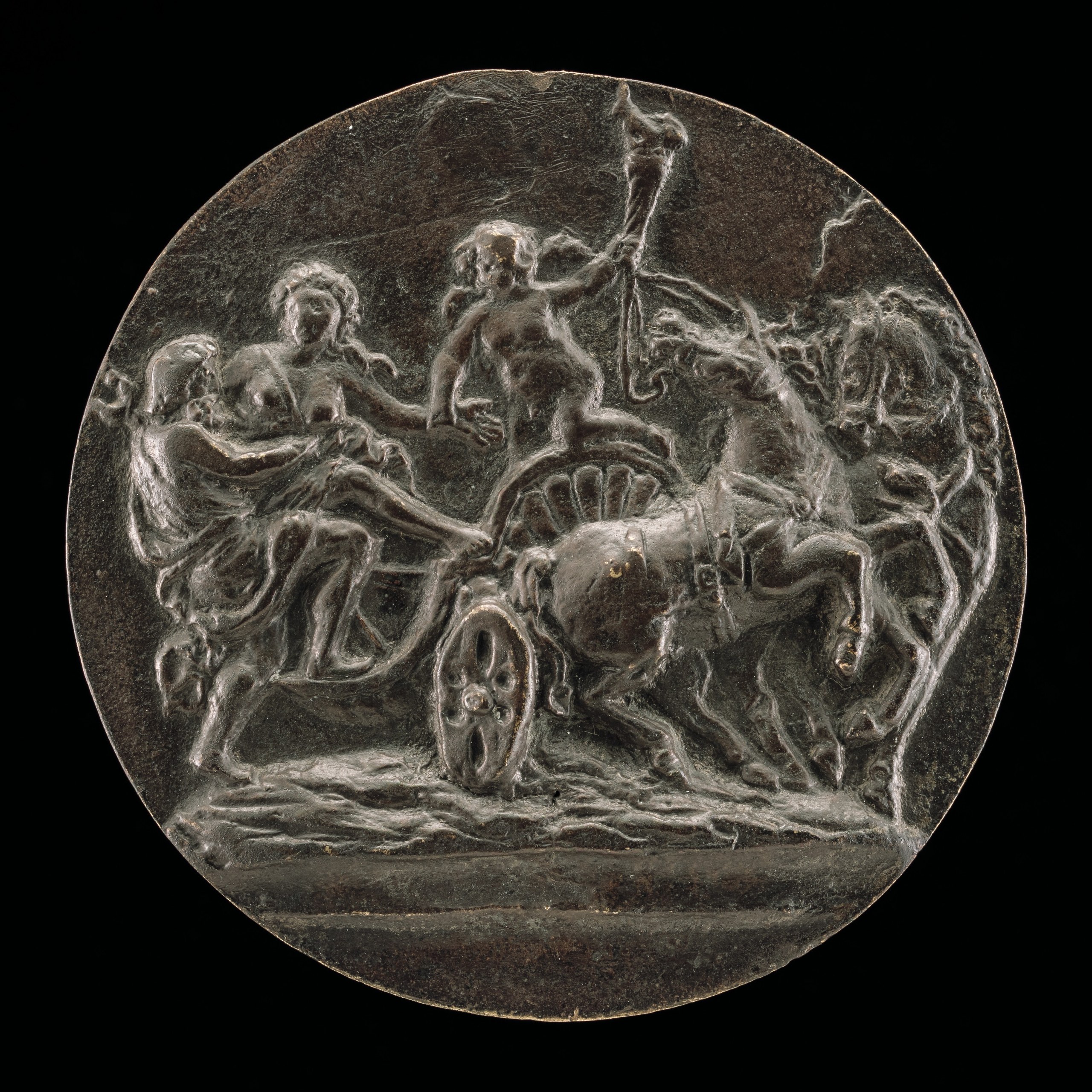
The Rape of Proserpine
Italian 16th Century
National Gallery of Art
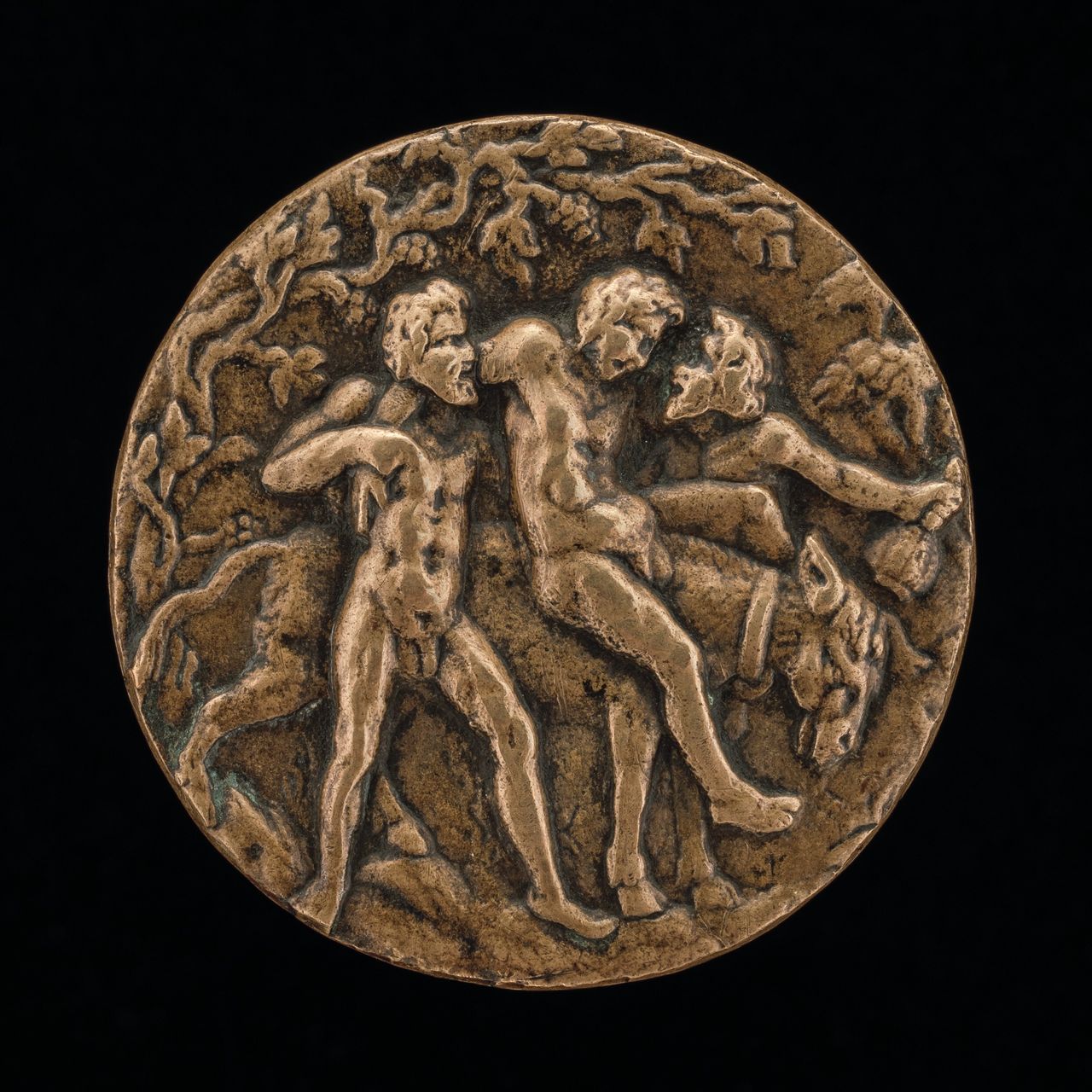
Silenus
Italian 16th Century
National Gallery of Art
![Mars with Three Figures [reverse]](https://art.momentable.art/momentable/nga/44880_w2560.jpg)
Mars with Three Figures [reverse]
Italian 16th Century
National Gallery of Art
![Portrait of a Boy, Perhaps a Member of the Carrara Family [obverse]](https://art.momentable.art/momentable/nga/44875_w1280.jpg)
Portrait of a Boy, Perhaps a Member of the Carrara Family [obverse]
Italian 16th Century
National Gallery of Art
![Aurora Stepping from a Car [reverse]](https://art.momentable.art/momentable/nga/44878_w2560.jpg)
Aurora Stepping from a Car [reverse]
Italian 16th Century
National Gallery of Art
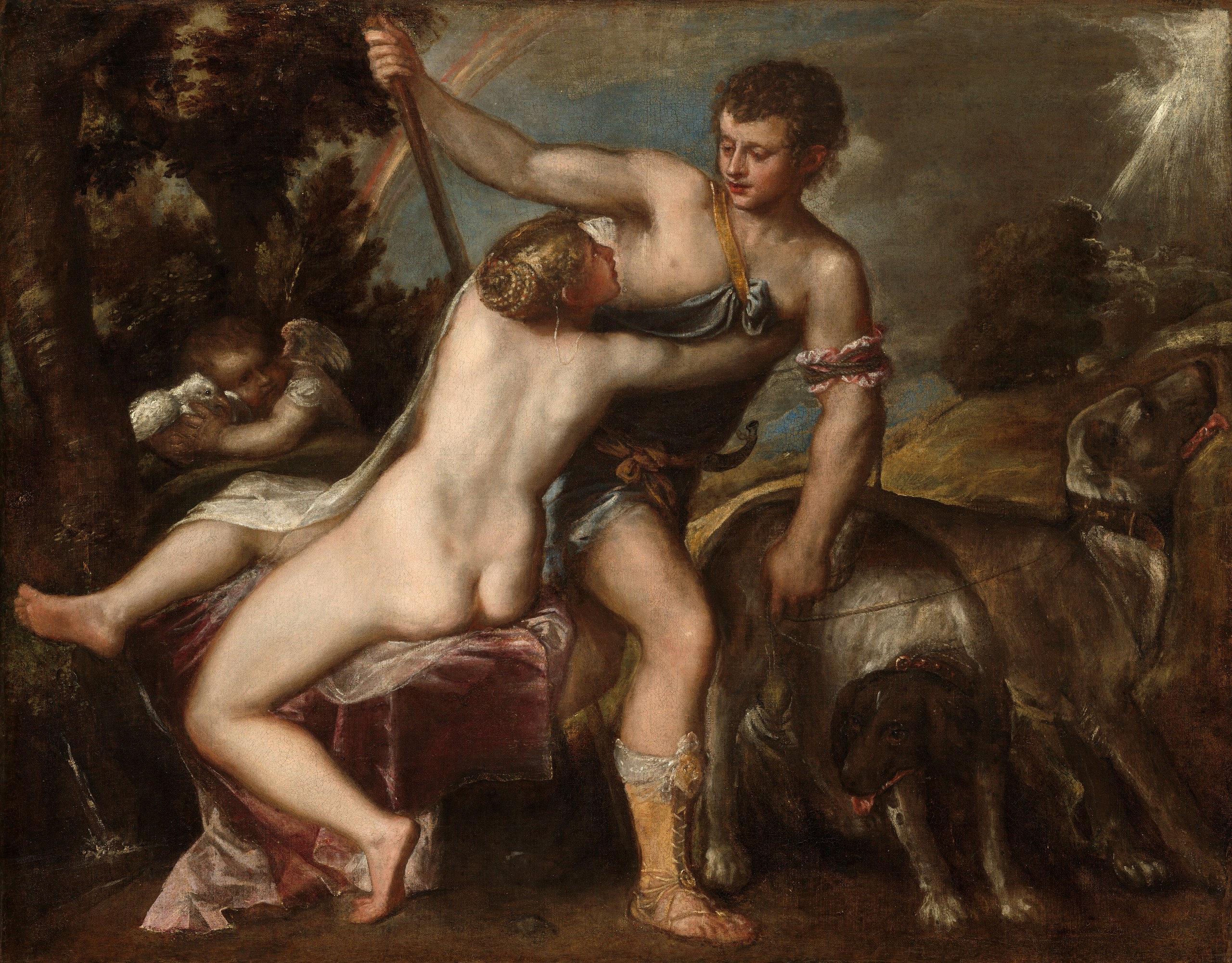
Venus and Adonis
Italian 16th Century
National Gallery of Art