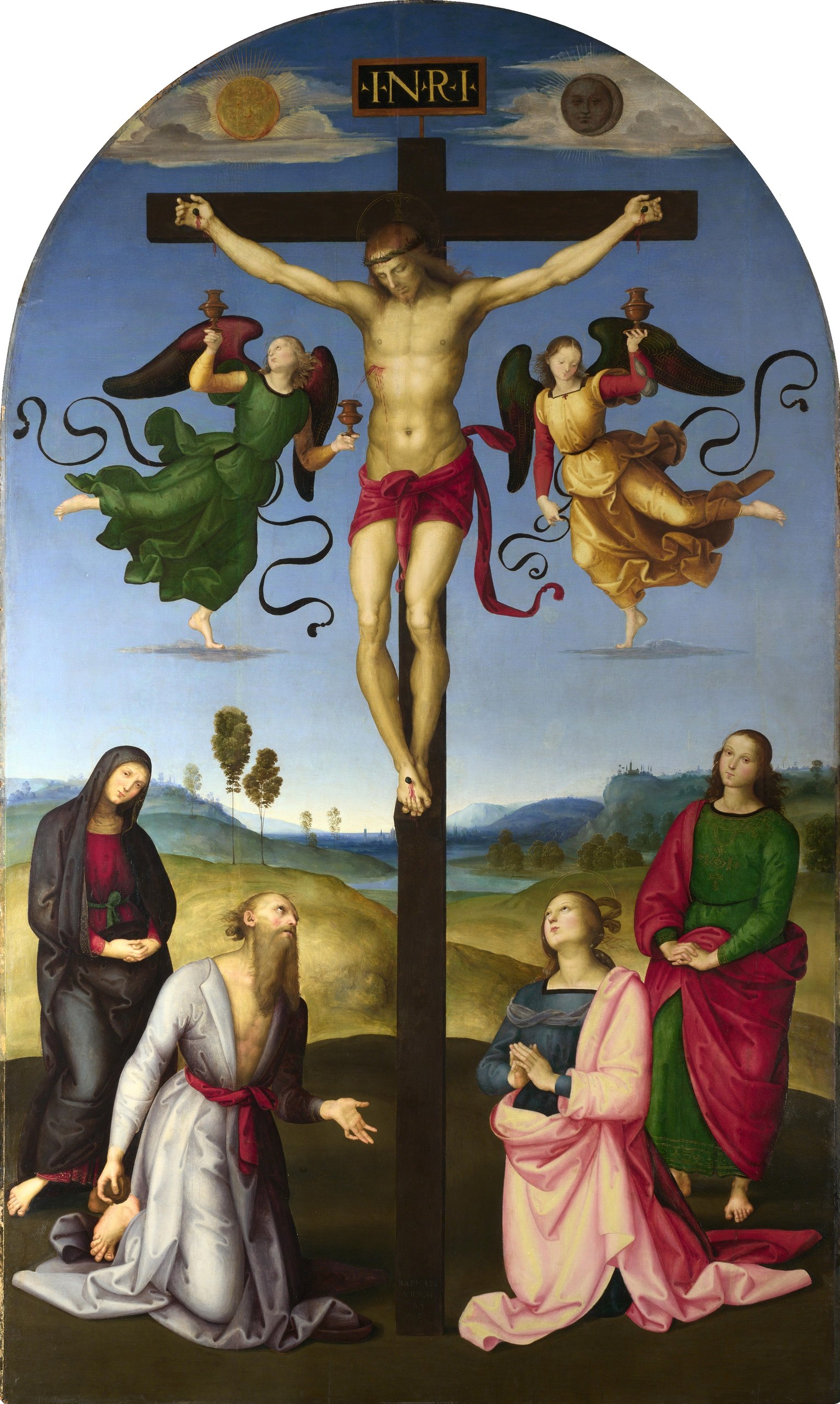
About this work
The Mond Crucifixion or Gavari Altarpiece is an oil on poplar panel dated to 1502 to 1503, making it one of the earliest works by Italian Renaissance artist Raphael, perhaps the second after the c.1499 to 1500 Baronci Altarpiece. It originally comprised four elements, of which three survive, now all separated: a main panel of the Crucified Christ with the Virgin Mary, Saints and Angels which was bequeathed to the National Gallery, London, by Ludwig Mond, and a three-panel predella from which one panel is lost; the two surviving panels are Eusebius of Cremona raising Three Men from the Dead with Saint Jerome's Cloak in the Museu Nacional de Arte Antiga, in Lisbon, and Saint Jerome saving Silvanus and punishing the Heretic Sabinianus in the North Carolina Museum of Art. This early work by Raphael was commissioned by the wool merchant Domenico Gavari as the altarpiece for his burial chapel in the south aisle of the church of San Domenico in Città di Castello, in Umbria, near Raphael's home town of Urbino.
About Raphael
Raffaello Sanzio da Urbino, now generally known in English as Raphael (UK: RAF-ay-əl, US: RAF-ee-əl, RAY-fee-, RAH-fy-EL), was an Italian painter and architect of the High Renaissance. His work is admired for its clarity of form, ease of composition, and visual achievement of the Neoplatonic ideal of human grandeur. Together with Leonardo da Vinci and Michelangelo, he forms the traditional trinity of great masters of that period. His father Giovanni Santi was court painter to the ruler of the small but highly cultured city of Urbino.
Where it hangs
Mond Crucifixion is in the collection of National Gallery.
More by Raphael
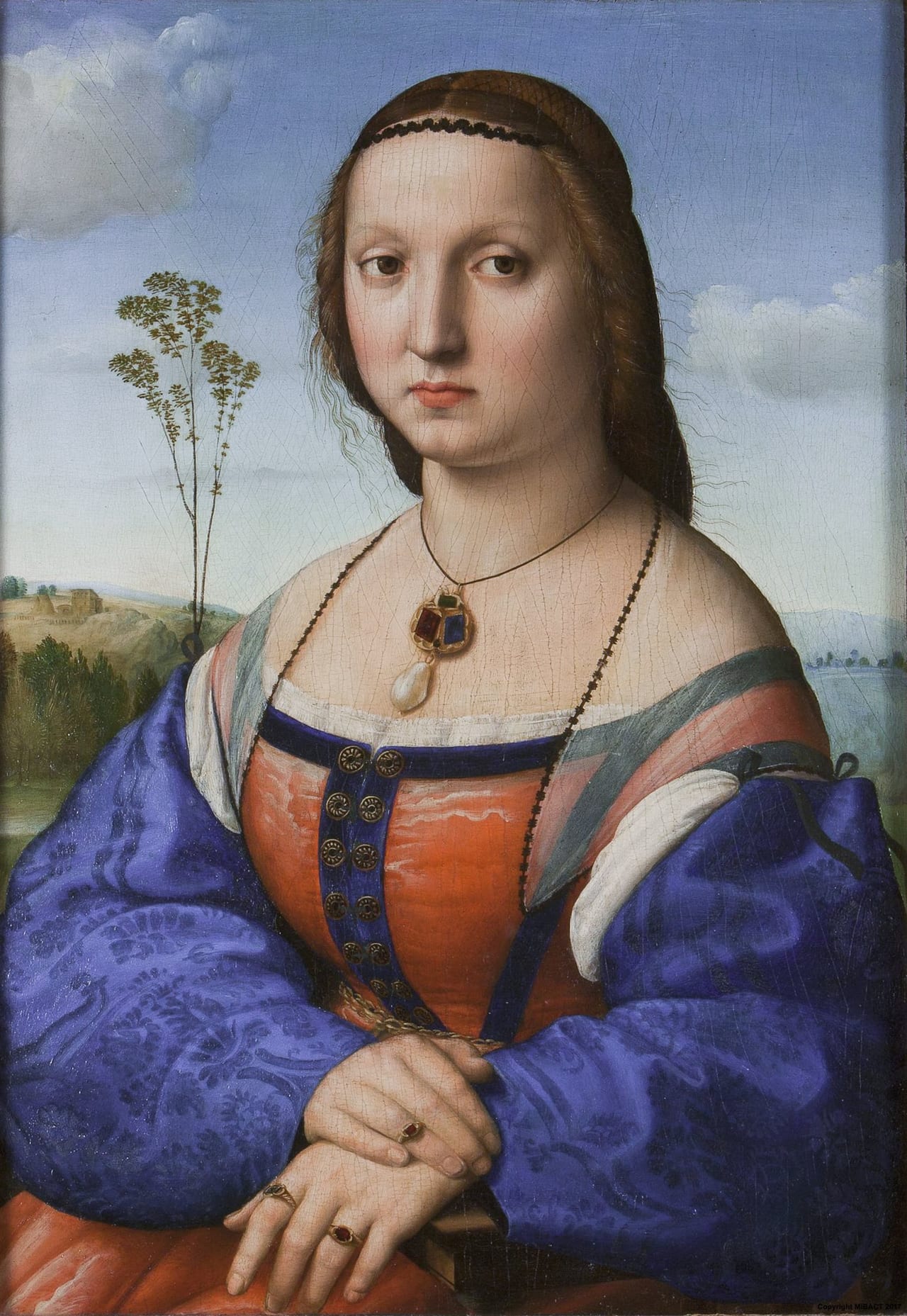
Portrait of Maddalena Doni
Raphael · 1505
Palazzo Pitti
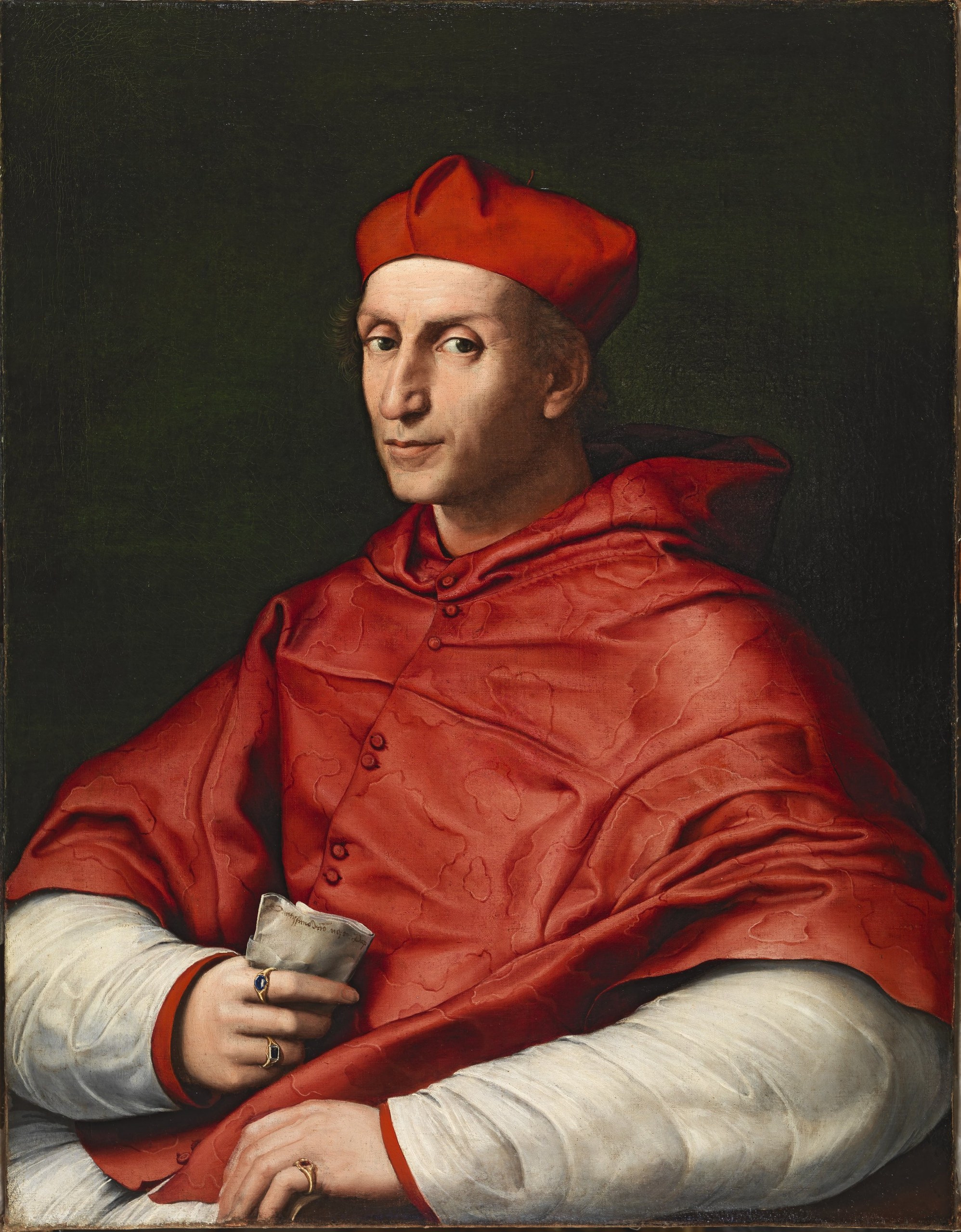
Portrait of Cardinal Bibbiena
Raphael · 1516
Palazzo Pitti
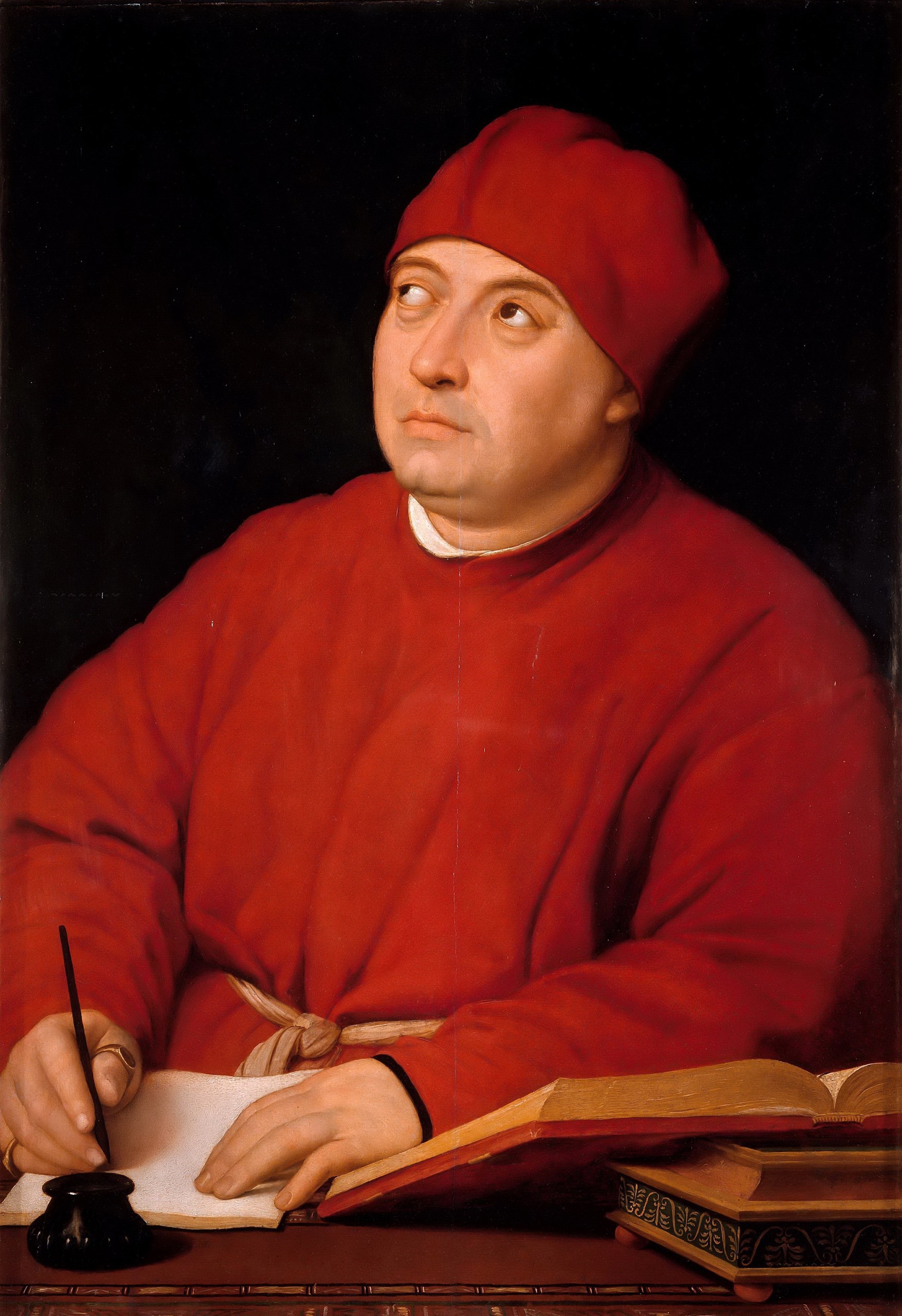
Portrait of Tommaso Inghirami, called Fedra
Raphael · 1510
Palazzo Pitti
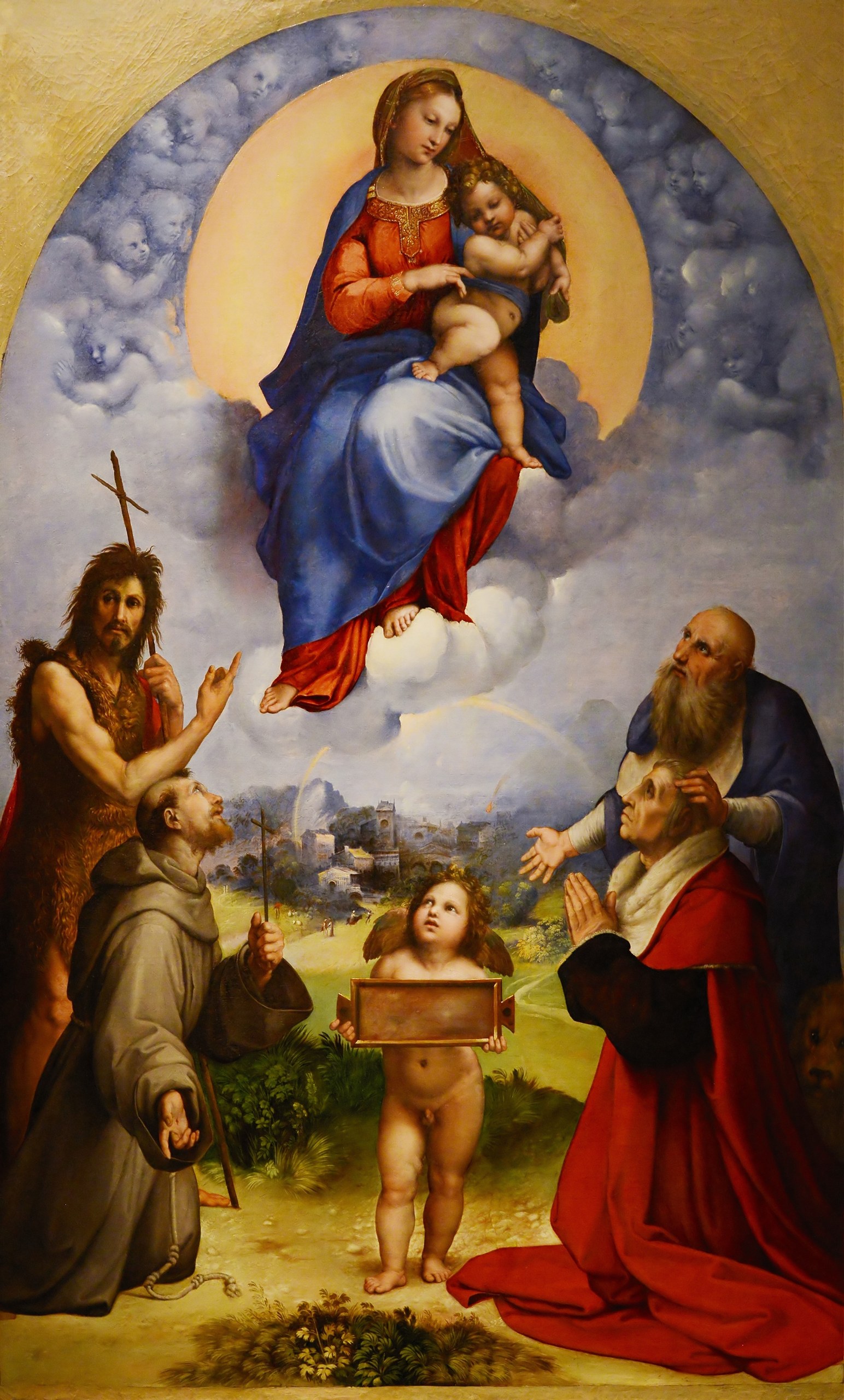
Madonna of Foligno
Raphael · 1511
Vatican Museums
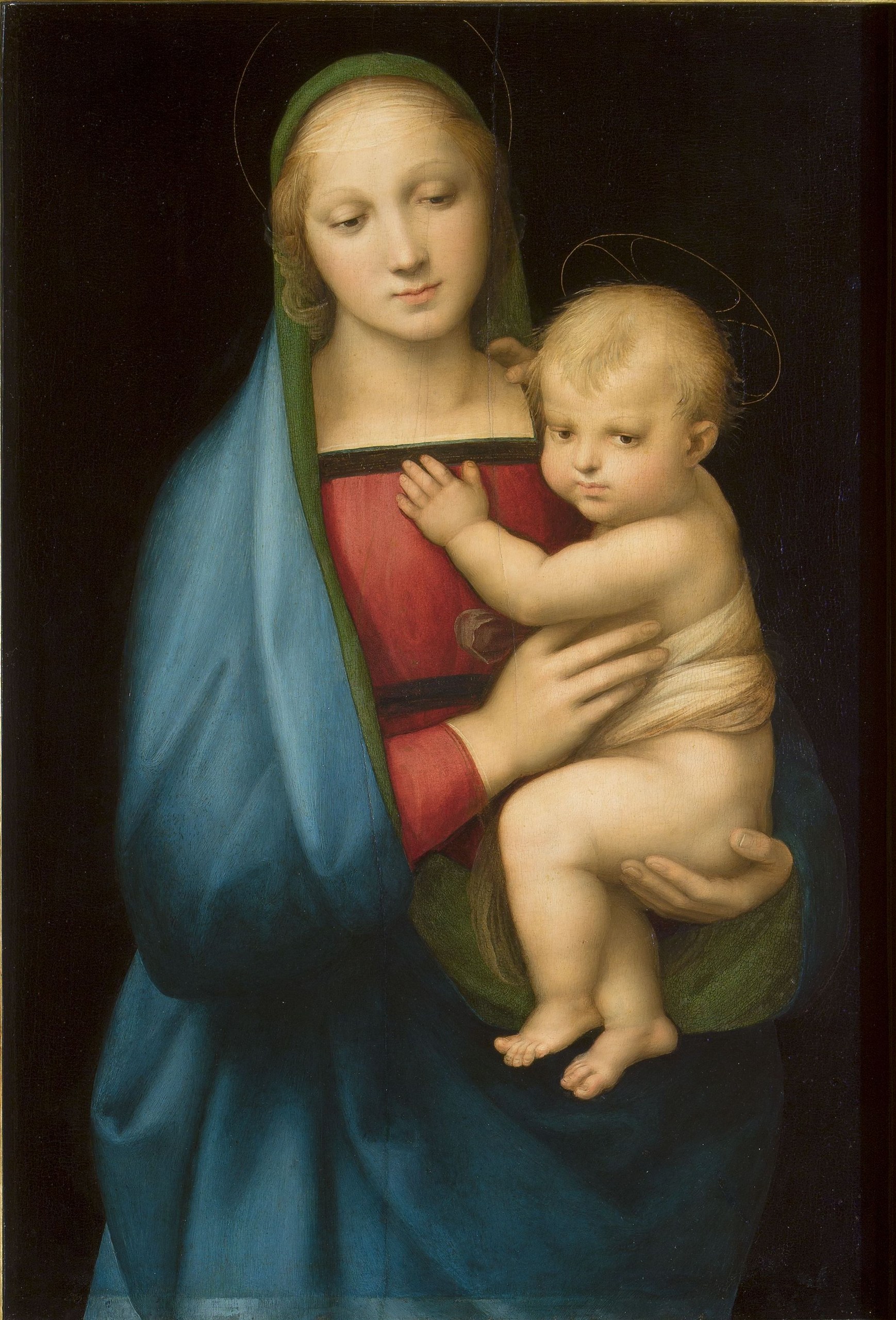
Madonna del Granduca
Raphael · 1506
Palazzo Pitti
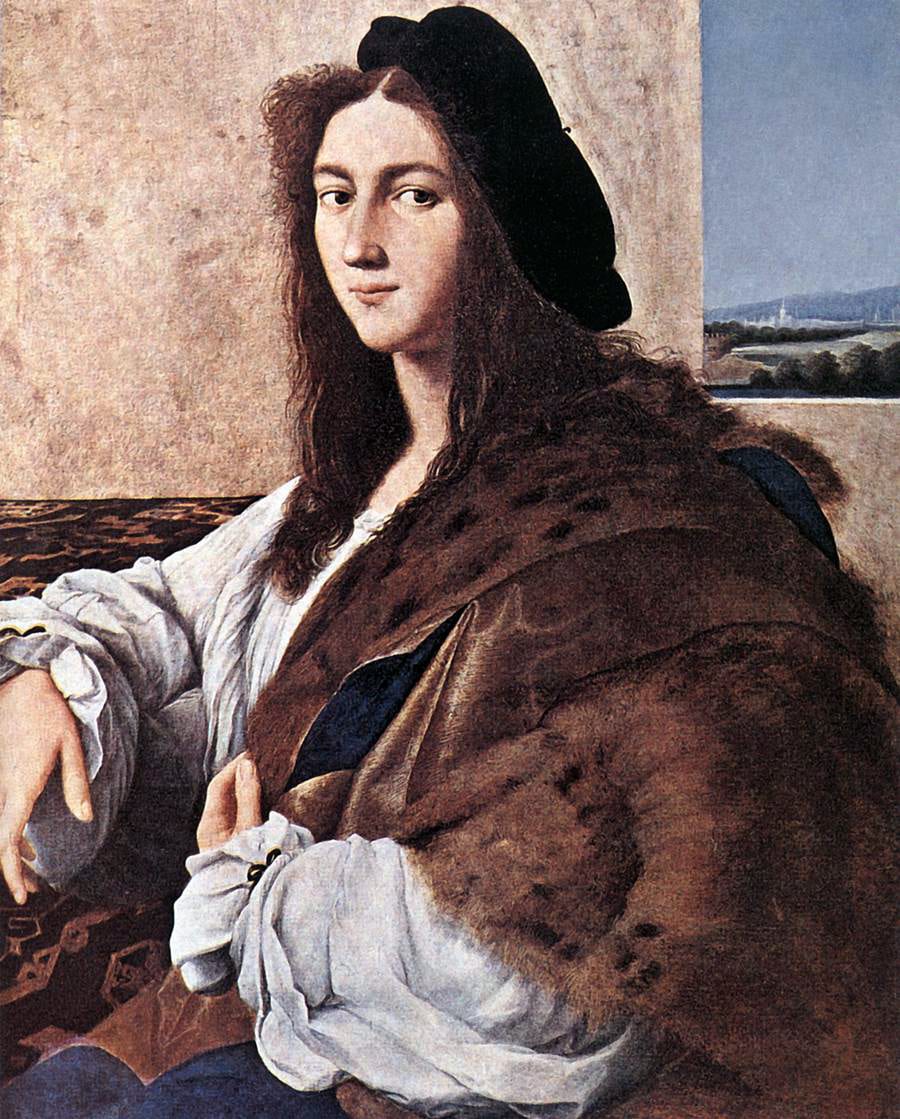
Portrait of a Young Man
Raphael · 1513
National Museum in Kraków