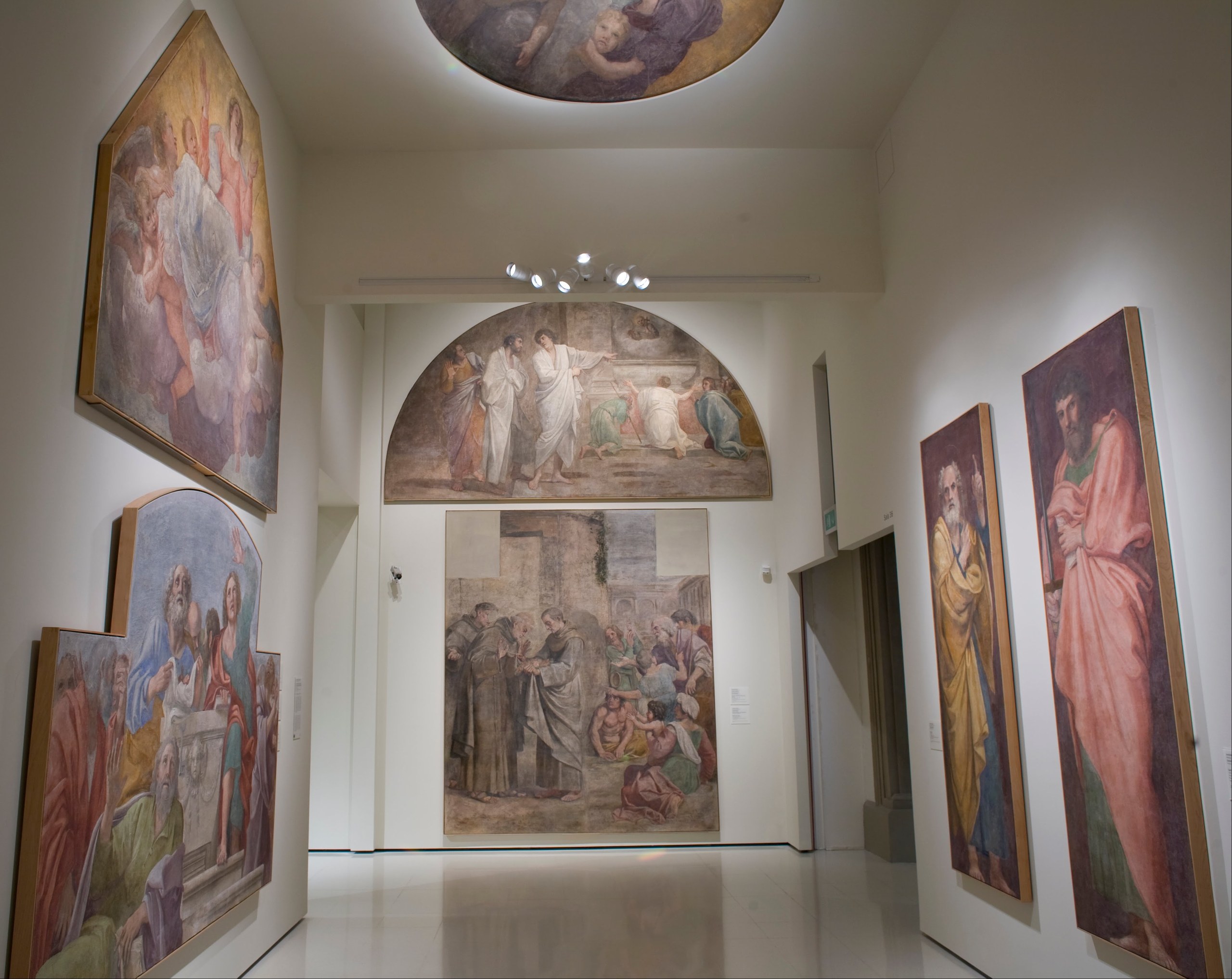
About this work
The mural paintings from the Herrera Chapel are a group of mural paintings by Annibale Carracci and collaborators, of around 1602, now divided between the National Art Museum of Catalonia in Barcelona, and the Museo del Prado in Madrid. They are frescoes that were painted for a chapel in Rome around 1604, but later transferred to canvas and moved to Spain by 1851. In 1602, the Spanish nobleman Juan Enriquez de Herrera dedicated a chapel to the Spanish Franciscan Saint (Didacus or) Diego de Alcala in what is now Nostra Signora del Sacro Cuore in Rome, but was then "Saint James of the Spanish", the Spanish national church in Rome.
About Annibale Carracci
Annibale Carracci was an Italian painter and instructor, active in Bologna and later in Rome. Along with his younger brother Agostino Carracci and elder cousin Ludovico Carracci (with whom he also worked collectively), Annibale was one of the progenitors, if not founders of a leading strand of the Baroque style, borrowing from styles from both north and south of their native city, and aspiring for a return to classical monumentality, but adding a more vital dynamism. Painters working under Annibale at the gallery of the Palazzo Farnese would be highly influential in Roman painting for decades.
Where it hangs
mural paintings from the Herrera Chapel is in the collection of Museu Nacional d'Art de Catalunya.
More by Annibale Carracci
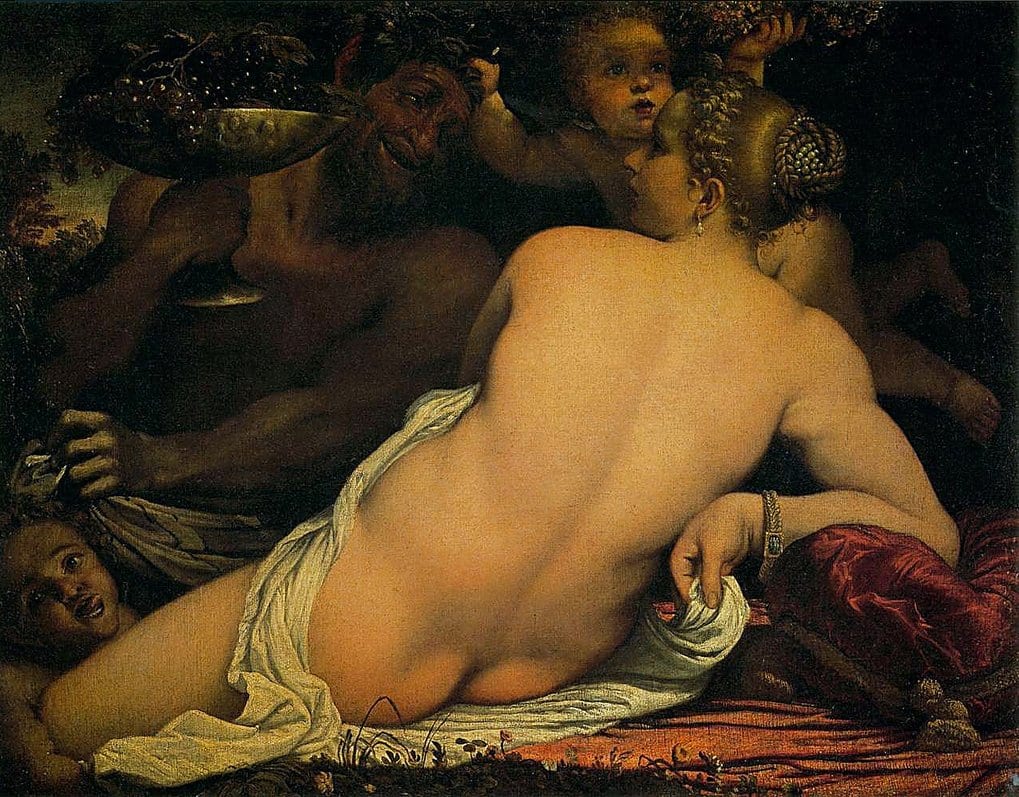
Venus with a Satyr and Cupids
Annibale Carracci · 1588
Uffizi Gallery