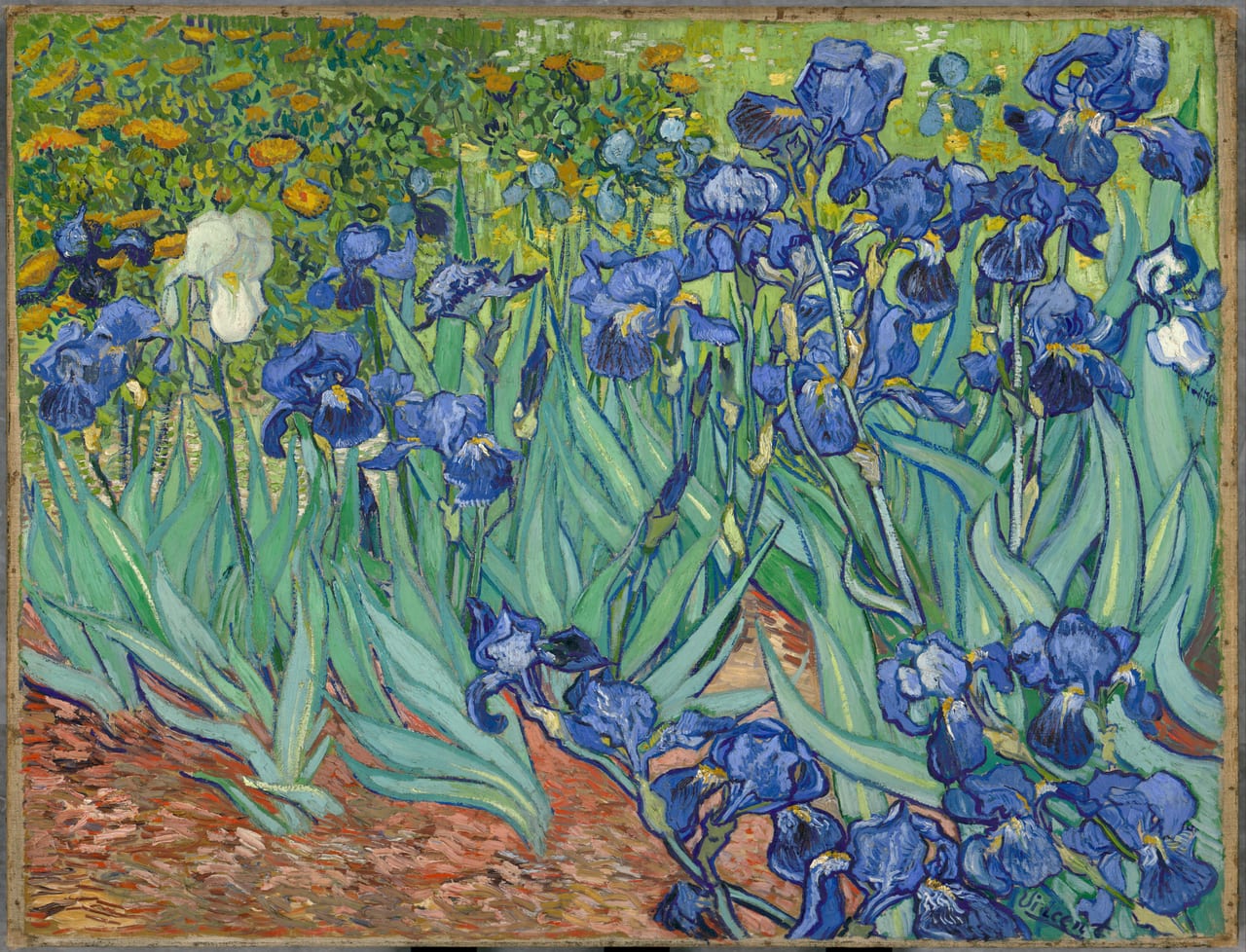
Irises
Vincent van Gogh · 1889

Post-Impressionism
What Impressionism opened, four painters took further: after the last group show of 1886, Cézanne, Gauguin, Seurat and van Gogh each bent the new light to a purpose of his own.
Play 12 works from this collection on your TV, phone or tablet with Momentable Art TV.
Play CollectionFour directions from one starting point
The word covers what became of Impressionism after the group's final Paris exhibition in 1886. It is usually kept for four major figures, who each extended the new painting along a road of his own: Cézanne, Gauguin, Seurat and van Gogh.
Cézanne, in his own words, wanted to "re-do Poussin from nature": to give the Impressionists' colour the permanence of the old masters' construction. Seurat turned the study of light into optics, building an image dot by dot from measured colour. Gauguin chose imagination over observation, trading Paris for Brittany and the South Seas. Van Gogh kept the motif in front of him and let the brush carry the feeling directly.
The word itself
Roger Fry, a British painter and critic, coined the term in 1910, for an exhibition he called Manet and the Post-Impressionists. The artists never founded or joined anything; the name is a later umbrella for a generation that came after Impressionism, and its four principals never worked as a group.
Around the four stood others of the same generation, above all Toulouse-Lautrec, whose posters and nightclub scenes carry the era's freedom with line and colour into Paris after dark. Used strictly, the term covers French art between 1886 and 1914, and writers have stretched it wider at both edges.
Artists
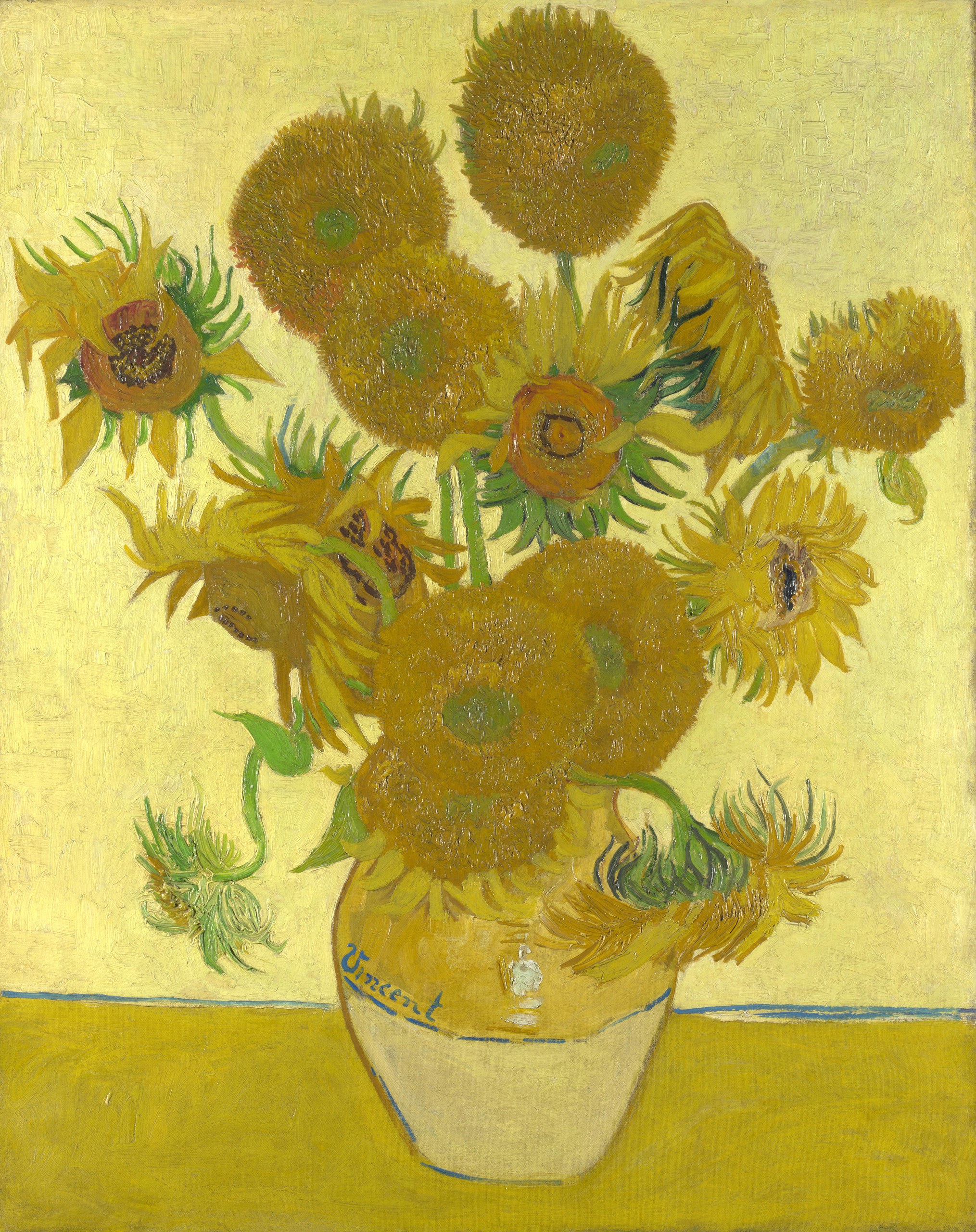
Colour and brush used as feeling: he painted in front of the subject, and the strokes carry his response straight onto the canvas. Scarcely appreciated in his lifetime, today the best loved of the painters who followed Impressionism.
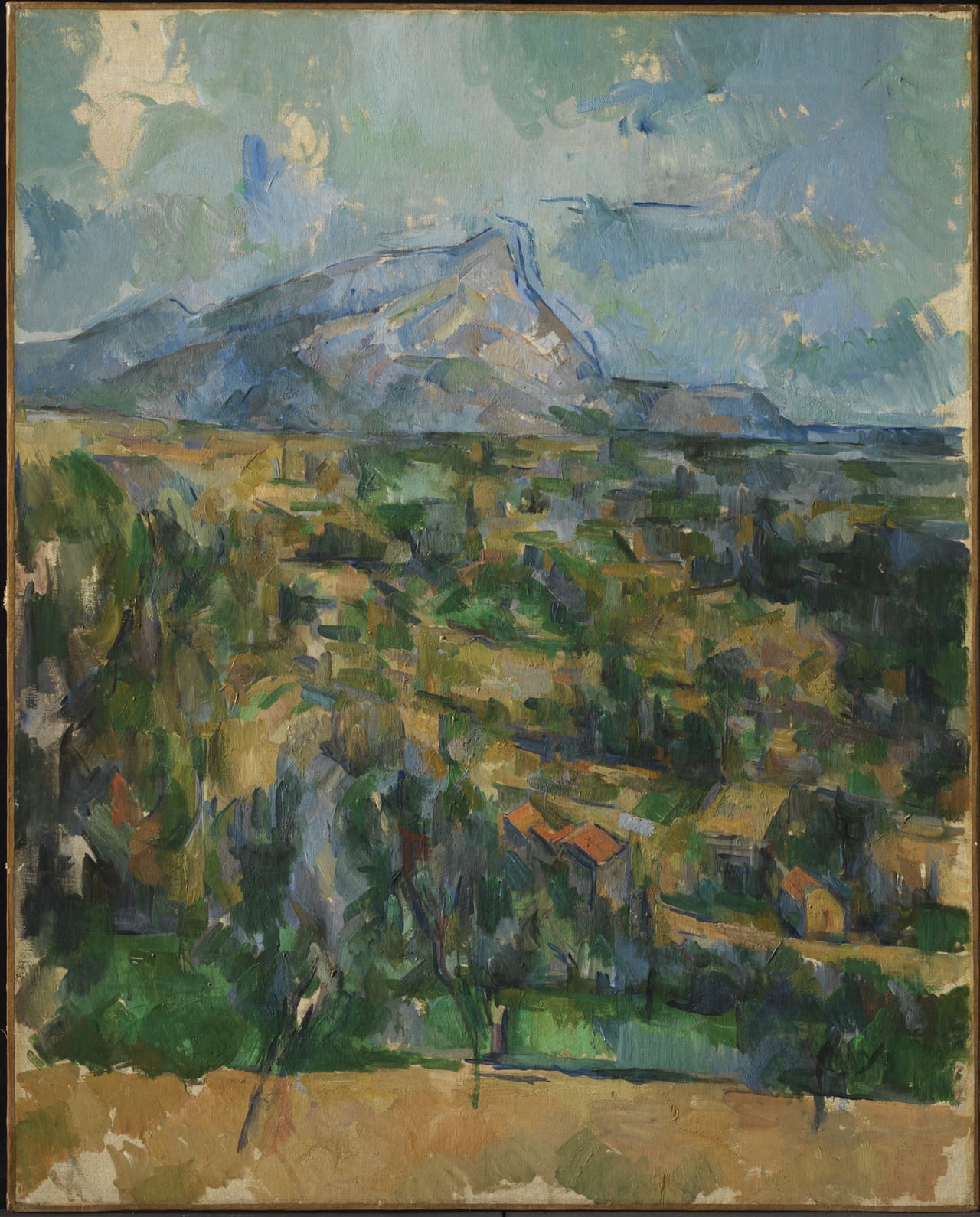
Showed beside the Impressionists while pursuing other aims; the constructive solidity of his painting steered Picasso and much of the art of the century that followed.
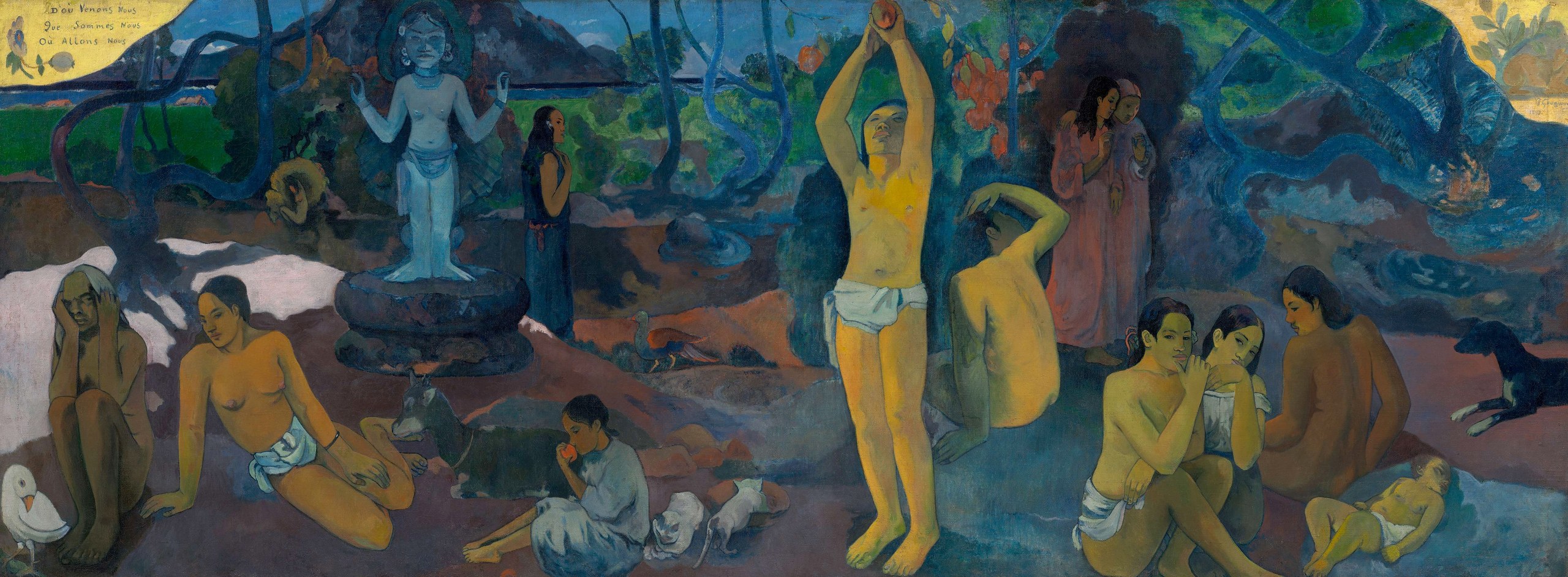
Paris-born, the son of a journalist, he left stockbroking in 1883 and gave up painting from nature for subjects from the imagination; from 1891 Tahiti supplied his themes.
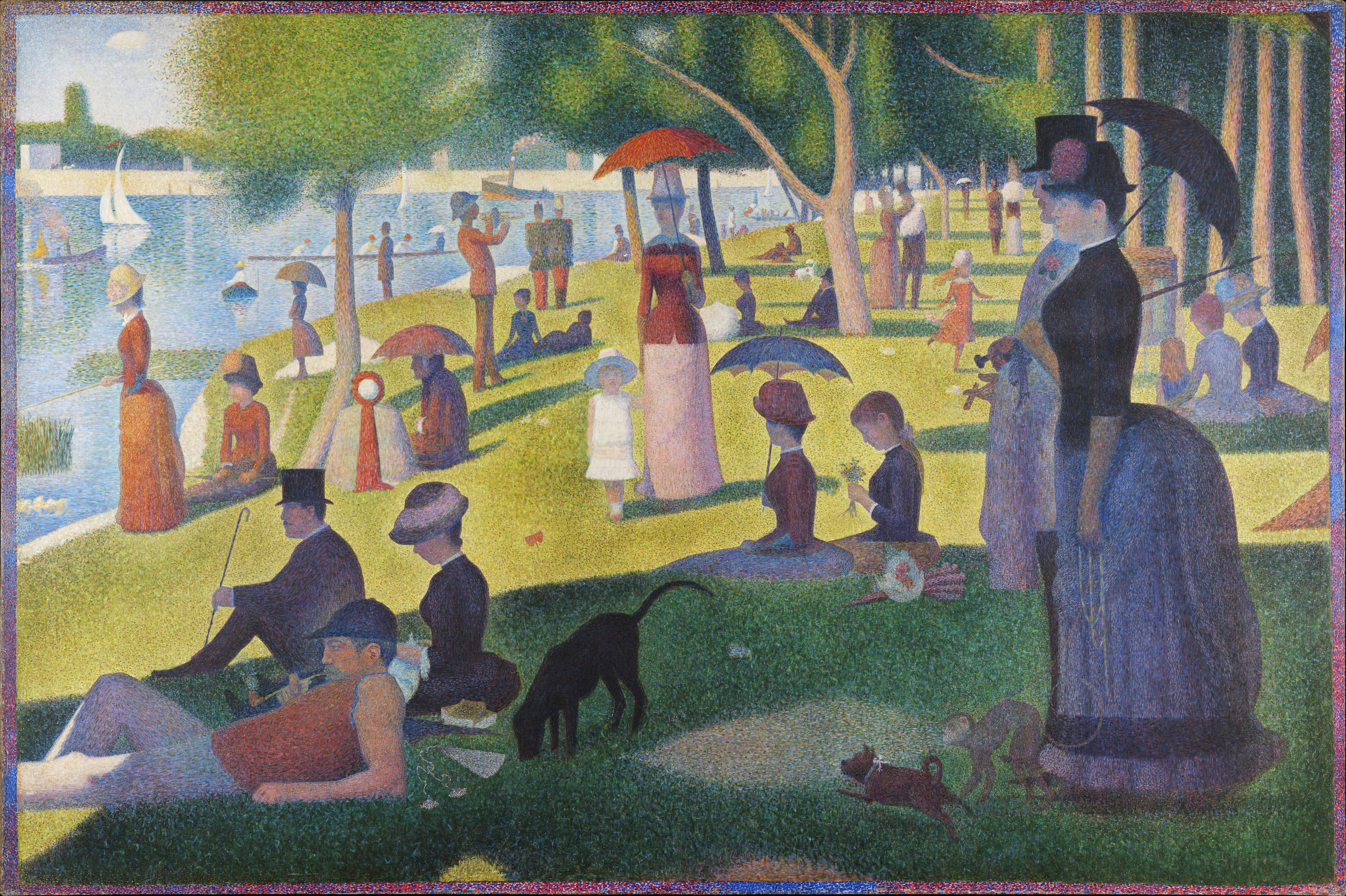
The movement's scientist, who rebuilt the Impressionist study of light and colour as a method, laying pure colour down dot by dot.
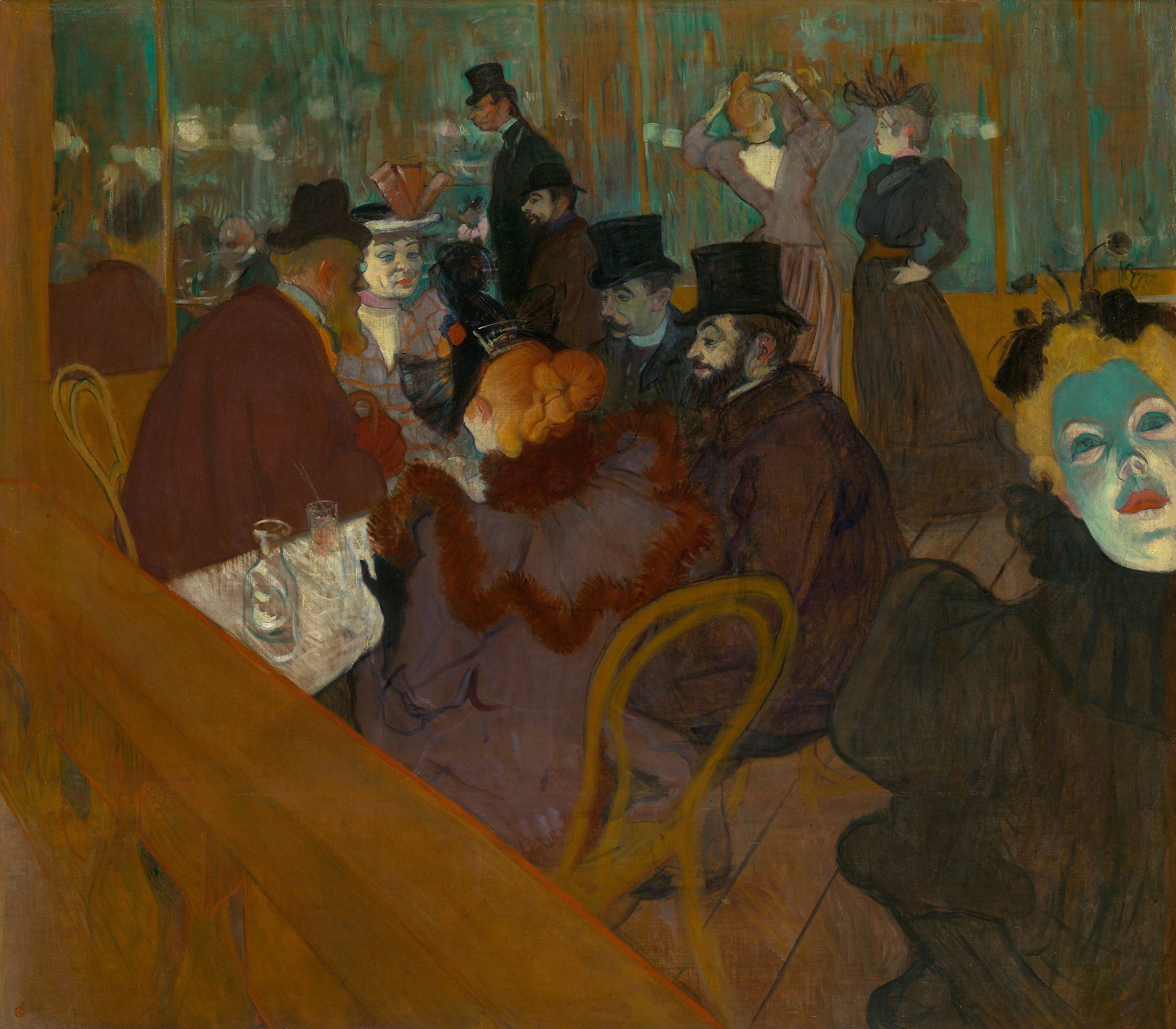
Paris after dark: dancers, clowns and drinkers. Chiefly a draftsman and printmaker, remembered above all for the posters he made for the city's venues.
Artworks
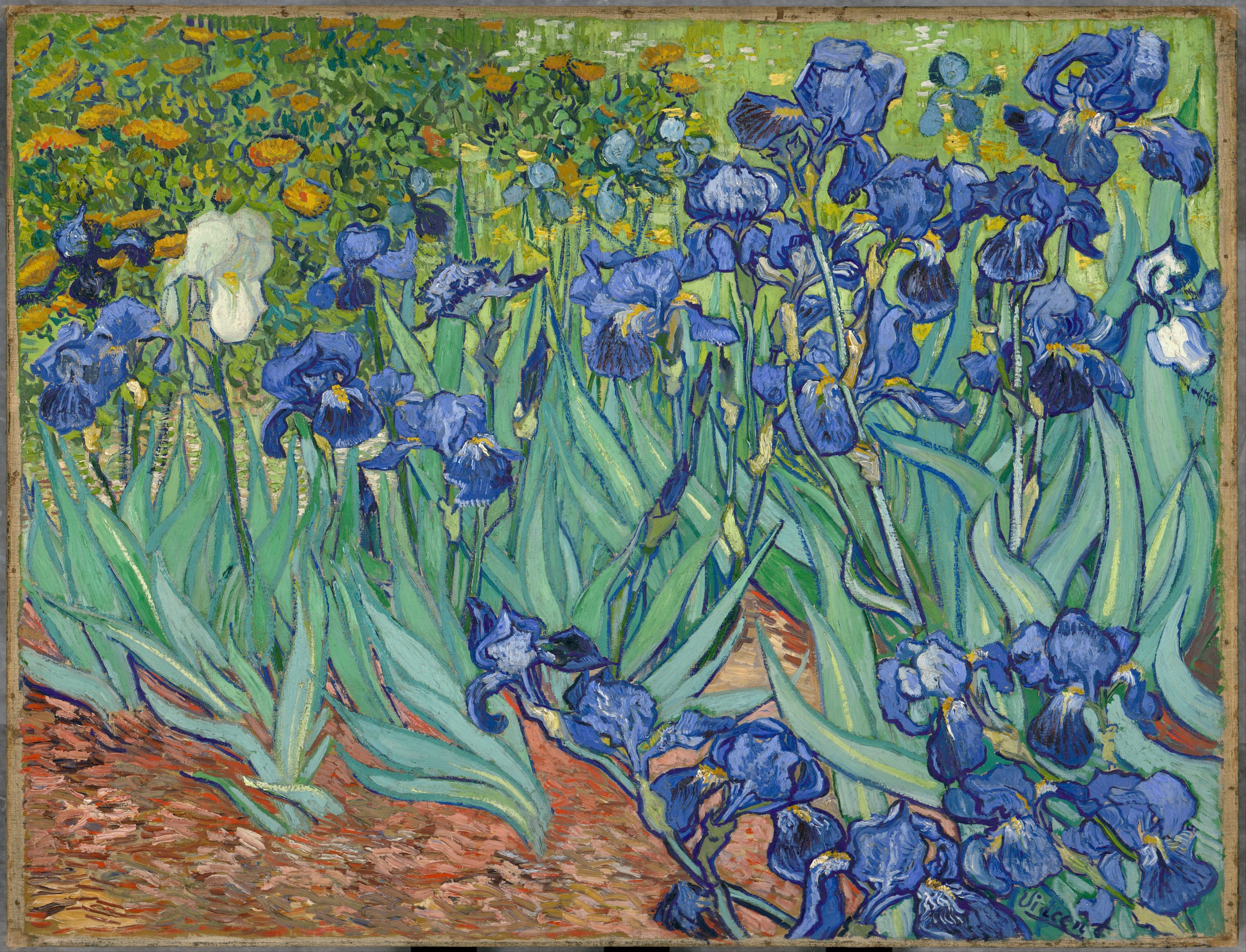
Irises
Vincent van Gogh · 1889
Irises. Painted in 1889 in the garden of the Saint-Rémy asylum, one of several hundred works from his last year: a cropped bank of flowers, deep blues against red-orange earth.
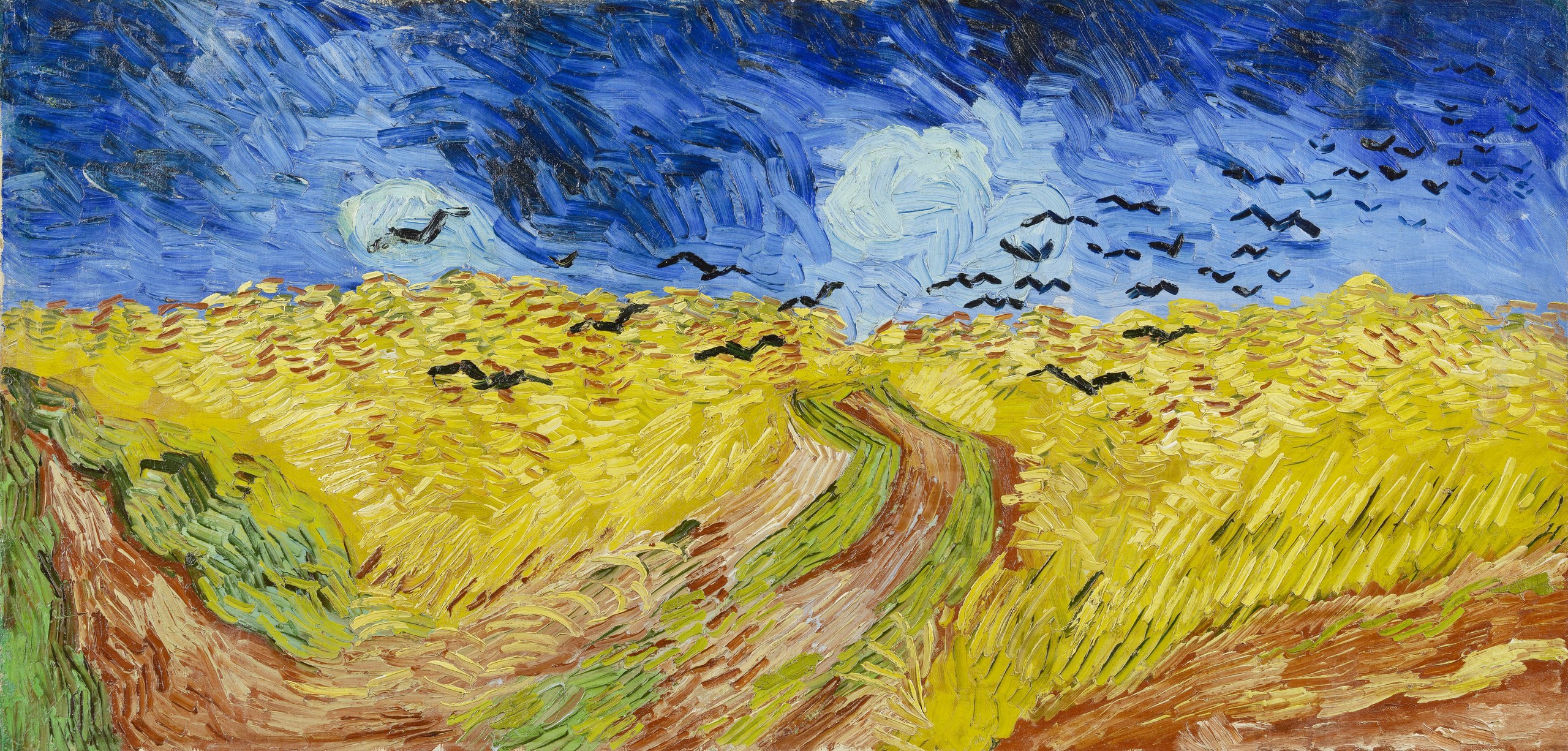
Wheatfield with Crows
Vincent van Gogh · 1890
Wheatfield with Crows. Three paths running through gold under a sky of two blues, crows lifting off the sheaves. A July 1890 canvas, counted by many critics among his greatest.
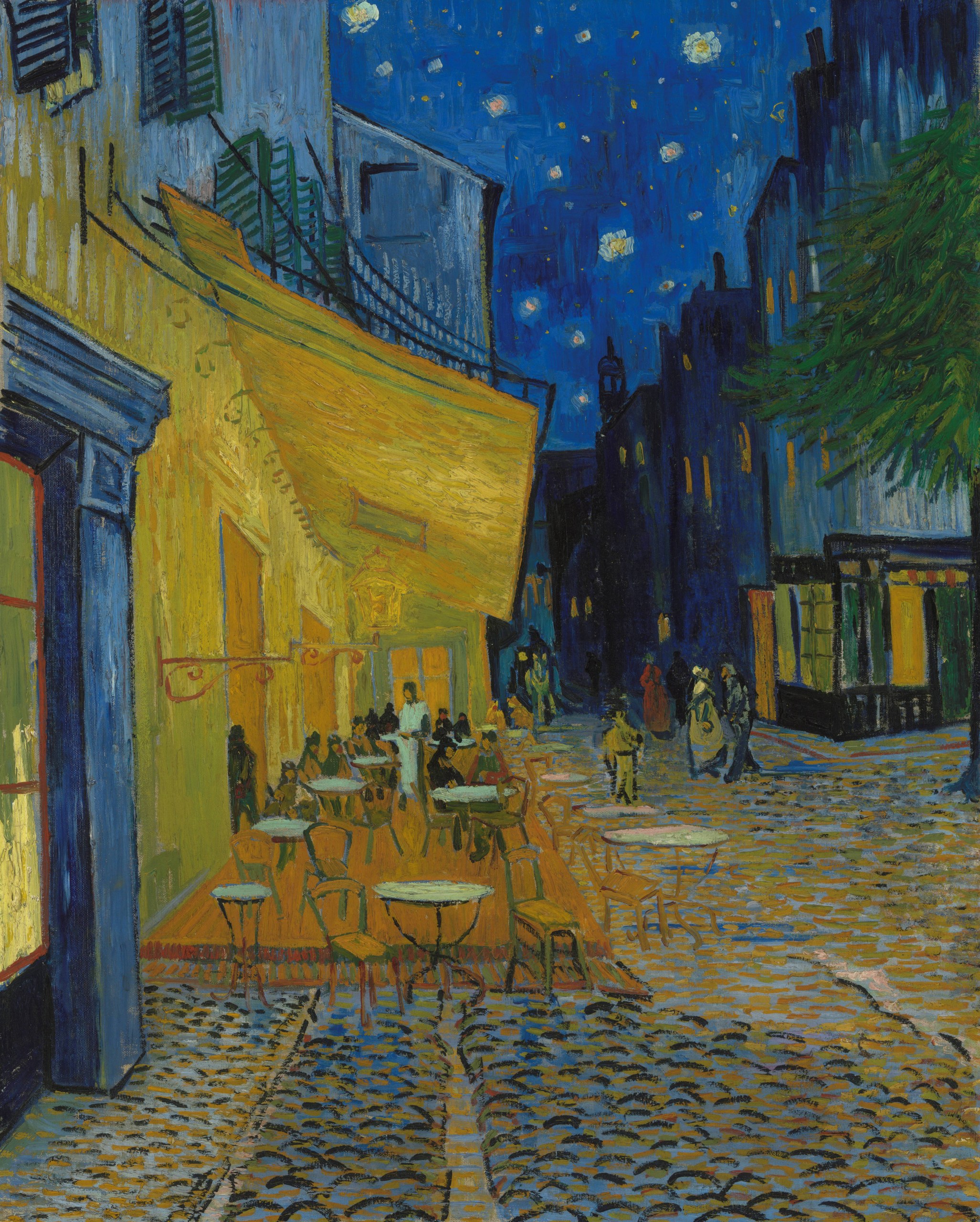
Café Terrace at Night
Vincent van Gogh · 1888
Café Terrace at Night. A lit terrace spilling yellow onto the stones, the night beyond it blue rather than black. Painted in Arles in mid-September 1888 and unsigned, though the artist described it in three letters.
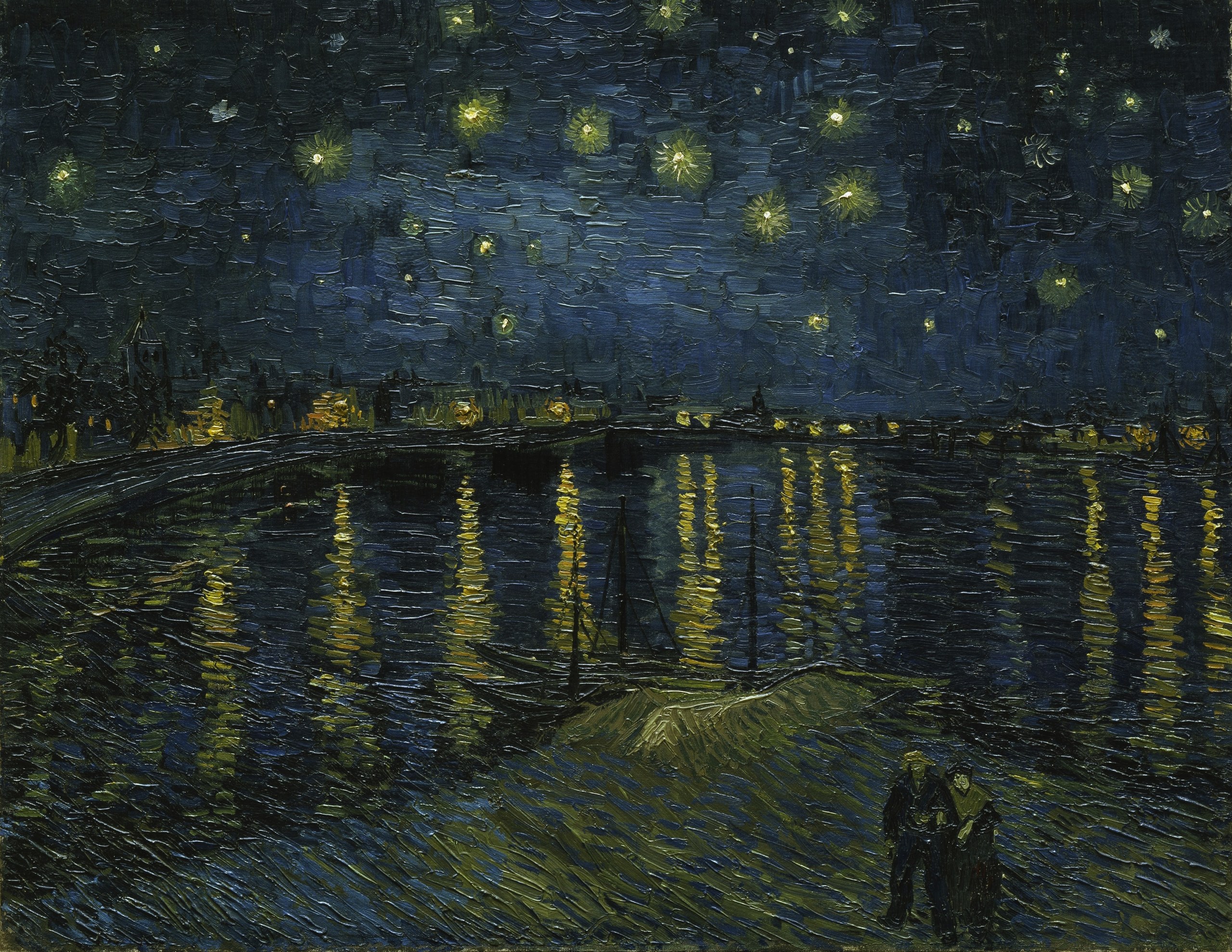
Starry Night Over the Rhone
Vincent van Gogh · 1888
Starry Night Over the Rhone. The night sky doubled in the river, painted from the bank of the Rhône, a street or two from the Yellow House he was renting.
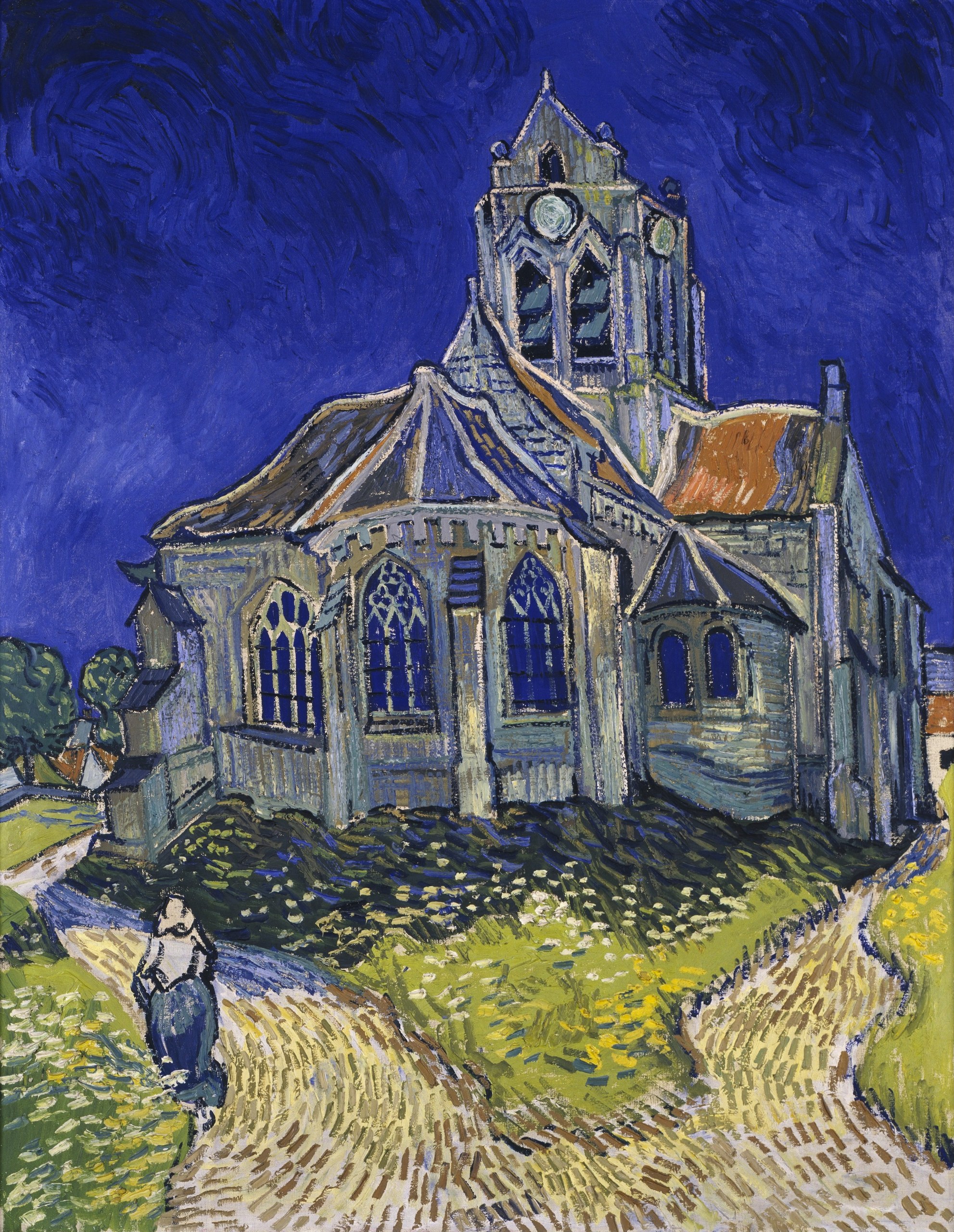
The Church at Auvers
Vincent van Gogh · 1890
The Church at Auvers. The parish church swollen and split, its nave bending like a living thing, painted in June 1890 weeks before the artist's death; the Musée d'Orsay holds it now.
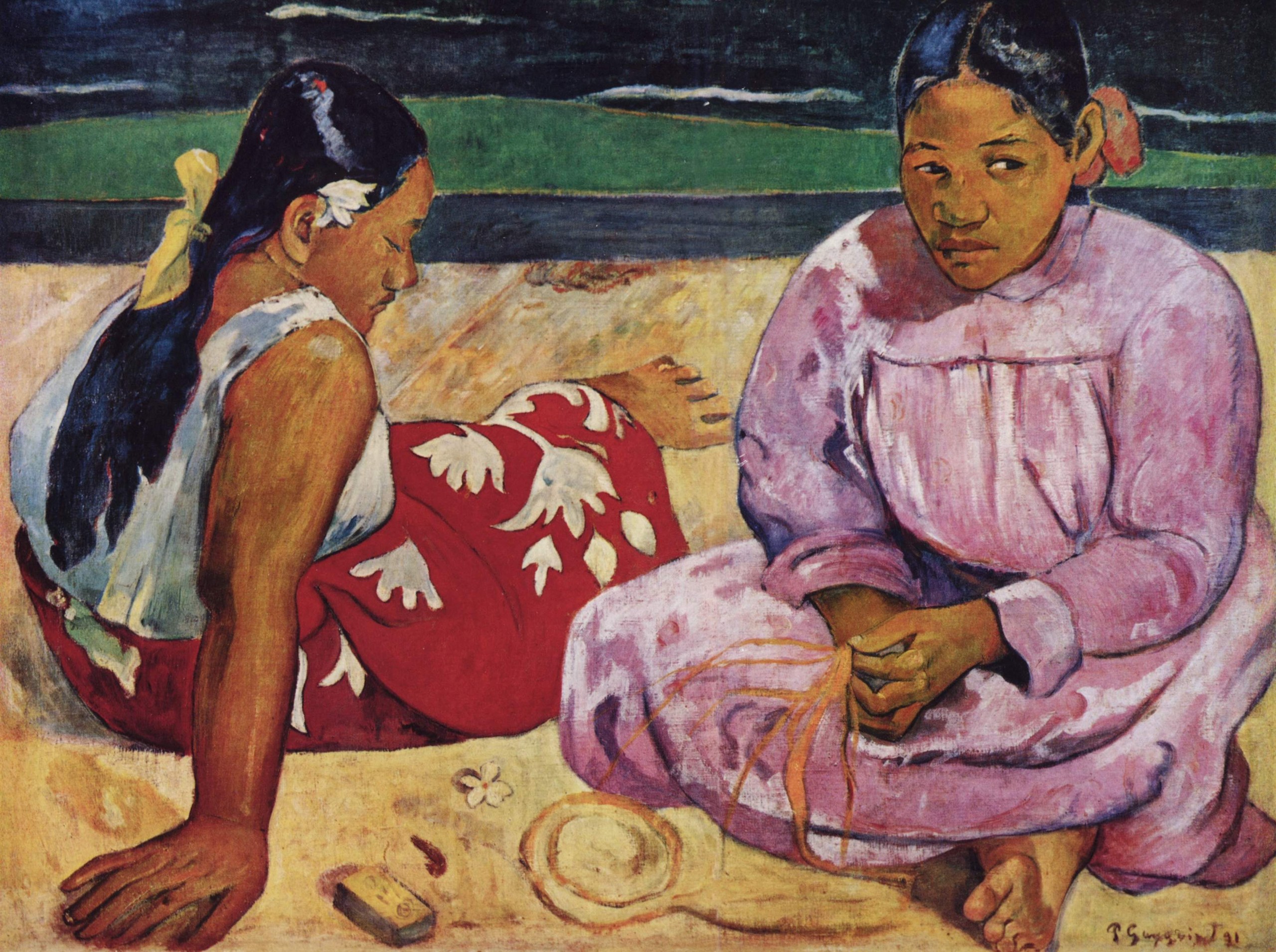
Tahitian Women on the Beach
Paul Gauguin · 1890
Tahitian Women on the Beach. Two women on a Pacific shore, one dark against the sand, one bright, from Gauguin's first stay in Tahiti; the Musée d'Orsay holds it.
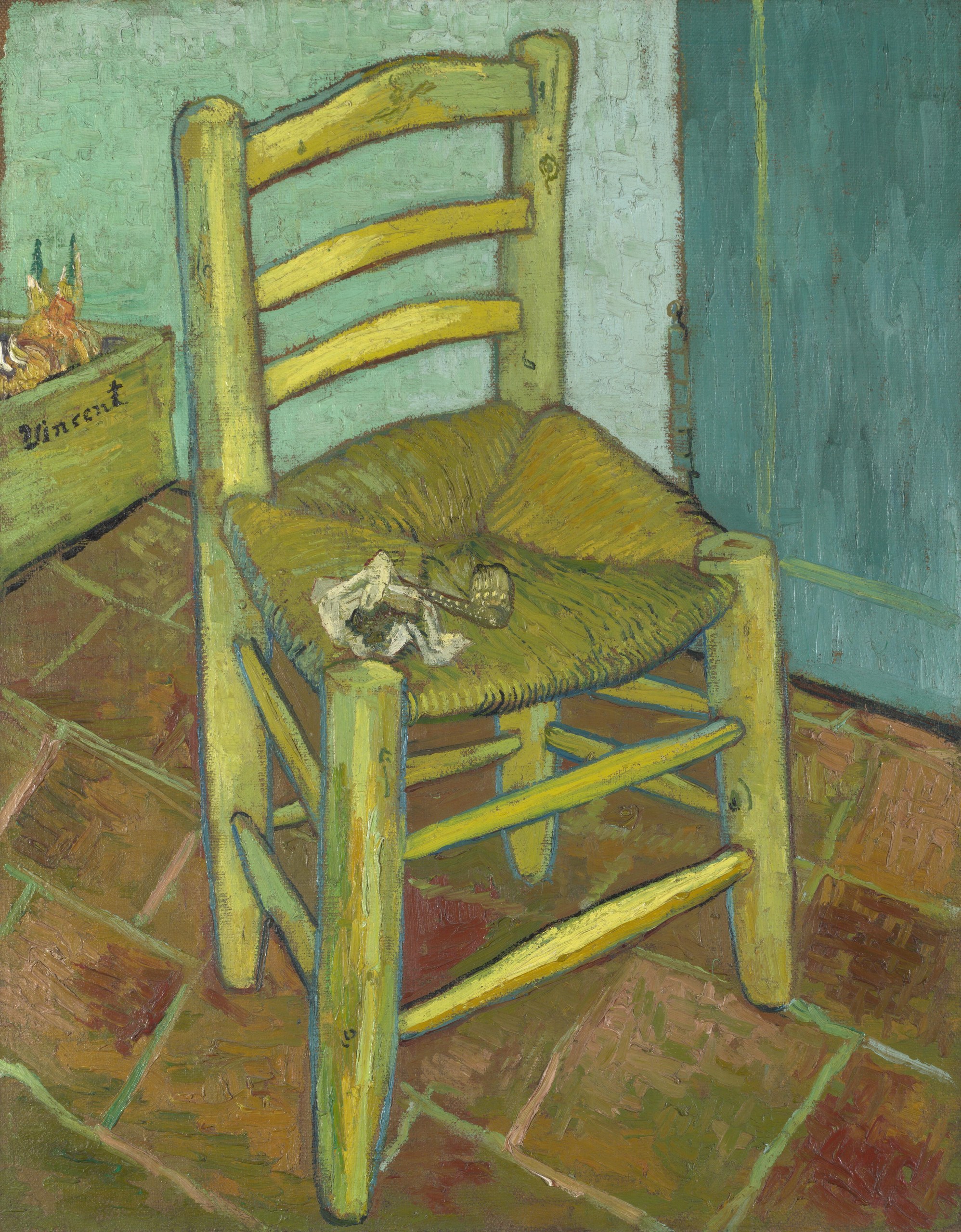
Van Gogh's Chair
Vincent van Gogh · 1889
Van Gogh's Chair. A rustic wooden chair with a woven straw seat, a pipe and a pouch of tobacco on it, on a tiled floor: an empty-chair portrait of its owner, painted in the Yellow House and kept by the National Gallery in London.
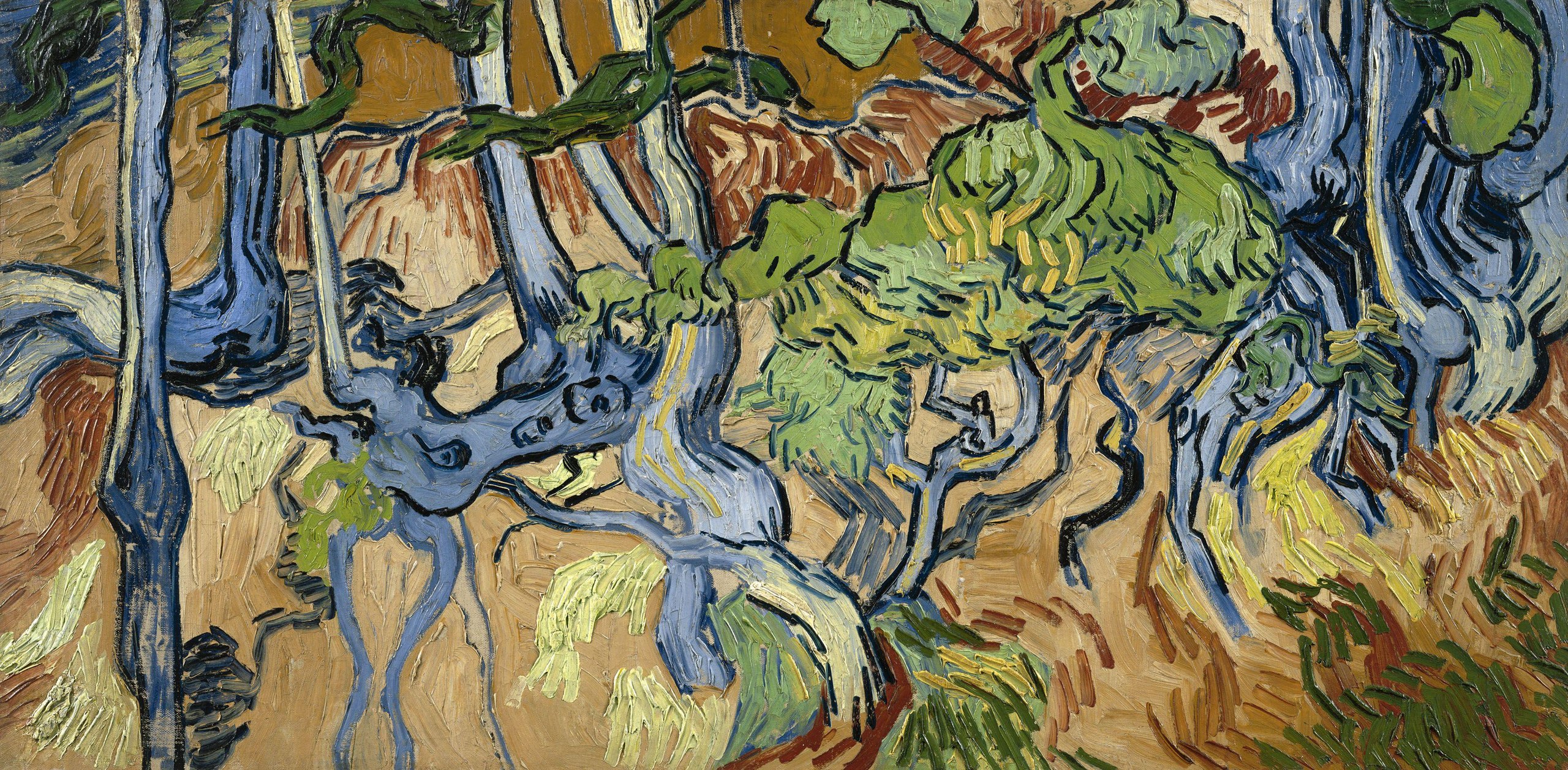
Tree Roots
Vincent van Gogh · 1890
Tree Roots. Trunks and roots climbing a blue hillside, painted in July 1890 at Auvers-sur-Oise on one of the double-square canvases of his last landscapes, and likely the final picture he made.
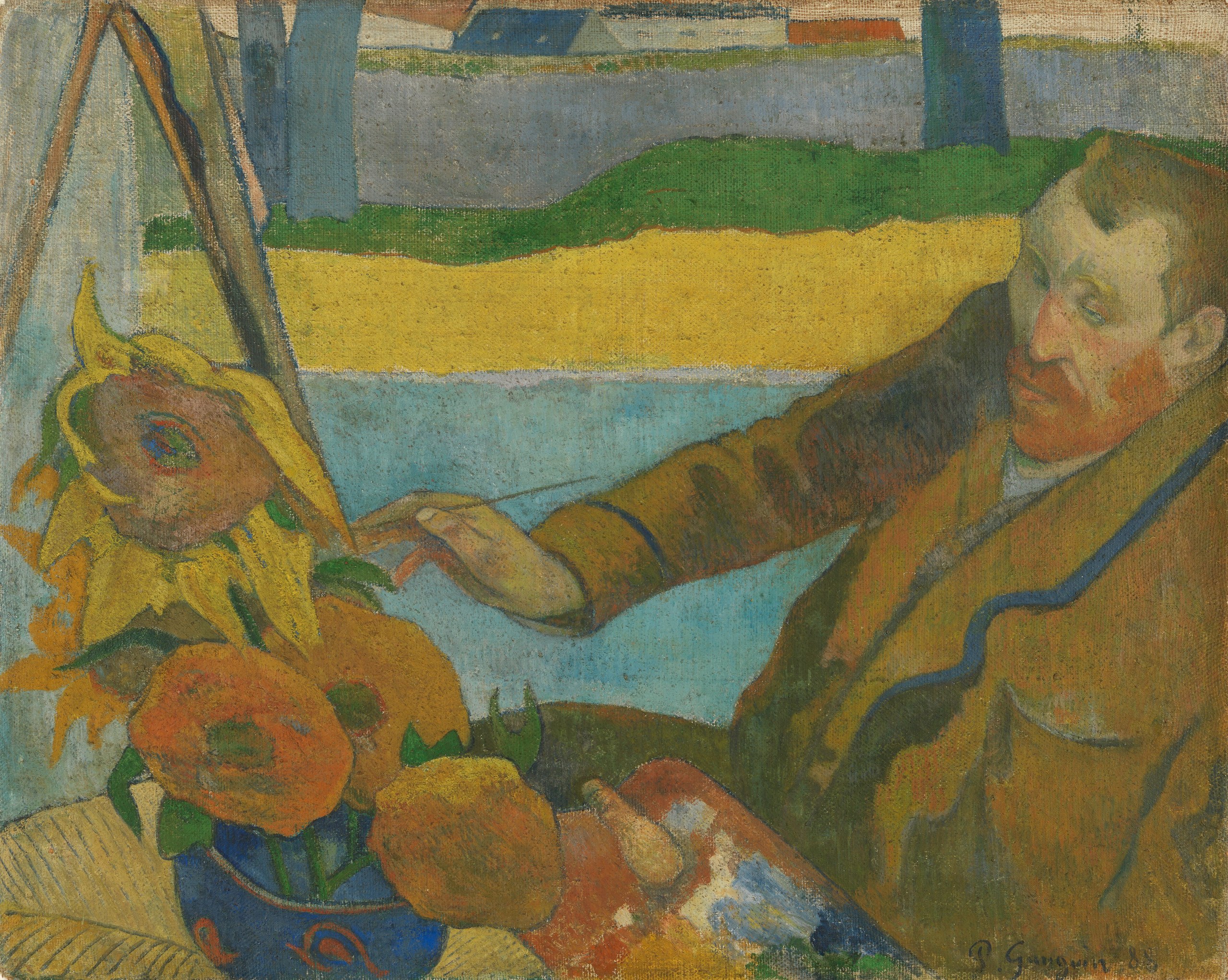
Vincent van Gogh Painting Sunflowers
Paul Gauguin · 1888
Vincent van Gogh Painting Sunflowers. Gauguin's portrait of van Gogh at his easel, painted while Gauguin lived with him in Arles; it belongs to the Van Gogh Museum in Amsterdam.
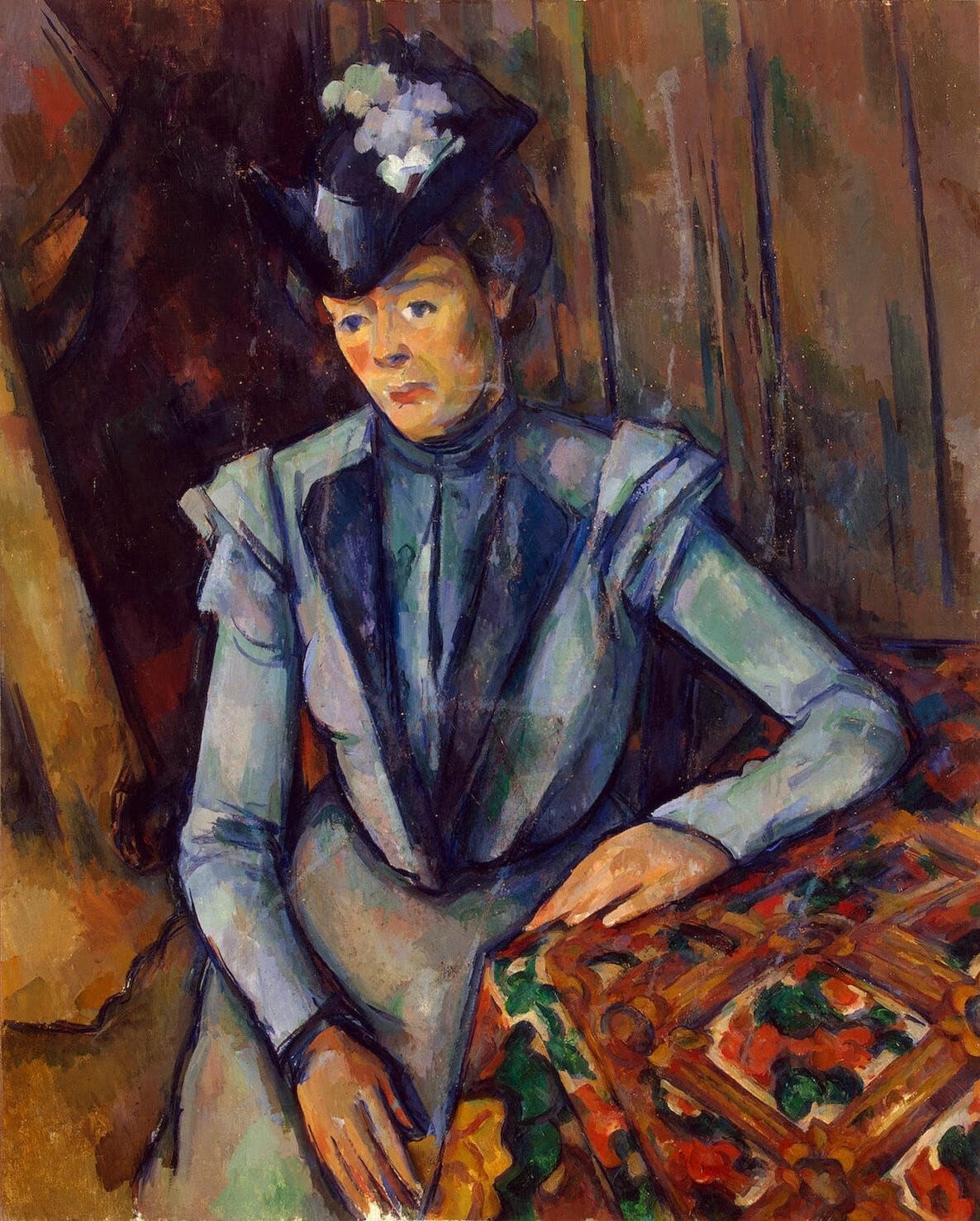
Lady in Blue
Paul Cézanne · 1904
Lady in Blue. Among Cézanne's final female portraits, its sitter his governess Madame Brémond; the colour and construction point forward to Fauvism and Cubism.
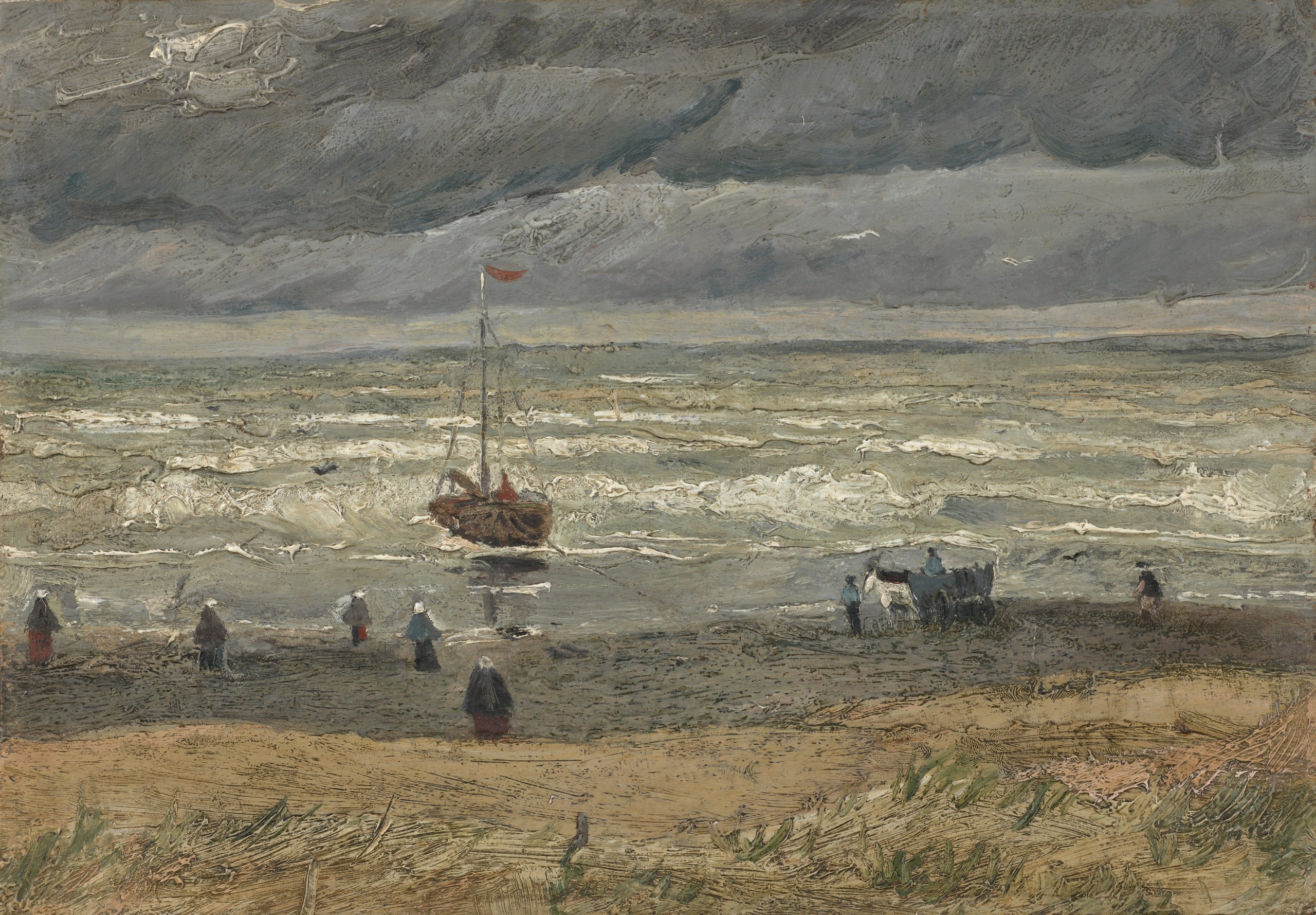
View of the Sea at Scheveningen
Vincent van Gogh · 1882
View of the Sea at Scheveningen. An early canvas painted on the beach near The Hague in August 1882, while he was still teaching himself: the sea as weather before it became light.
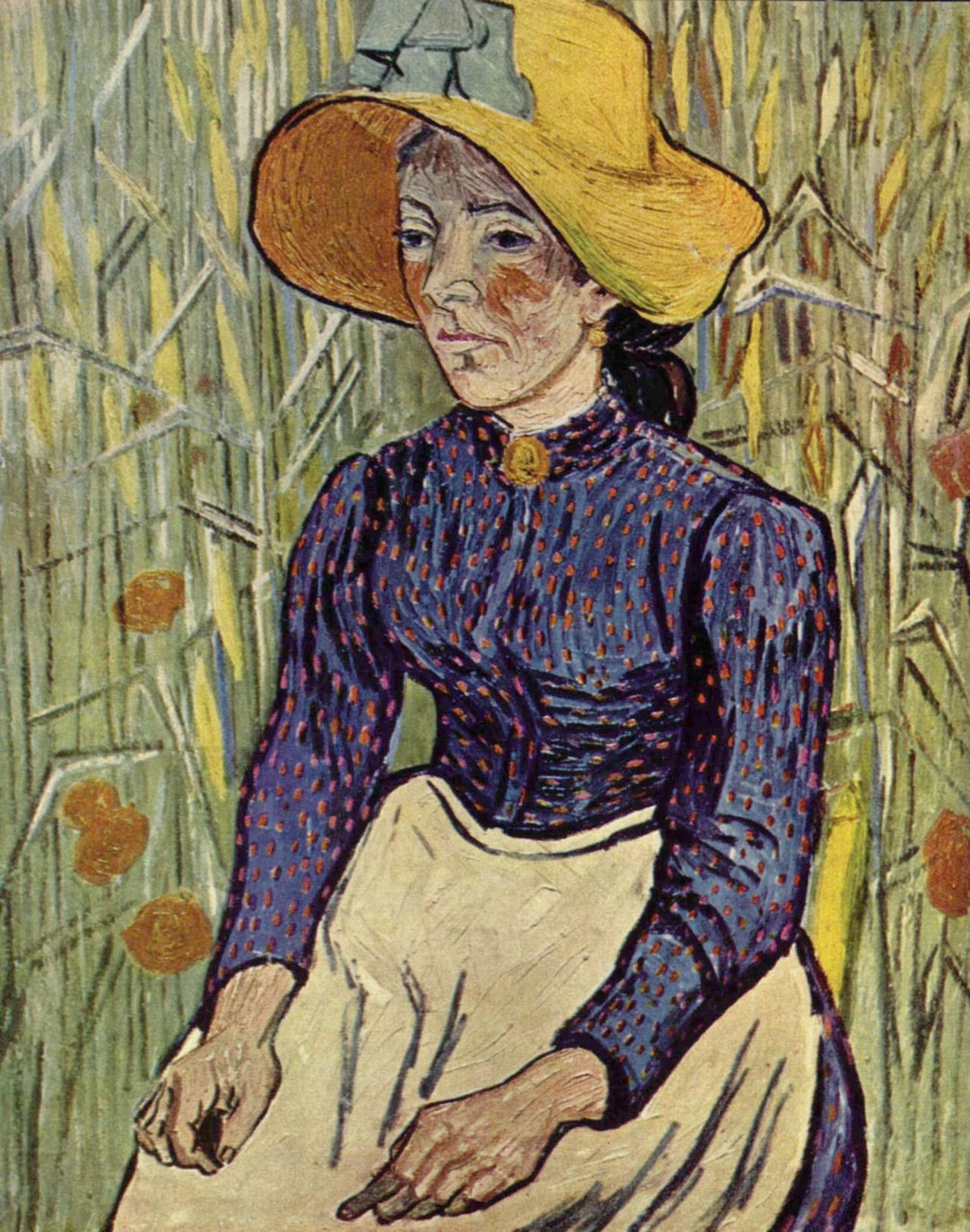
Peasant Woman Against a Background of Wheat
Vincent van Gogh · 1890
Peasant Woman Against a Background of Wheat. A woman in a blue smock against a field of gold, an 1890 canvas of which he made several versions.
Sources
- Tate, “Post-impressionism”
- National Gallery, London, “Vincent van Gogh”
- National Gallery, London, “Paul Gauguin”
- National Gallery, London, “Paul Cezanne”
- National Gallery, London, “Henri de Toulouse-Lautrec”
- National Gallery, London, “Georges Seurat”
- National Gallery, London, “Pierre-Auguste Renoir”
- Wikipedia, “Irises (painting)”
- Wikipedia, “Wheatfield with Crows”
- Wikipedia, “Café Terrace at Night”
- Wikipedia, “Starry Night Over the Rhône”
- Wikipedia, “The Church at Auvers”
- Wikipedia, “Tahitian Women on the Beach”
- Wikipedia, “Van Gogh's Chair”
- Wikipedia, “Tree Roots”
- Wikipedia, “Vincent van Gogh Painting Sunflowers”
- Wikipedia, “Lady in Blue (Cézanne)”
- Wikipedia, “Beach at Scheveningen in Stormy Weather”
- Wikipedia, “Peasant Woman Against a Background of Wheat”
- Wikipedia, “Post-Impressionism”
- Wikipedia, “Joaquín Sorolla”
Invite Post-Impressionism into your living room
Play 12 works from this collection on your TV, phone or tablet with Momentable Art TV.