Lewis chessmen
1200

National Museum of Scotland
Edinburgh · Founded 1854
The Lewis chessmen, carved from walrus ivory eight centuries ago, sit here with the whole story of Scotland. Free to enter, with the Scottish collections and the old Royal Scottish Museum’s science and natural history under one roof.
- 2.3M
- Visitors a year
- 1854
- Founded
- Free
- Admission
- Daily 10:00–17:00
- Daily opening hours
20 works from this collection play free on your TV, phone or tablet. Press play and one starts now.
Watch it nowWhat to see
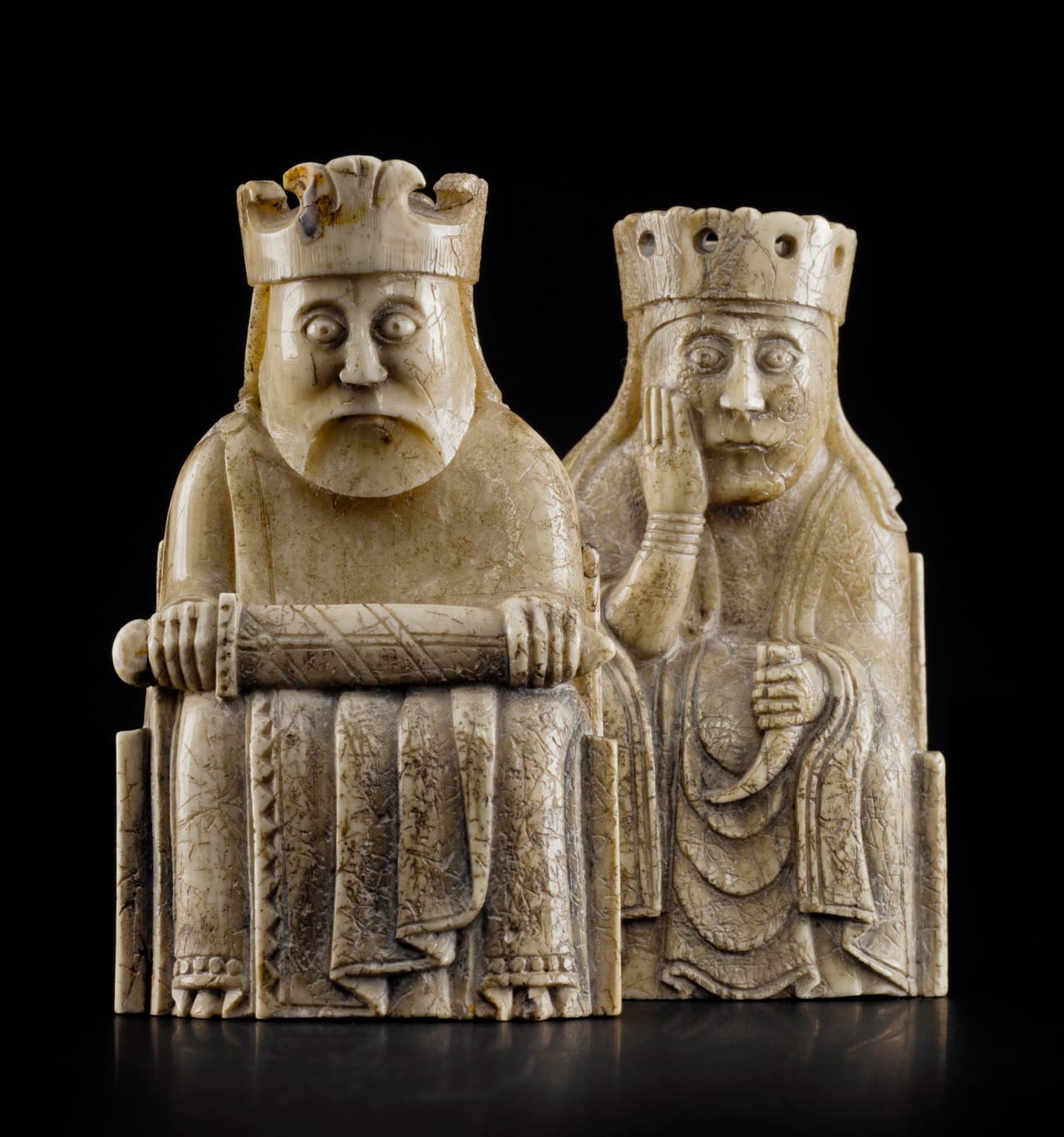
Lewis chessmen
1200
The Lewis chessmen or Uig chessmen, named after the island or the bay where they were found, are a group of distinctive 12th-century chess pieces, along with other game pieces, most of which are carved from walrus ivory. Discovered in 1831 on the Isle of Lewis in the Outer Hebrides of Scotland, they may constitute some of the few surviving medieval chess sets, although it is not clear if a single complete period-accurate set can be assembled from the pieces.
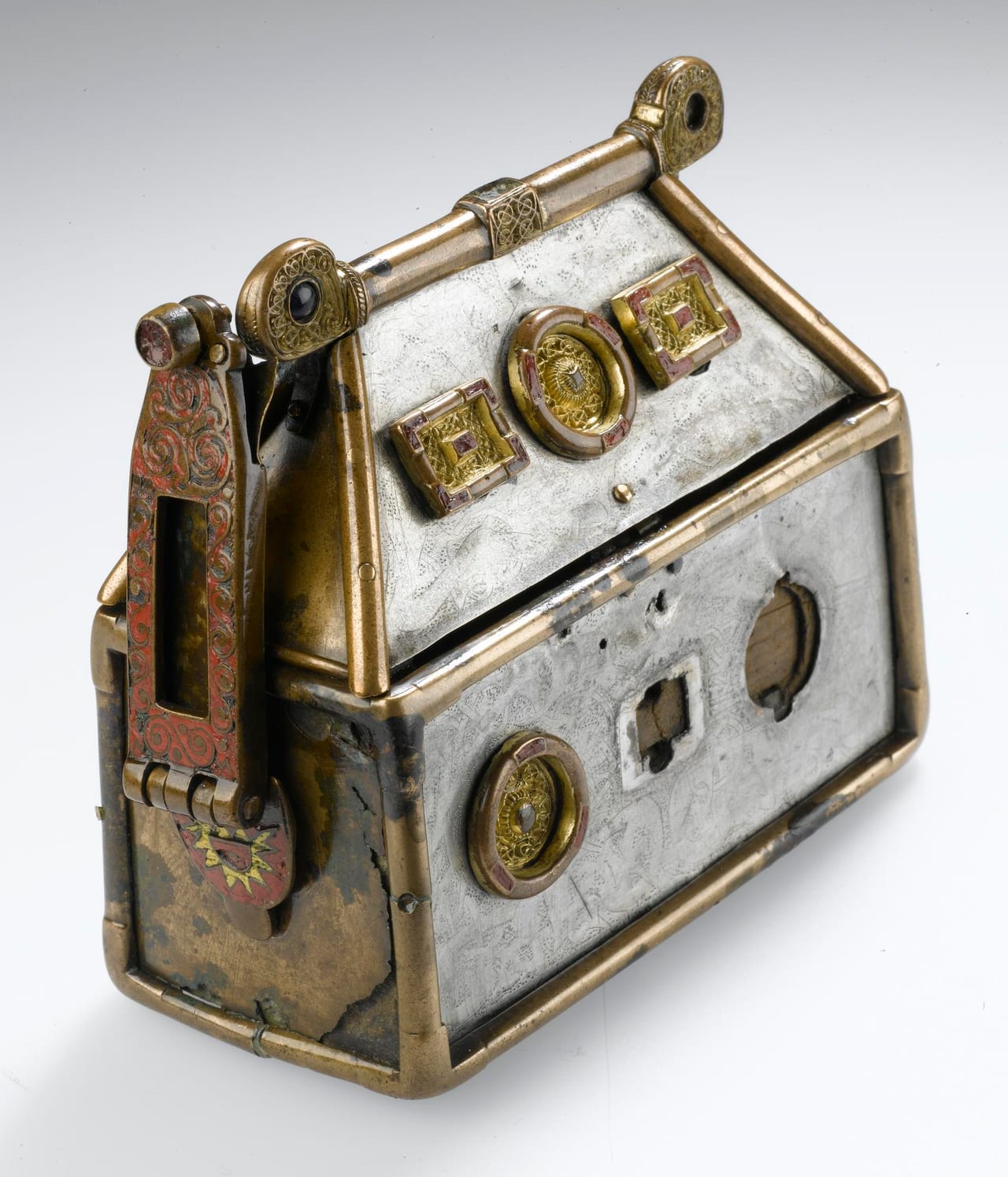
Monymusk Reliquary
750
The Monymusk Reliquary is an eighth century Scottish house-shape reliquary made of wood and metal characterised by an Insular fusion of Gaelic and Pictish design and Anglo-Saxon metalworking, presumably by the Celtic Church monks of Iona Abbey. It is now in the National Museum of Scotland in Edinburgh.
Cramond Lioness
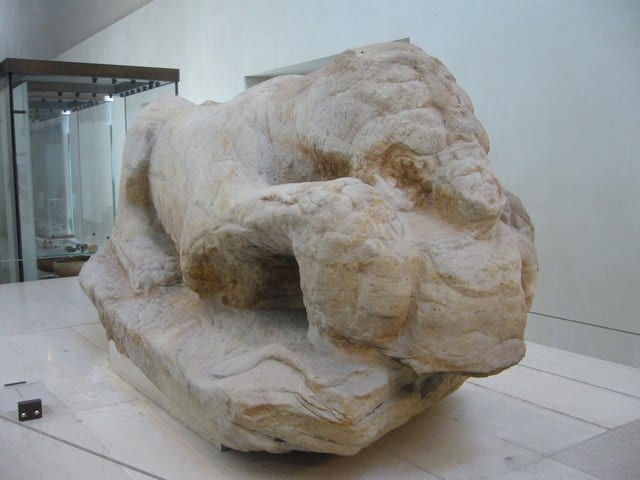
The Cramond Lioness is a Roman-era sculpture recovered in 1997 from the mouth of the River Almond at Cramond in Edinburgh, Scotland. The sculpture, one of the most important Roman finds in Scotland for decades, was discovered by ferryman Robert Graham.
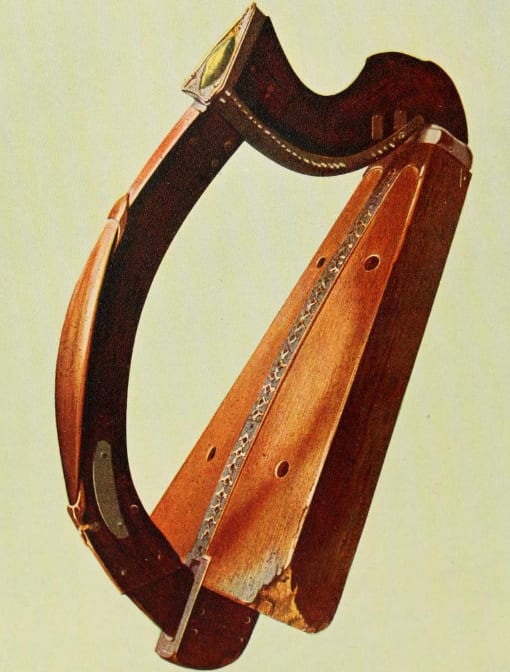
Lamont Harp
1500
The Lamont Harp, or Clàrsach Lumanach (also known as the Caledonian Harp or Lude Harp) is a Scottish Clarsach currently displayed in the National Museum of Scotland. It is believed to date back to the 15th century, and to have originated in Argyll.
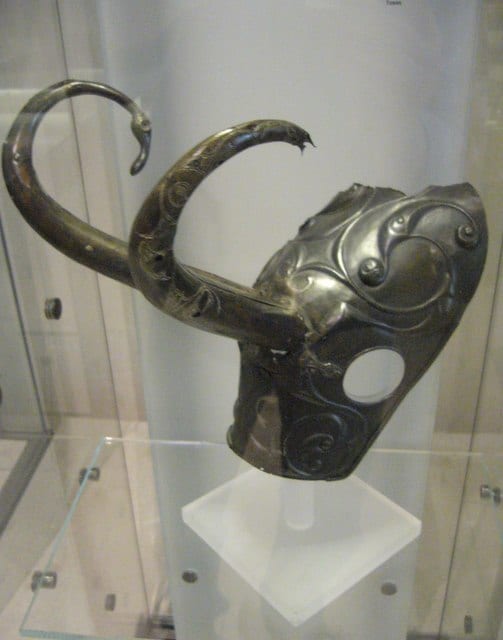
Torrs Pony-cap and Horns
The Torrs Horns and Torrs Pony-cap (once together known as the Torrs Chamfrein) are Iron Age bronze pieces now in the National Museum of Scotland, which were found together, but whose relationship is one of many questions about these "famous and controversial" objects that continue to be debated by scholars. Most scholars agree that horns were added to the pony-cap at a later date, but whether they were originally made for this purpose is unclear; one theory sees them as mounts for drinking-horns, either totally or initially unconnected to the cap.
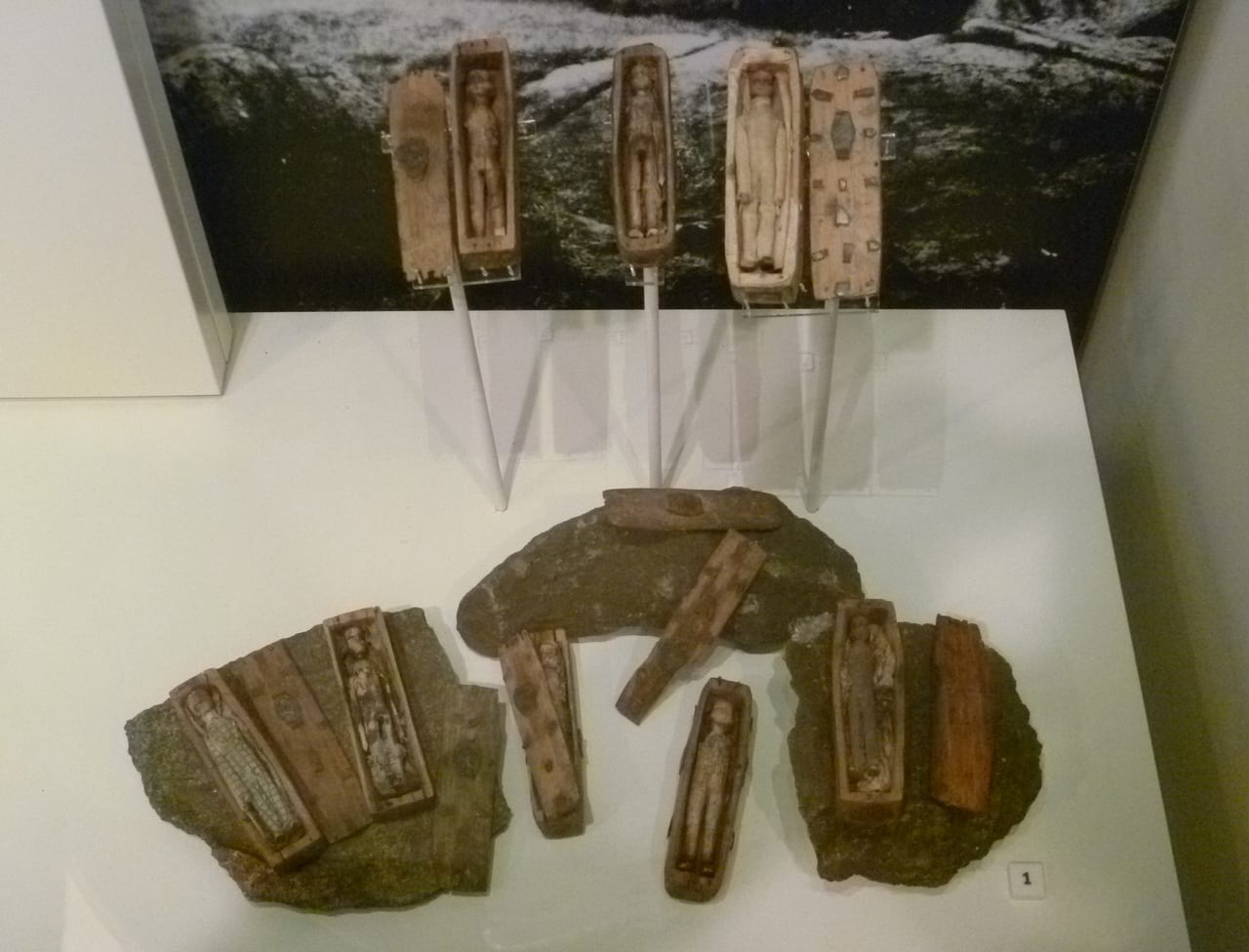
miniature coffins
The collections
The galleries in the newer building present Scottish history in an essentially chronological arrangement, beginning at the lowest level with prehistory to the early medieval period, with later periods on the higher levels. The Victorian building, as reopened in 2011, contains four zones (each with numerous galleries), covering natural history, world cultures (including galleries on the South Pacific, East Asia, and Ancient Egypt), European art and design, and science & technology. The Grand Gallery contains a variety of large objects from the collections, with a display called the "Window on the World" rising through four storeys, or about, containing over 800 objects reflecting the breadth of the collections. Beyond the Grand Gallery at ground level is the "Discoveries" gallery, with objects connected to "remarkable Scots... Assyrian relief of King Ashurnasirpal II and a court official
Artists
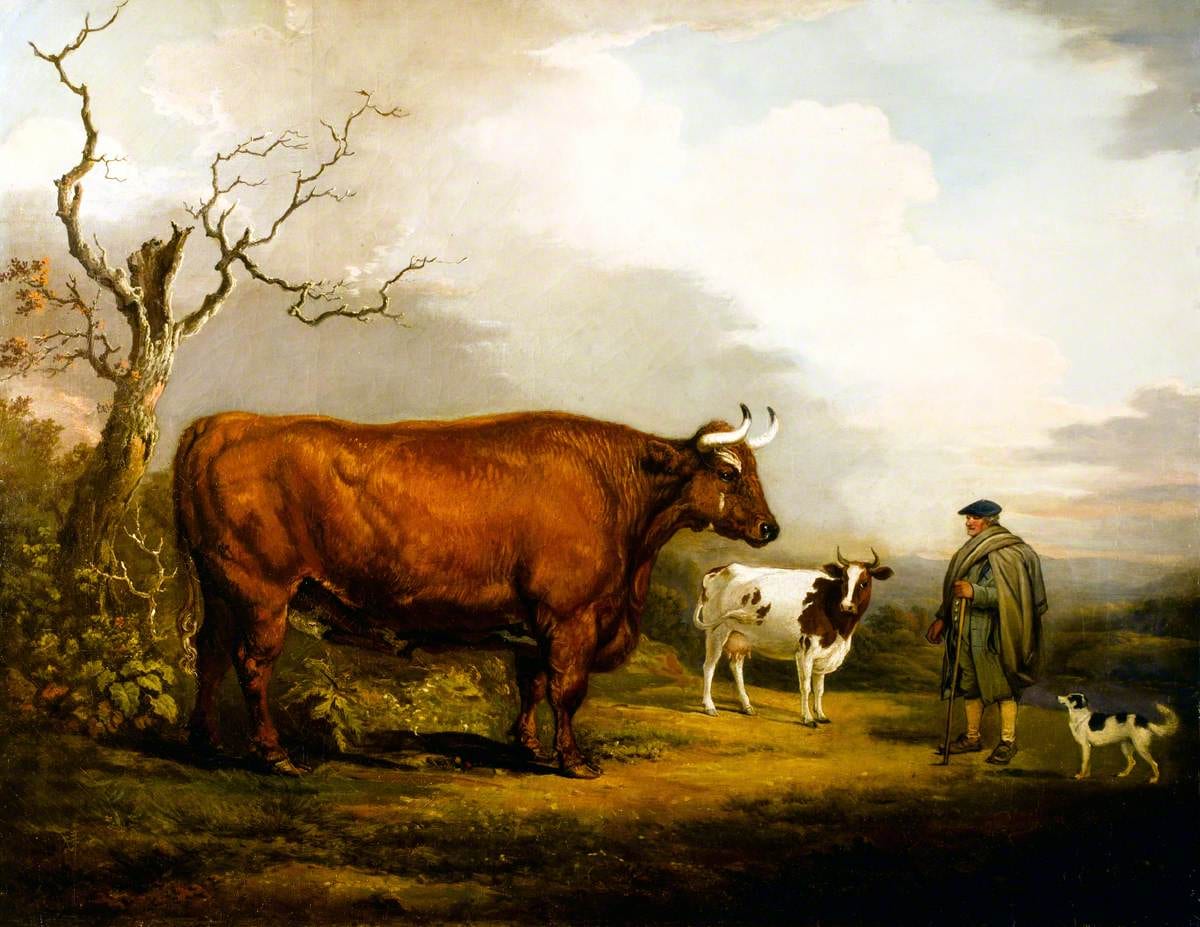
United Kingdom of Great Britain and Ireland · 1758–1840
Alexander Nasmyth was a Scottish portrait and landscape painter, a pupil of Allan Ramsay. He also undertook several architectural commissions.
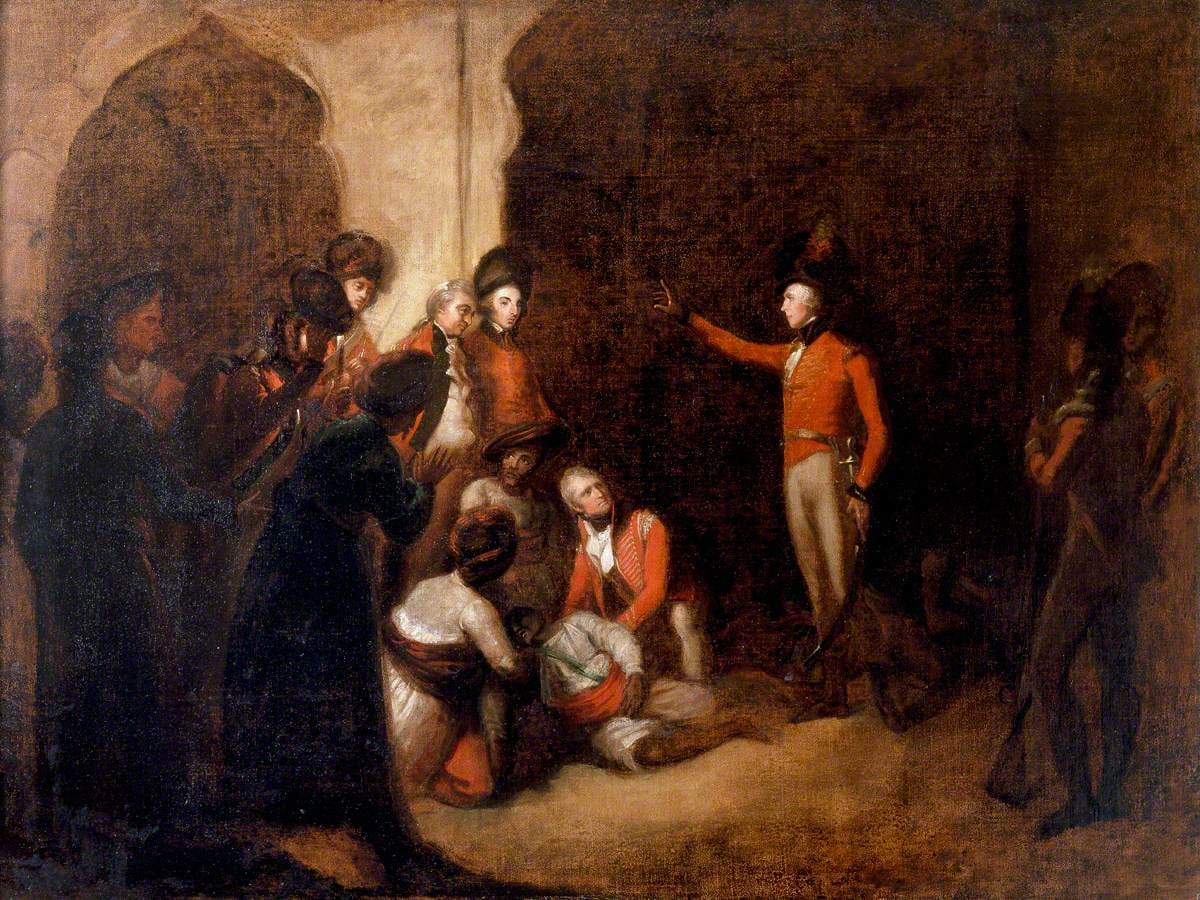
United Kingdom of Great Britain and Ireland · 1762–1822
Arthur William Devis was an English painter of history paintings and portraits. He painted portraits and historical subjects, sixty-five of which he exhibited (1779, 1821) at the Royal Academy.
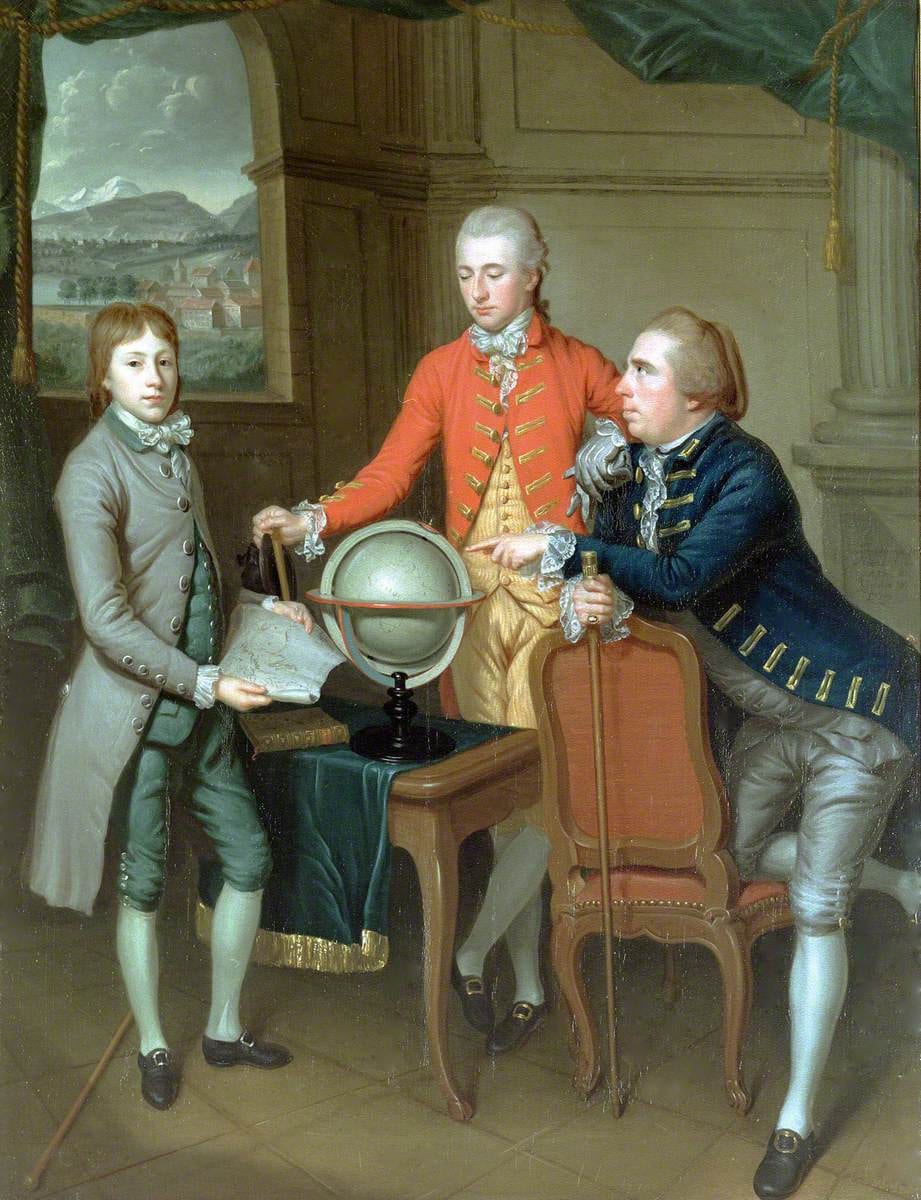
Switzerland · 1732–1795
Jean Preudhomme or Preud'ho(m)me or Prudhomme was a Swiss painter. He was a contemporary of the Swiss painters Anton Graff, Johann Jakob Schalch, Angelica Kauffman, Jakob Emanuel Handmann, Johann Caspar Füssli and his so
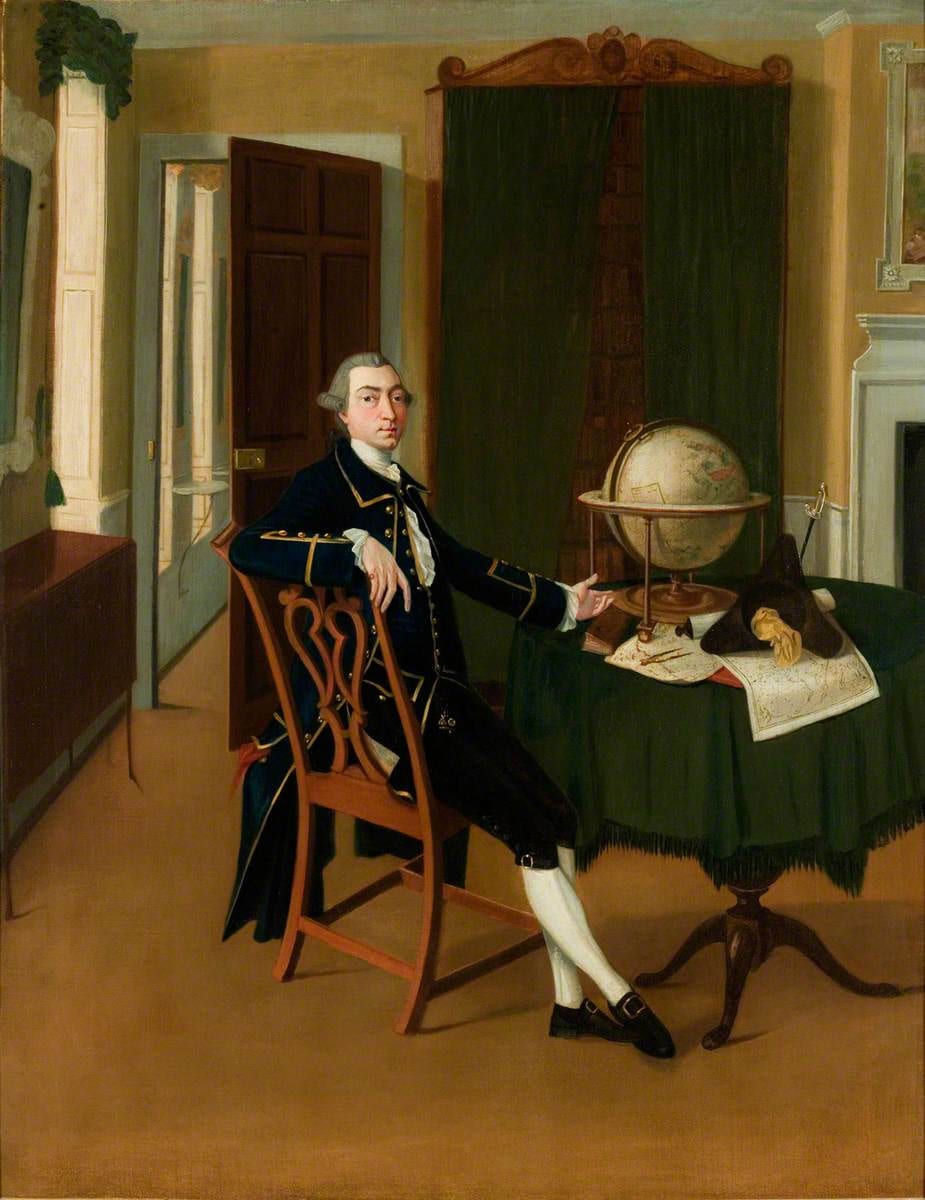
1735–1806
John Thomas Seton, also spelled Thomas Seaton, was a Scottish painter.
Artworks
Douglas, 8th Duke of Hamilton on His Grand Tour
Jean Preudhomme · 1774
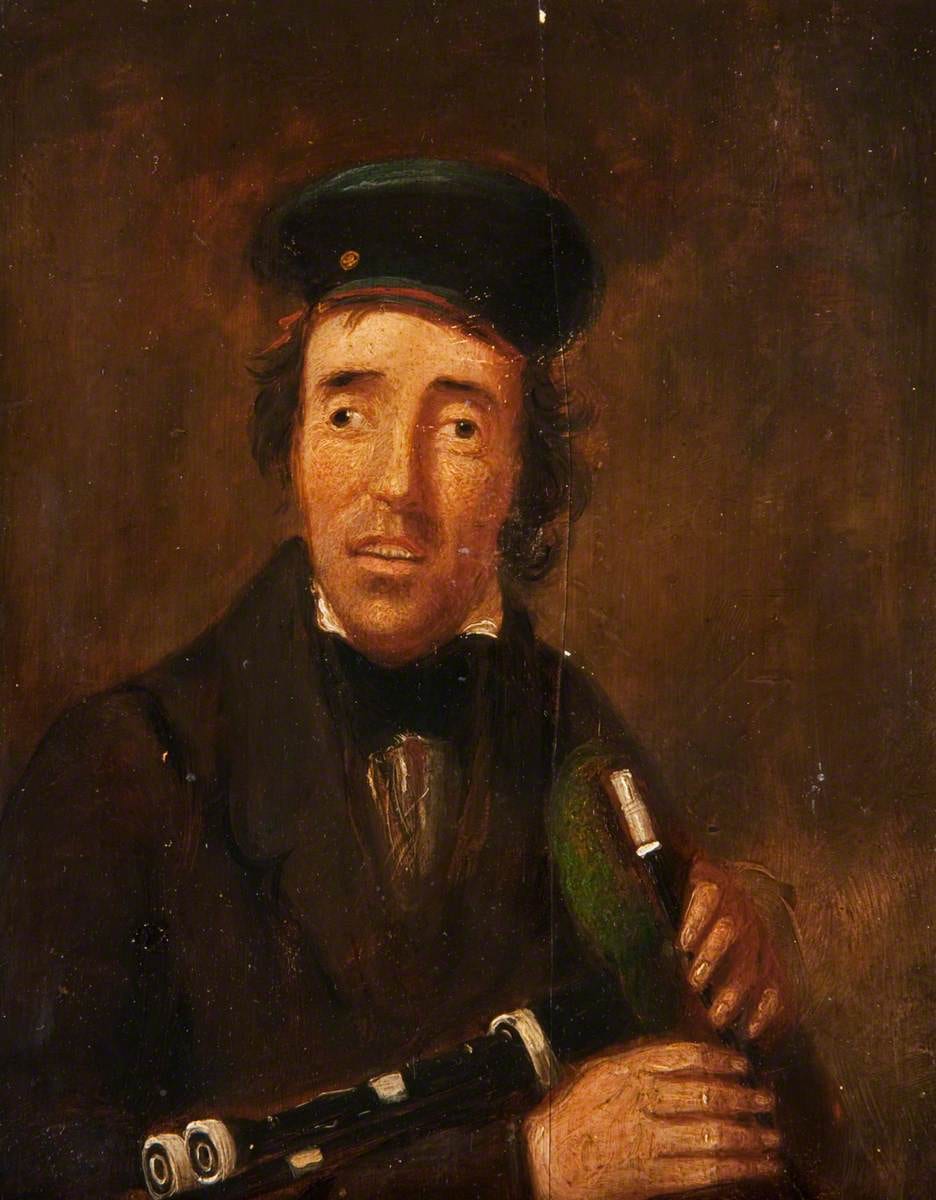
Burgh Piper
William Allan
The Finding of the Body of Tippoo Sahib
Arthur William Devis · 1802
The Spottiswoode Ox
Alexander Nasmyth
Alexander Dalrymple (1737–1808)
John Thomas Seton · 1765
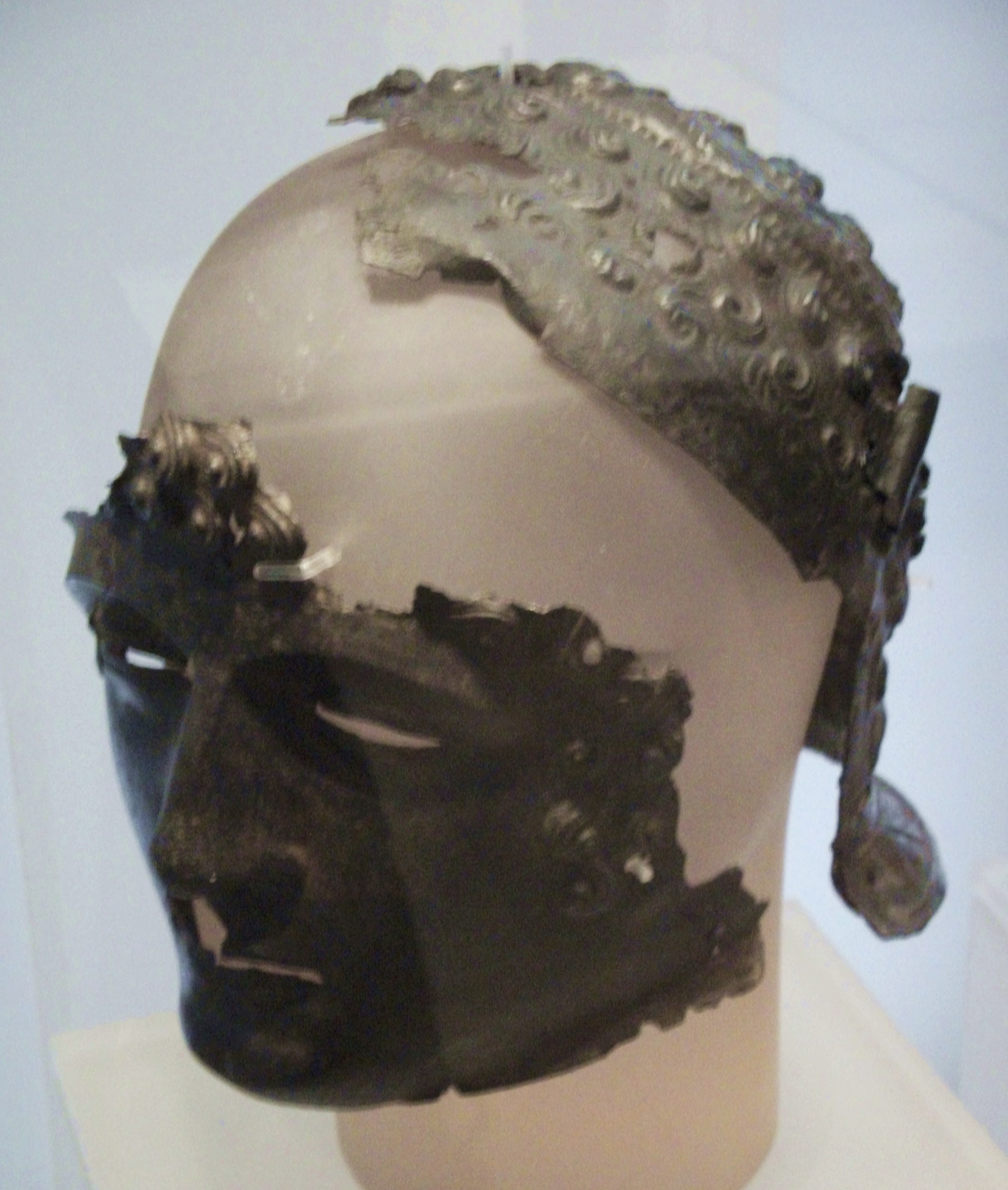
Newstead Helmet
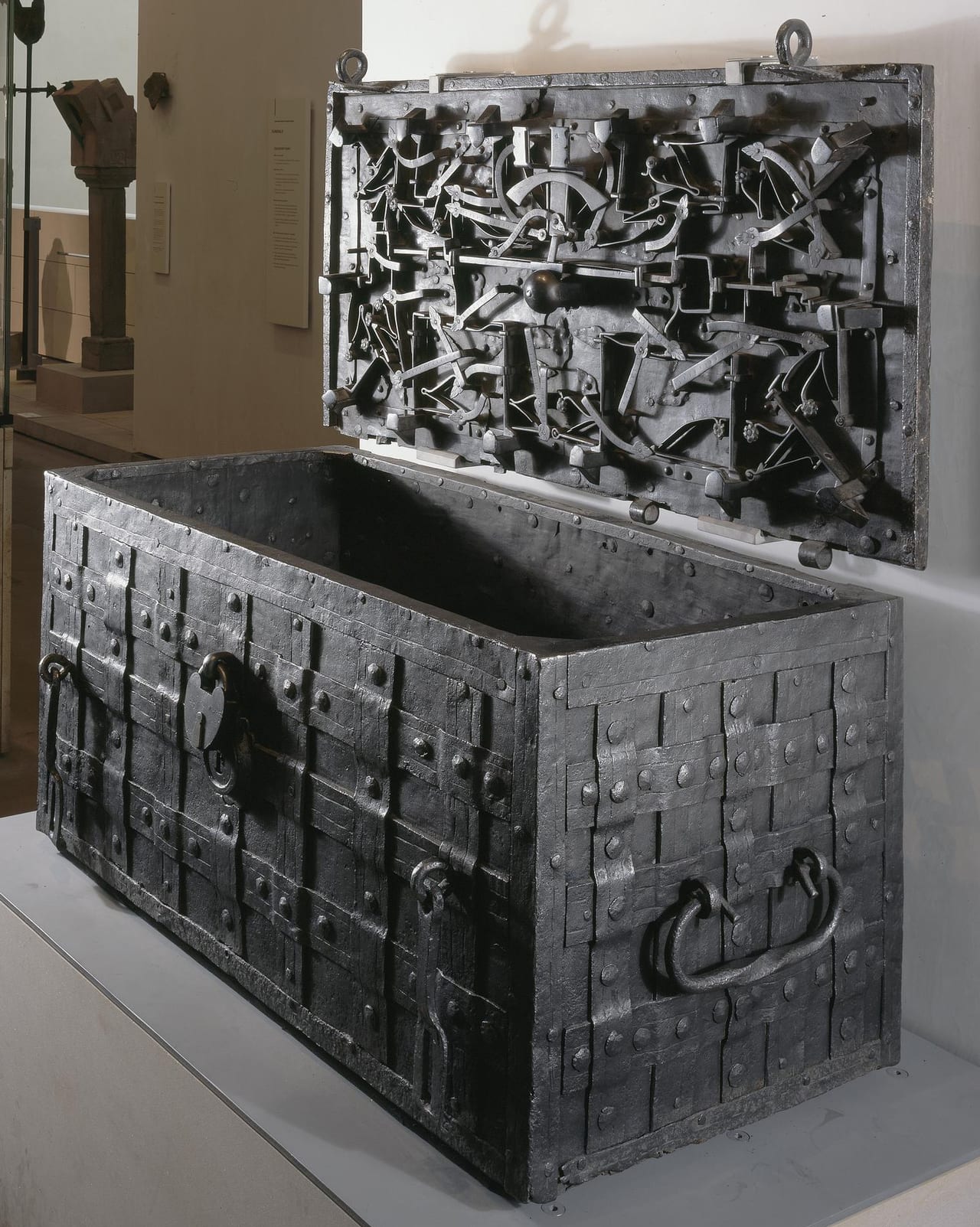
Darien Chest
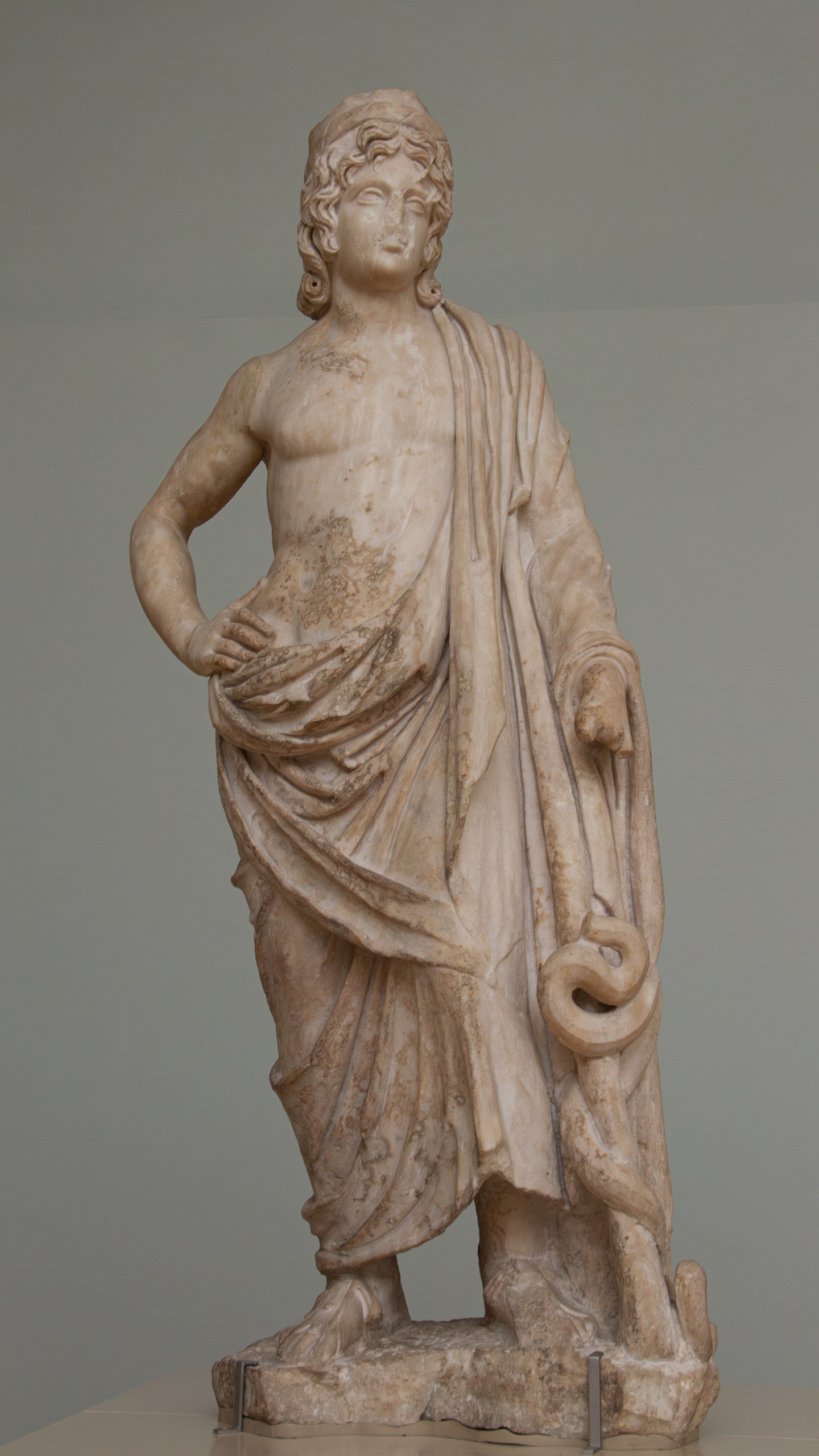
Asklepios
2nd century BC
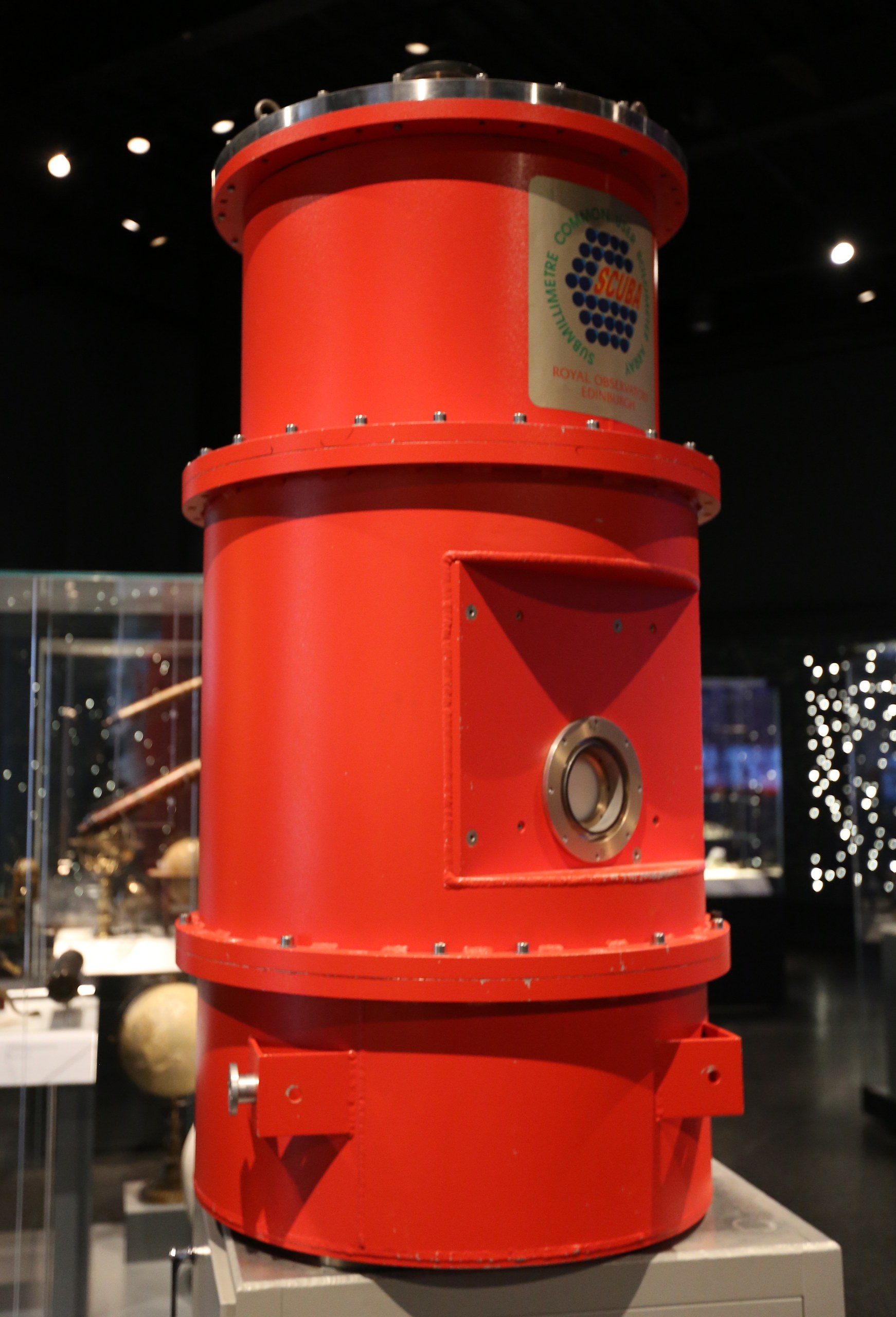
Submillimetre Common-User Bolometer Array
Plan your visit
Hours
Open daily, 10:00 to 17:00. Closed 25 December. Open 26 December and 1 January, 12:00 to 17:00. Confirm on www.nms.ac.uk/national-museum-of-scotland before you travel.
Admission
Free entry, with charges for some special exhibitions.
Getting there
Chambers Street.
On their own site
Opening hours, tickets and current exhibitions are on the museum’s own site.
More guides to explore
Invite National Museum of Scotland into your living room
20 works from this collection are available on Momentable, free to view, on your TV, phone, or tablet.